Understanding combustion is at the core of safe and effective gas engineering. Every appliance, from domestic boilers to cookers, relies on controlled combustion to operate correctly. Without a solid grasp of these principles, it becomes difficult to diagnose faults, maintain efficiency or ensure safety.
At Staffordshire Training Services, combustion theory is not treated as a standalone topic. It is integrated into practical training, helping learners apply technical knowledge in real working environments. Whether you are starting your journey or building on existing experience, a strong understanding of combustion supports every aspect of gas work.
Combustion In Gas Work
Combustion is the chemical reaction between a fuel and oxygen that produces heat. In gas engineering, this process must be carefully controlled to ensure appliances operate safely and efficiently.
Natural gas, when burned correctly, produces heat, carbon dioxide and water vapour. This controlled reaction powers heating systems and hot water appliances across the UK.
An important concept linked to combustion is calorific value. This refers to the amount of energy released when gas is burned. Engineers may come across gross and net calorific values, which influence appliance efficiency and system performance.
For engineers, understanding combustion is essential not only for installation but also for servicing, maintenance, and fault finding.
The Combustion Triangle
The combustion triangle explains the three elements required for combustion to occur:
- Fuel
- Oxygen
- Heat
If any one of these elements is removed, combustion cannot take place.
In practical gas work:
- Fuel relates to the correct gas supply and pressure
- Oxygen is provided through ventilation and air intake
- Heat is introduced through ignition systems
This principle is central to both safety and diagnostics when working on appliances.
Types Of Combustion In Gas Appliances
Complete Combustion
Complete combustion occurs when there is the correct balance of gas and oxygen. This results in a clean and efficient burn.
The main by products are:
- Carbon dioxide
- Water vapour
Incomplete Combustion
Incomplete combustion occurs when there is insufficient oxygen or poor mixing of gas and air.
This can produce:
- Carbon monoxide
- Soot
- Excessive fumes
Understanding primary and secondary air is important here. Primary air mixes with gas before ignition, while secondary air supports the flame during combustion. Most appliances also operate with a small level of excess air to ensure safe combustion.
Air To Gas Ratio
The air-to-gas ratio refers to the proportion of air mixed with gas before combustion.
There is a theoretical ideal known as stoichiometric combustion, where fuel and oxygen are perfectly balanced. In practice, appliances operate with slightly more air than this ideal to maintain safety and stability.
Too little air leads to incomplete combustion, while too much air can reduce efficiency.
Understanding this balance allows engineers to:
- Diagnose inefficient systems
- Identify unsafe operation
- Commission appliances correctly
Flame Characteristics
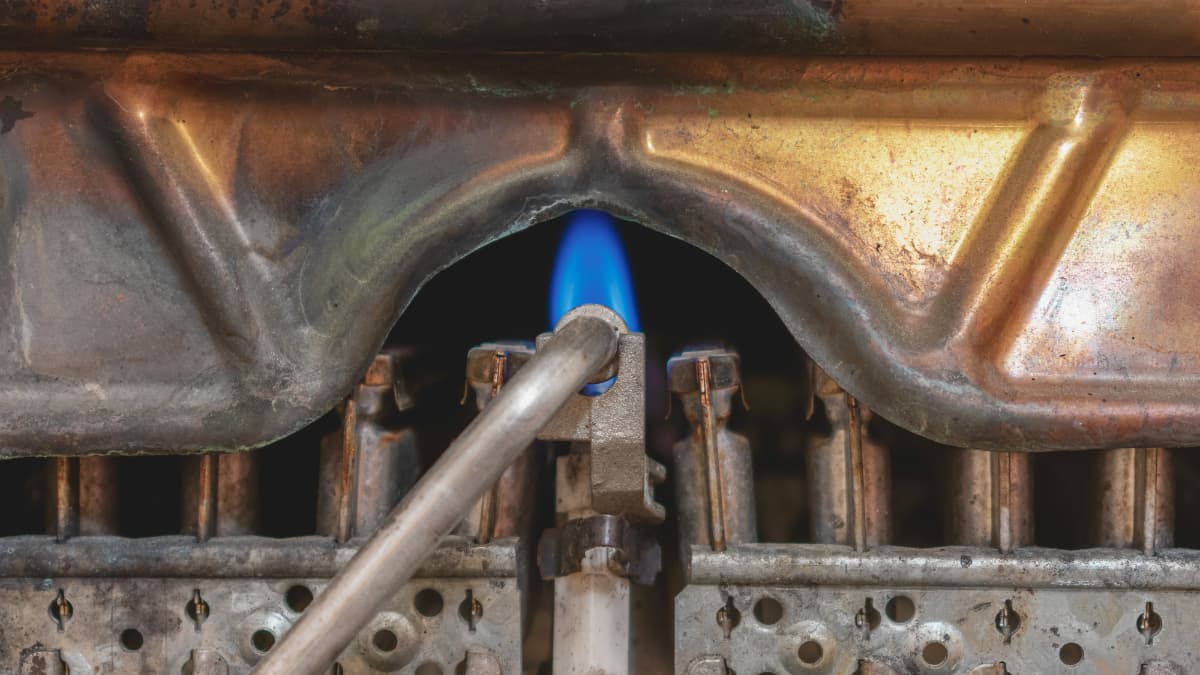
The appearance of a flame provides important clues about combustion quality.
A correct flame is typically:
- Blue
- Stable
- Evenly distributed
Signs of poor combustion include:
- Yellow or orange flames
- Flickering or lifting flames
- Soot deposits
Modern appliances also include flame-sensing devices, such as thermocouples or flame rectification systems. These ensure that the gas supply is shut off if no flame is detected, adding a critical layer of safety.
Combustion Products
The main products of combustion include:
- Carbon dioxide
- Water vapour
- Nitrogen
- Trace gases
Carbon monoxide is produced when combustion is incomplete and poses a serious health risk. It is colourless, odourless and highly dangerous.
Engineers must understand how combustion conditions affect flue gas composition and ensure appliances operate within safe limits.
Ventilation In Combustion
Ventilation provides the oxygen required for safe combustion.
Different appliance types have different requirements:
- Open flue appliances rely on room ventilation
- Room sealed appliances draw air directly from outside
Modern properties are often more airtight, which can restrict airflow and increase the risk of poor combustion if not properly managed.
Combustion Analysis in Gas Work
Combustion analysis is used to measure how effectively an appliance is burning fuel.
Using a flue gas analyser, engineers can assess:
- Oxygen levels
- Carbon dioxide levels
- Carbon monoxide levels
- Overall efficiency
A key measurement is the ratio between carbon monoxide and carbon dioxide, which indicates combustion quality.
Accurate readings depend on properly calibrated equipment and following manufacturer guidelines.
Causes Of Poor Combustion
Poor combustion can result from several factors, including:
- Restricted air supply
- Faulty burners or injectors
- Incorrect gas pressure or pipe sizing
- Poor flue installation or blockage
- Lack of servicing
Understanding these causes allows engineers to diagnose and resolve issues efficiently on site.
Combustion in Training and Assessment
Combustion is a core part of gas training and assessment.
Learners will:
- Study combustion theory
- Apply knowledge in practical settings
- Use testing equipment
- Develop diagnostic skills
This knowledge is essential for progressing to ACS, which forms part of all gas training courses.
Application On Site
In day-to-day work, combustion principles are applied during:
- Installation and commissioning
- Routine servicing
- Fault finding
Engineers will check burner performance, verify flue operation, use combustion analysers and adjust appliances in line with manufacturer requirements.
This ensures systems operate safely and efficiently.
Efficiency and Environmental Impact
Combustion efficiency directly affects fuel consumption and environmental impact.
Efficient combustion:
- Reduces fuel usage
- Lowers emissions
- Improves system performance
Modern condensing boilers are designed to maximise efficiency by recovering heat from flue gases. Correct combustion plays a key role in achieving this performance and reducing overall carbon output.
Combustion Knowledge In Professional Development
A strong understanding of combustion is essential for success in the gas industry.
It allows engineers to:
- Work safely and confidently
- Improve efficiency and performance
- Deliver better outcomes for customers
- Maintain compliance with regulations
This knowledge also supports progression into more advanced areas of the industry.
Staffordshire Training Services
At Staffordshire Training Services, combustion principles are taught through a balance of theory and hands-on training.
Both the Gas Managed Learning Programme and the Level 3 Gas Engineering Operative Apprenticeship provide the foundation needed to understand and apply combustion principles effectively.
At Staffordshire Training Services, we are committed to helping engineers build that foundation and progress into skilled, confident professionals.
Related Articles
- Gas Safety (Installation and Use) Regulations For Engineers
- Unsafe Situations and Gas Engineer Legal Duties
- L56 Approved Code Of Practice For Gas Engineers
- Gas Safety Regulation 26 for Engineers
- Gas Safety (Installation and Use) Regulation Failures Found During ACS
Prefer an AI Summary?