Safe and effective operation of gas appliances depends on more than correct installation. Ventilation and flueing play a critical role in ensuring appliances burn fuel efficiently and safely remove combustion gases.
For gas engineers, a clear understanding of airflow, flue systems and installation standards is essential. These principles are applied daily during installation, servicing, and fault-finding.
At Staffordshire Training Services, ventilation and flueing are taught alongside combustion principles, helping learners develop the knowledge and confidence required to work safely in real environments.
Ventilation In Gas Work
Ventilation provides the oxygen required for combustion. Without a sufficient air supply, gas appliances cannot operate safely or efficiently.
In domestic settings, ventilation also prevents the buildup of harmful gases, including carbon monoxide. As modern homes become more airtight due to insulation and energy efficiency improvements, natural airflow is often reduced. This increases the importance of correctly designed and maintained ventilation systems.
Restricted airflow can directly affect the air-to-gas ratio within an appliance, leading to incomplete combustion and increased safety risks.
Types Of Gas Appliance Ventilation
Different appliances rely on different ventilation arrangements depending on their design.
- Open Flue Appliances
Open flue appliances draw air directly from the room in which they are installed. Because of this, they rely on permanent ventilation openings to ensure a continuous supply of oxygen.
These systems are more sensitive to airflow restrictions and require careful assessment of the installation environment.
- Room Sealed Appliances
Room sealed appliances draw air from outside the property through a dedicated air intake. This makes them less dependent on room ventilation.
They are commonly used in modern installations and offer improved safety, as the combustion process is isolated from the living space.
Ventilation Requirements In Domestic Properties
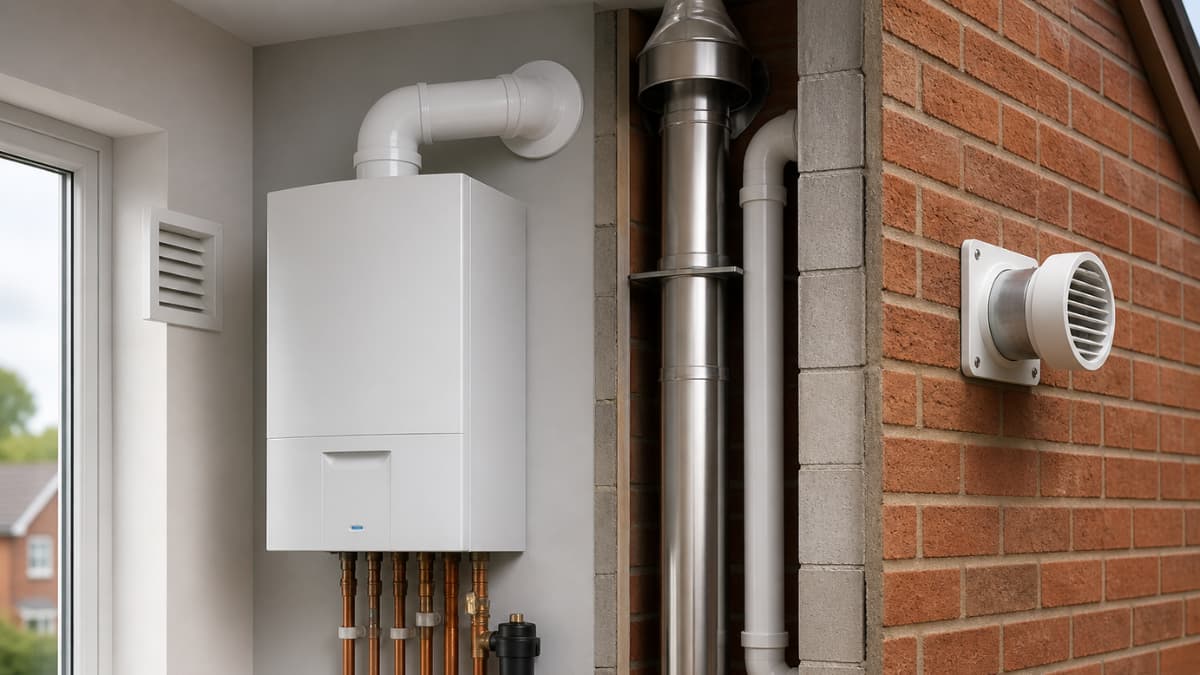
Ventilation in domestic properties is typically provided through fixed openings such as air bricks or vents.
Considerations include:
- Correct sizing of ventilation openings
- Appropriate positioning to allow effective airflow
- Ensuring vents remain unobstructed
Changes to a property, such as double glazing, insulation or extractor fans, can reduce natural airflow and even create negative pressure within the property. This can affect both combustion and flue performance.
Blocking or altering ventilation openings can create unsafe conditions and must always be avoided.
Flueing Principles and Purpose
A flue is responsible for safely removing combustion gases from an appliance and discharging them to the outside atmosphere.
Effective flueing ensures:
- Safe removal of combustion gases
- Prevention of carbon monoxide entering the property
- Stable combustion conditions within the appliance
Flue performance is closely linked to combustion efficiency. Poor flueing can disrupt airflow, leading to incomplete combustion and unsafe operation.
Flue Draught and Performance
In open flue systems, natural draught is created by the temperature difference between hot flue gases and cooler external air.
This upward flow depends on:
- Flue height
- Internal condition of the flue
- Number of bends or restrictions
- External weather conditions
Poor draught can lead to flue gas spillage, incomplete combustion and unsafe appliance operation. Understanding draught is essential when diagnosing chimney and flue-related issues.
Types Of Flue Systems
Gas appliances use different types of flue systems depending on their design and efficiency.
- Open Flue Systems
Open flue systems rely on natural draught to carry combustion gases upwards and out of the property. These systems depend on correct chimney performance and adequate ventilation.
- Balanced Flue Systems
Balanced flue systems are commonly used with room-sealed appliances. They combine air intake and flue gas discharge within a sealed arrangement, improving efficiency and safety.
- Fan Assisted Flues
Modern high-efficiency appliances often use fan-assisted flues. These systems actively control airflow, ensuring consistent removal of combustion gases.
Flue Materials and Construction
Flue systems are constructed from a range of materials, including metal, plastic and masonry.
Engineers must ensure:
- Compatibility with the appliance type
- Correct sealing of joints
- Resistance to corrosion and condensate
Condensing appliances produce acidic condensate, so flue materials must be suitable for long-term exposure.
Flue Positioning and Installation Requirements
Correct flue positioning is essential for safe operation.
Engineers must consider:
- Safe distances from windows, doors and air intakes
- Avoiding areas where flue gases could re-enter the property
- Maintaining correct clearances from boundaries
- Following manufacturer instructions and UK regulations
Incorrect flue positioning can result in gas recirculation and serious safety risks.
Flue Flow Testing and Spillage Checks
Flue performance must be tested during installation and servicing.
This includes:
- Flue flow testing using smoke pellets to confirm correct draw
- Checking for continuity and identifying leaks
- Spillage testing to ensure gases are not entering the room
If spillage is detected, the appliance must be classified appropriately, and action must be taken to make the situation safe.
Condensate and Modern Appliance Considerations
Modern condensing boilers produce condensate as part of their operation.
Engineers must consider:
- Safe drainage of condensate
- Correct pipe sizing and routing
- Risk of freezing in external pipework
Condensate management is an important part of both installation and maintenance in modern systems.
Ventilation and Flueing Faults
Faults in ventilation and flueing can significantly affect appliance performance and safety.
Common issues include:
- Blocked or restricted vents
- Damaged or poorly installed flues
- Incorrect flue length or configuration
- Corrosion or leakage
- Poor gas pressure or installation issues affecting combustion
These faults can lead to inefficient operation and an increased risk of carbon monoxide exposure.
Carbon Monoxide Risks and Prevention
Carbon monoxide is produced when combustion is incomplete. Poor ventilation or faulty flueing can prevent gases from being safely removed, allowing carbon monoxide to accumulate.
Gas engineers must:
- Identify unsafe ventilation conditions
- Inspect flue systems thoroughly
- Carry out appropriate testing
- Follow correct procedures when unsafe situations are found
Carbon monoxide alarms provide an additional safeguard, but correct installation and maintenance remain essential.
Ventilation and Flue Checks During Servicing
Routine servicing includes thorough checks of both ventilation and flue systems.
Engineers will:
- Inspect ventilation openings
- Check airflow and potential restrictions
- Assess flue condition and integrity
- Carry out flue flow and spillage tests where required
These checks ensure continued safe operation and compliance with current standards.
Ventilation and Flueing In Training and Assessment
Ventilation and flueing are core elements of gas training and assessment.
Learners will:
- Study airflow and combustion support
- Practise flue installation and inspection
- Carry out testing procedures
- Understand unsafe situations and required actions
These skills are essential for progressing towards ACS and working safely in the industry.
Training is delivered through both the Gas Managed Learning Programme and the Level 3 Gas Engineering Operative Apprenticeship.
Practical Application On Site
In real working environments, engineers apply ventilation and flueing knowledge to:
- Assess installation conditions
- Evaluate airflow and ventilation provision
- Inspect flue systems for safety and compliance
- Identify and rectify faults
This ensures appliances operate safely and efficiently within the property.
Gas Training With Staffordshire Training Services
At Staffordshire Training Services, ventilation and flueing are taught as part of a complete understanding of gas safety, installation and appliance performance.
Learners develop both theoretical knowledge and practical skills through structured training delivered at our purpose-built centre in Stafford. This includes working with real appliances, flue systems and ventilation scenarios to reflect conditions found on site.
Training is delivered by experienced engineers who guide learners through key principles such as airflow, flue performance, testing procedures and safe installation practices. This ensures learners are prepared not only for assessment, but for real work in domestic environments.
Both the Gas Managed Learning Programme and the Level 3 Gas Engineering Operative Apprenticeship cover ventilation and flueing in depth, supporting progression towards ACS and Gas Safe registration.
Our focus is on building confident engineers who understand not just how systems work, but why they must be installed and maintained correctly.
Related Articles
- Gas Safety (Installation and Use) Regulations For Engineers
- Tightness Testing and Gas Soundness For Engineers
- Combustion Principles For Gas Engineers
- Gas Managed Learning Programme Versus Level 3 Apprenticeship
- Building Regulations Part L for Gas Engineers
Prefer an AI Summary?