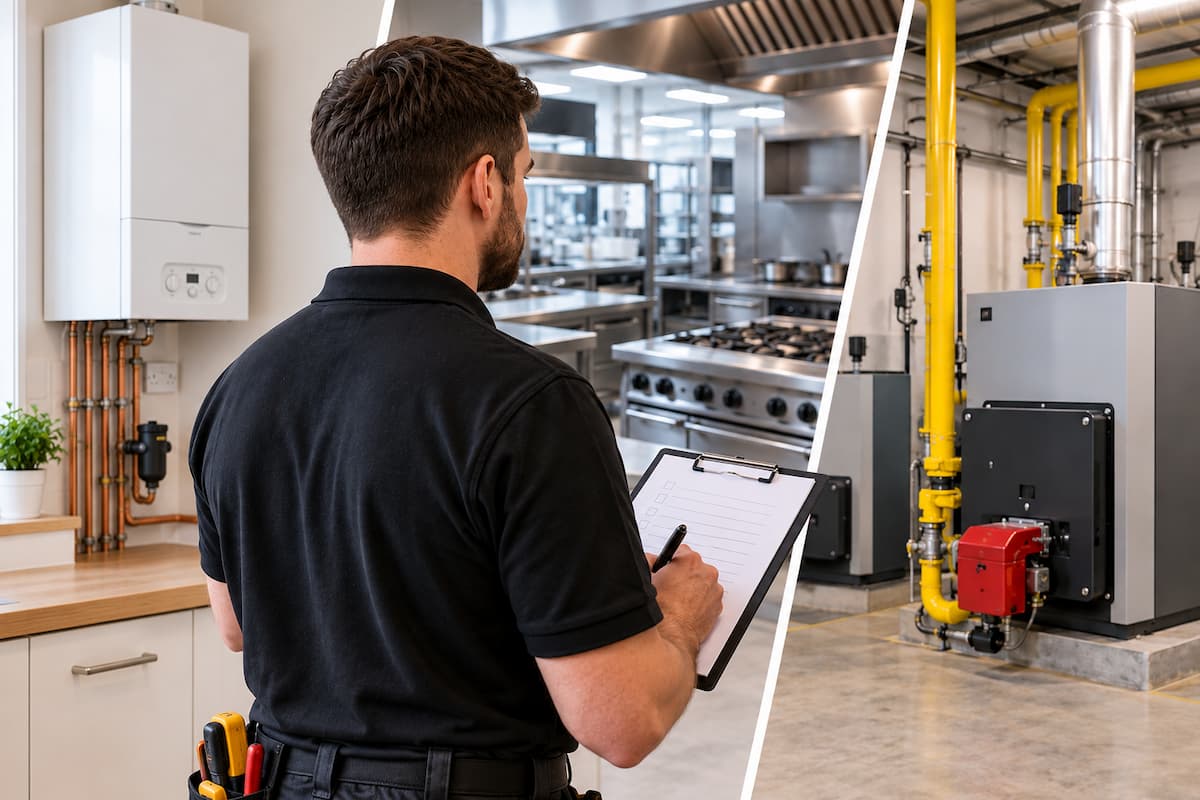
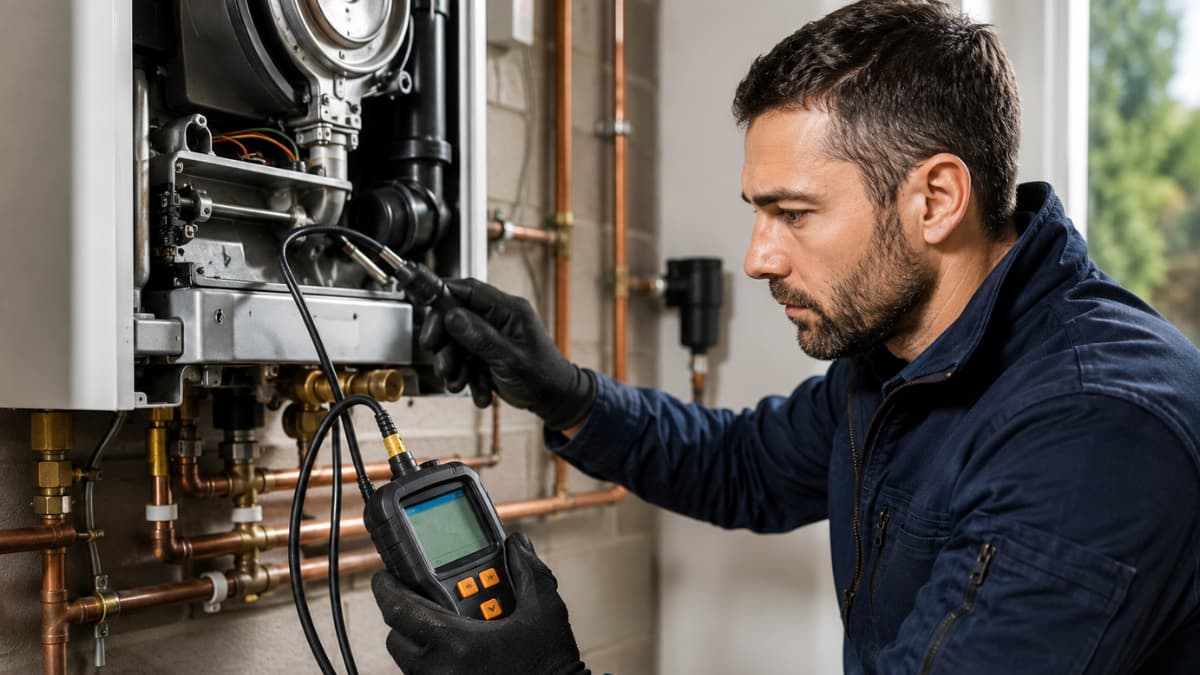
Combustion analysis is one of the most important technical and safety procedures carried out by gas engineers. It allows engineers to assess appliance combustion performance, identify unsafe operation, and confirm that combustion products are being removed safely through the flue system.
Modern gas appliances rely on precise combustion conditions to operate safely and efficiently. Even small changes in combustion quality can affect appliance performance, increase carbon monoxide production and create unsafe situations.
For engineers, combustion analysis is not simply a commissioning step. It is a critical diagnostic and safety process that supports compliance, ACS competence and appliance reliability.
Combustion Analysis In Gas Work
Combustion analysis helps engineers confirm that an appliance is:
- burning gas correctly
- receiving sufficient combustion air
- operating within manufacturer parameters
- removing combustion products safely
It also supports:
- appliance commissioning
- servicing and maintenance
- fault diagnosis
- efficiency assessment
- unsafe situation identification
Without proper combustion testing, developing faults may remain undetected until they become serious.
Combustion In Gas Appliances
Combustion occurs when fuel burns in the presence of oxygen, producing heat. For combustion to be safe and efficient, the appliance requires:
- correct gas supply
- adequate combustion air
- proper burner operation
- effective flue performance
Poor combustion may result from:
- blocked or restricted air supply
- incorrect gas pressure
- damaged burners
- poor appliance setup
- flue restrictions
- component wear or contamination
Combustion analysis allows engineers to assess these conditions accurately.
Flue Gas Testing
Flue gas testing measures the products of combustion within the flue system. These readings provide insight into appliance performance, combustion efficiency and safety.
Flue gas testing is used during:
- appliance commissioning
- servicing
- fault finding
- safety checks
- performance verification
An appliance may appear to operate normally while still producing unsafe combustion readings. This is why flue gas analysis is essential.
Understanding Combustion Readings
Flue gas analysers provide several readings that help engineers assess combustion quality.
These may include:
- oxygen levels
- carbon dioxide levels
- carbon monoxide readings
- flue gas temperature
- combustion ratio
Each reading contributes to the overall understanding of appliance performance.
For example:
- High oxygen readings may indicate excess air or flue dilution
- Unstable carbon monoxide readings may suggest combustion instability
- Rising flue temperatures may indicate heat transfer issues
Readings should never be viewed in isolation. Engineers must understand how the readings relate to one another.
Combustion Ratio Explanation
The combustion ratio is one of the most important indicators of combustion quality.
It is calculated using:
> Combustion Ratio = Carbon Monoxide (CO) ÷ Carbon Dioxide (CO₂)
This ratio helps engineers assess how cleanly the appliance is burning fuel.
In general:
- Lower ratios indicate cleaner combustion
- Rising ratios may indicate developing combustion problems
- Unstable ratios can suggest changing combustion conditions
The combustion ratio is often more useful than carbon monoxide readings alone because it reflects overall combustion performance rather than a single value.
Combustion ratios must always be interpreted in accordance with current manufacturer instructions and industry guidance.
Flue Gas Analysers and Equipment
Flue gas analysers are precision instruments and must be maintained correctly to provide reliable readings.
Engineers should ensure:
- analysers are suitable for the appliance type
- calibration is current
- probes and filters are clean
- hoses are undamaged
- equipment is functioning correctly before testing
Poorly maintained equipment can lead to inaccurate readings and unsafe conclusions.
Calibration and Accuracy
Calibration is essential for reliable combustion analysis.
Engineers should:
- follow manufacturer calibration requirements
- verify analyser condition before use
- avoid using contaminated or damaged probes
- check analyser operation regularly
Reliable readings depend on reliable equipment.
Safe Combustion Analysis Procedure
A structured approach improves consistency and reduces risk.
Preparation
Before testing, engineers should:
- visually inspect the appliance
- confirm flue integrity
- assess ventilation provision
- identify signs of staining or spillage
- ensure the appliance is operating normally
Testing
During testing, engineers should:
- insert the probe correctly into the sampling point
- allow readings to stabilise fully
- monitor combustion values carefully
- compare readings against manufacturer guidance
- observe burner behaviour and appliance operation
After Testing
After testing, engineers should:
- interpret readings correctly
- investigate abnormal results
- carry out adjustments or repairs where required
- record all readings and actions clearly
Temperature, Stabilisation and Reading Behaviour
Combustion readings can change during appliance operation. Engineers must allow readings to stabilise fully before interpreting results.
Factors affecting readings include:
- appliance warm up time
- airflow changes
- fan operation
- flue conditions
- combustion chamber temperature
Rushed readings may create false conclusions.
Unstable readings may indicate:
- airflow disruption
- burner instability
- restricted flueing
- combustion faults
- intermittent component problems
A methodical approach is essential.
Causes Of Poor Combustion
Poor combustion can result from a wide range of installation or appliance issues.
Common causes include:
- inadequate combustion air
- blocked heat exchangers
- damaged or contaminated burners
- incorrect gas pressure
- flue restrictions
- incorrect appliance setup
- poor ventilation
- fan or airflow faults
Combustion analysis helps engineers identify and investigate these conditions safely.
Indicators Of Unsafe Combustion
Engineers should recognise practical warning signs that may indicate unsafe combustion.
These include:
- yellow or unstable flames
- staining around the appliance or flue
- signs of spillage
- excessive condensation
- delayed ignition
- unusual burner noise
- repeated lockouts
- strong combustion odours
These indicators should always prompt further investigation.
Ventilation and Flue Influences
Combustion quality depends heavily on ventilation and flue performance.
Engineers should assess:
Poor ventilation or flue performance can significantly affect combustion readings.
Condensing Boiler Combustion Considerations
Modern condensing boilers operate differently from older appliances and require a careful combustion assessment.
Engineers should understand:
- condensing boilers operate with lower flue gas temperatures
- combustion performance is closely linked to the correct setup
- condensate removal can affect operation
- incorrect gas rate or airflow may affect efficiency and combustion quality
Because condensing appliances are highly efficient, minor setup issues can significantly affect performance and combustion readings.
Regular servicing and accurate combustion analysis are essential for maintaining safe operation.
Combustion Fault Diagnosis Table
| Combustion Symptom | Possible Cause | Engineer Focus |
|---|---|---|
| High carbon monoxide readings | Incomplete combustion or restricted airflow | Check burner condition, ventilation and gas pressure |
| High oxygen readings | Excess air or flue dilution | Inspect flue integrity and appliance setup |
| Unstable combustion readings | Airflow issues or burner instability | Check fan operation, flue condition and combustion chamber |
| Rising flue gas temperature | Poor heat transfer or heat exchanger issue | Inspect heat exchanger and appliance condition |
| Low combustion performance | Incorrect setup or component wear | Check appliance commissioning and components |
| Repeated lockouts | Combustion instability or flue fault | Investigate combustion readings and safety devices |
| Signs of spillage or staining | Flueing or ventilation issue | Assess flue integrity and combustion air provision |
Relationship With Unsafe Situations
Combustion analysis links directly to unsafe situations, procedures, and Regulation 26 duties.
Where testing identifies unsafe operation, engineers must:
- classify the situation correctly
- act to prevent danger
- advise the responsible person appropriately
- document findings and actions clearly
Unsafe combustion must never be ignored or left unmanaged.
Commissioning and Combustion Analysis
Combustion analysis is a key part of appliance commissioning.
Engineers should:
- confirm correct gas pressures
- verify combustion performance
- check flue operation
- confirm appliance setup matches manufacturer guidance
- verify safe operation under working conditions
Failure to commission correctly may leave dangerous faults undetected.
Recording Combustion Readings
Clear records are essential for compliance and professional protection.
Engineers should document:
- combustion readings
- operating conditions
- adjustments made
- faults identified
- corrective actions taken
- final appliance status
Strong documentation supports future servicing and provides evidence of safe working practice.
Combustion Analysis Errors
Mistakes during combustion analysis can lead to unsafe conclusions.
Common issues include:
- poor probe placement
- failing to allow readings to stabilise
- using uncalibrated analysers
- relying on memory instead of manufacturer guidance
- ignoring abnormal readings
- failing to investigate unstable combustion
- misunderstanding combustion ratios
A structured and methodical approach reduces these risks.
Combustion Analysis in ACS Assessment
Combustion analysis is a major area within ACS assessment and reassessment.
Candidates are expected to:
- use analysers correctly,/li>
- understand combustion ratios
- interpret readings accurately
- explain causes of poor combustion
- demonstrate safe procedure
- identify unsafe conditions
Candidates often lose marks by rushing the process or failing to explain their reasoning clearly.
Combustion Analysis Workflow Table
| Stage | Engineer Action | Key Focus | Risk If Missed |
|---|---|---|---|
| Visual Inspection | Inspect appliance, flue and ventilation | Identify visible safety concerns | Unsafe conditions overlooked |
| Equipment Check | Confirm analyser calibration and condition | Ensure reading accuracy | False readings and unsafe conclusions |
| Probe Placement | Insert probe correctly into sampling point | Obtain reliable flue gas sample | Incorrect combustion data |
| Stabilisation | Allow appliance and readings to stabilise | Reliable interpretation | Misleading results |
| Reading Assessment | Interpret readings using manufacturer guidance | Identify unsafe operation | Unsafe appliance left operational |
| Fault Investigation | Investigate abnormal readings systematically | Determine root cause | Fault remains unresolved |
| Corrective Action | Adjust, repair or isolate appliance | Restore safe combustion | Continued risk to occupants |
| Documentation | Record readings and actions clearly | Compliance and evidence | Poor professional protection |
Flue Gas Analyser Checklist
| Check | Description | Complete |
|---|---|---|
| Calibration | Analyser within calibration period | ☐ |
| Condition | Probe, filters and hoses checked | ☐ |
| Visual Inspection | Appliance and flue checked before testing | ☐ |
| Ventilation | Combustion air provision assessed | ☐ |
| Probe Placement | Probe inserted correctly into sampling point | ☐ |
| Stabilisation | Readings allowed to stabilise fully | ☐ |
| Interpretation | Results checked against manufacturer guidance | ☐ |
| Documentation | Readings and actions recorded clearly | ☐ |
Gas Training In Staffordshire
Engineers across Staffordshire can strengthen their practical knowledge and ACS preparation through training at Staffordshire Training Services.
Gas training courses support safe commissioning, combustion analysis, flue gas testing, and broader gas safety compliance, helping engineers build confidence in both their technical and legal responsibilities.
Safe Appliance Performance Through Accurate Analysis
Combustion analysis and flue gas testing are essential parts of modern gas engineering. They help engineers verify safe operation, accurately diagnose faults, and protect occupants from the risks associated with poor combustion.
By understanding combustion ratios, reading relationships, flue influences and appliance behaviour, engineers can carry out safer and more effective analysis.
Strong combustion knowledge supports better commissioning, stronger ACS performance and higher professional standards across all areas of gas work.
Related Articles
- Combustion Principles For Gas Engineers
- Gas Safety (Installation and Use) Regulations For Engineers
- Tightness Testing and Gas Soundness For Engineers
- Ventilation and Flueing Requirements For Gas Appliances
- Standards Of Workmanship and Industry Compliance For Gas Engineers
Prefer an AI Summary?