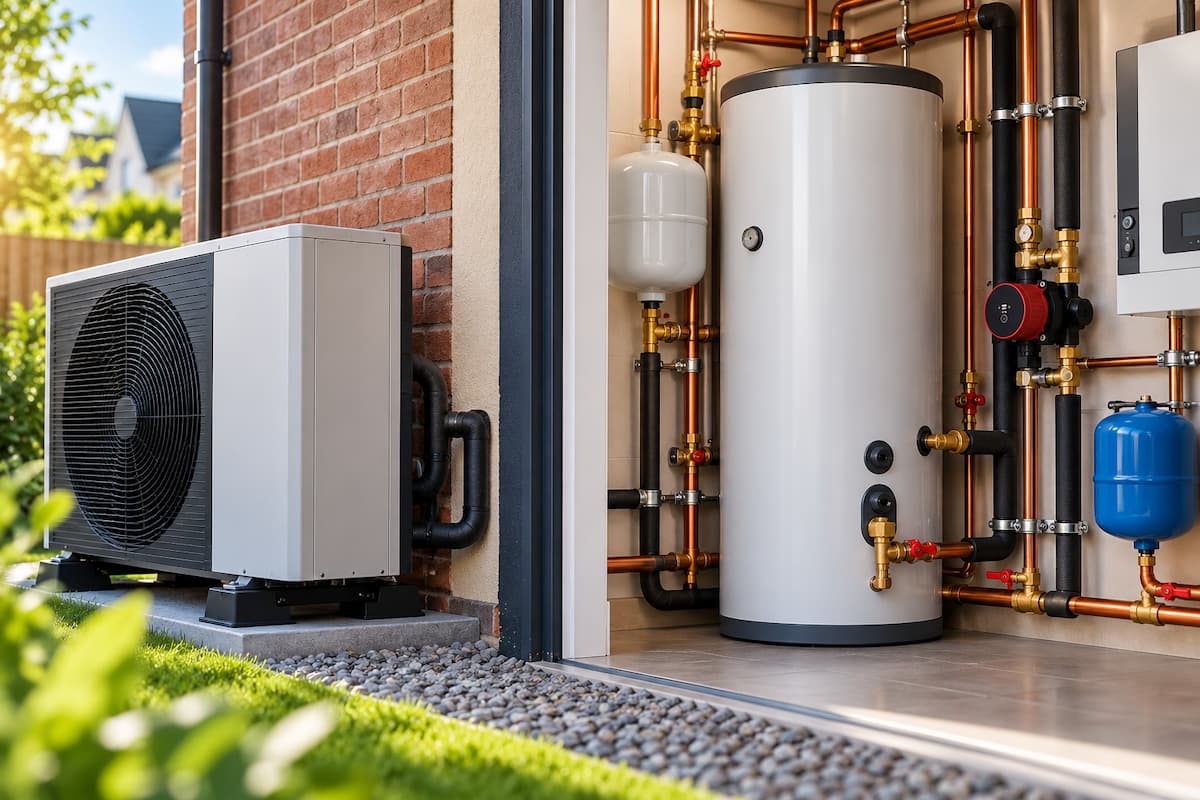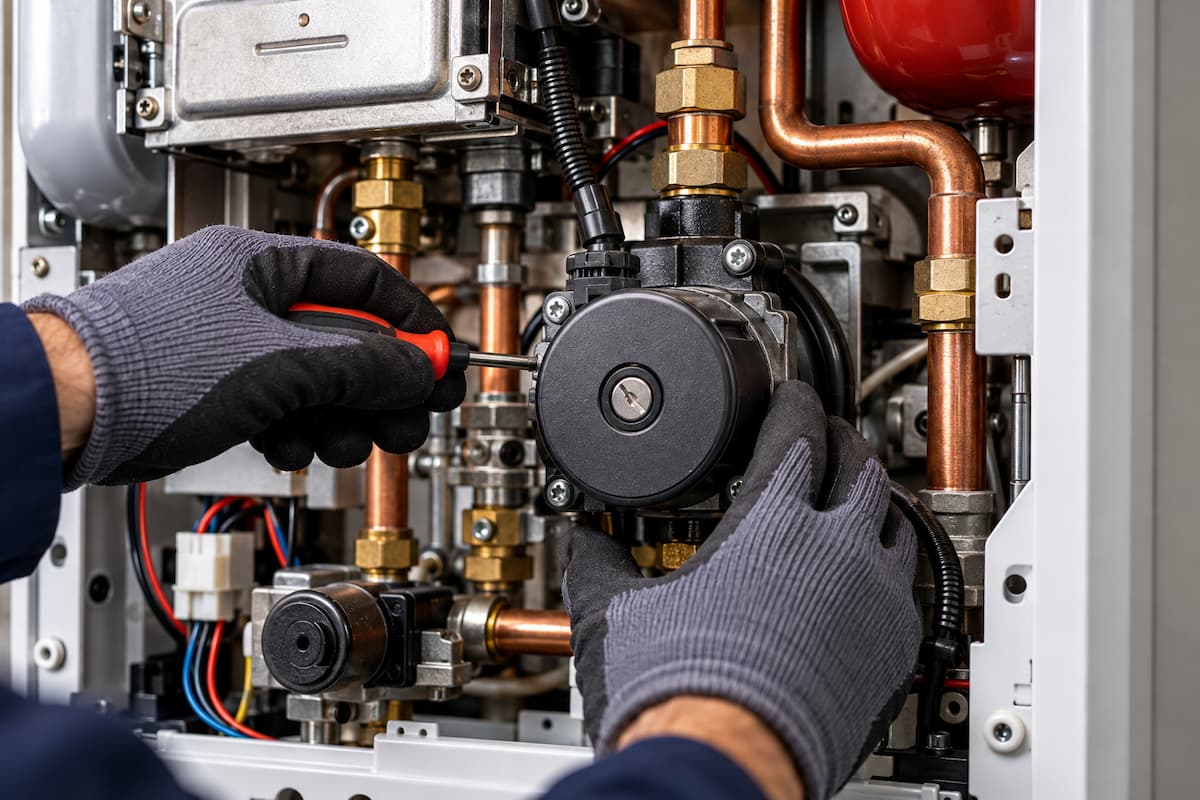
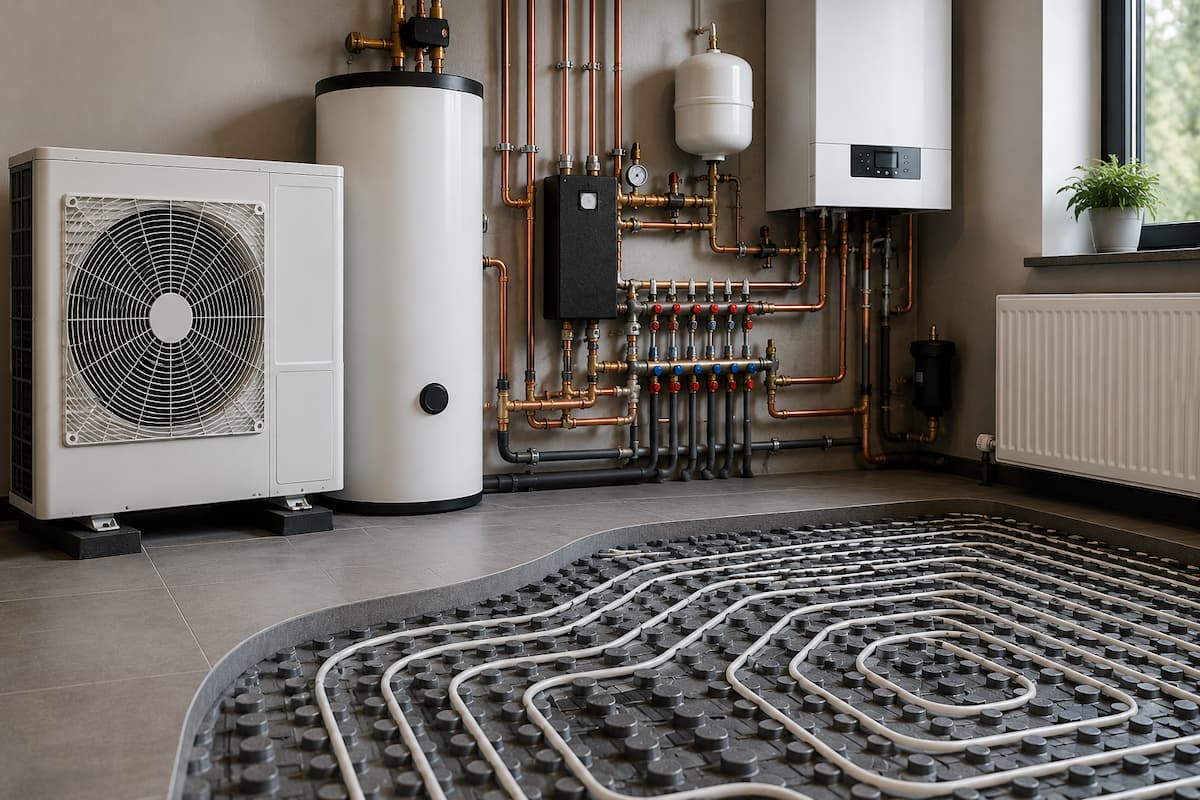
Low temperature heating systems are now central to modern renewable heating design. As air source heat pumps, ground source heat pumps and other low carbon technologies become more common across the UK, installers need to understand the relationship between heat loss, flow temperature, emitter sizing and system efficiency.
A correctly designed low temperature heating system can provide comfortable heating while reducing energy use. A poorly designed system can lead to cold rooms, high running costs, short cycling and customer complaints.
For renewable installers, low temperature heating is not just a design preference. It is a core part of efficient system performance.
Low Temperature Heating
Traditional gas boiler systems often operate with flow temperatures between 70°C and 80°C. Renewable heating systems work differently.
Heat pumps are most efficient when producing lower temperature water over longer operating periods. Many systems are designed to operate between 35°C and 50°C, depending on the property, heat loss and emitter design.
A low temperature heating system relies on:
- Accurate heat loss calculations
- Correct radiator or underfloor heating design
- Suitable pipework
- Proper system balancing
- Good water quality
- Effective controls
- Realistic customer expectations
The lower the flow temperature, the more efficiently a heat pump can operate.
Flow Temperature Comparison
The table below shows the typical relationship between heating system type and flow temperature.
| System Type | Typical Flow Temperature | Efficiency Impact |
|---|---|---|
| Traditional Gas Boiler | 70°C to 80°C | Suitable for older radiator systems but not ideal for renewable efficiency |
| Condensing Boiler | 55°C to 65°C | Improved efficiency compared with older boiler settings |
| Air Source Heat Pump | 35°C to 50°C | Higher efficiency when paired with correctly sized emitters |
| Ground Source Heat Pump | 35°C to 45°C | Strong efficiency potential with good design |
| Underfloor Heating | 30°C to 45°C | Excellent match for renewable heating systems |
This comparison is important because renewable heating design depends on reducing flow temperature without reducing comfort.
Renewable Heating Efficiency
Heat pump efficiency is closely linked to flow temperature. As flow temperature increases, the heat pump has to work harder. This can reduce seasonal efficiency and increase electrical consumption.
Lower flow temperatures can improve:
- Coefficient of performance
- Seasonal performance
- Running costs
- Compressor lifespan
- System stability
- Occupant comfort
This is why renewable installers must design the entire heating system for lower temperature operation rather than simply replacing a boiler with a heat pump.
Heat Pumps and Low Temperature Operation
Heat pumps do not behave like traditional boilers. A boiler can often deliver high temperature heat quickly, even if the wider system design is not ideal.
Heat pumps perform best when they run steadily for longer periods. This provides more consistent internal temperatures and reduces energy waste.
A well designed low temperature system should provide:
- Stable room temperatures
- Efficient heat distribution
- Reduced cycling
- Good comfort levels
- Lower operating costs
Installers should explain this operating difference to customers before installation. This helps avoid confusion once the system is in use.
Heat Loss Calculations
Heat loss calculations are essential for low temperature heating design.
A room by room heat loss calculation identifies the amount of heat each room needs during colder weather. This figure allows the installer to size radiators, underfloor heating circuits and heat pumps correctly.
For example, if a living room has a heat loss of 2kW, the emitter in that room must be able to deliver at least 2kW at the chosen flow temperature.
If the emitter cannot provide that output, the room may not reach the desired temperature.
Low temperature design depends on accurate heat loss data. Guesswork can quickly lead to poor performance.
Radiator Sizing
Radiators produce less heat at lower flow temperatures. This is one of the most important concepts for installers moving from boiler work into renewable heating.
A radiator that performed well with a boiler at 75°C may not provide enough heat when connected to a heat pump running at 45°C.
Installers may need to:
- Fit larger radiators
- Add extra radiators
- Use double panel radiators
- Use fan-assisted emitters
- Improve insulation
- Consider underfloor heating
Larger heat emitters allow lower flow temperatures while still meeting the room heat demand.
Delta T and Radiator Performance
Delta T is the temperature difference used to describe radiator output performance.
Many traditional radiator outputs are based on Delta T 50. This assumes a much higher average radiator temperature compared with the room temperature.
Low temperature heat pump systems often operate at much lower Delta T values. As Delta T reduces, radiator output also reduces.
| Design Condition | Typical Use | Radiator Output Impact |
|---|---|---|
| Delta T 50 | Traditional boiler radiator sizing | Higher stated radiator output |
| Delta T 40 | Lower temperature boiler settings | Reduced radiator output |
| Delta T 30 | Some heat pump designs | Significantly reduced output |
| Delta T 20 | Very low temperature systems | Much larger emitters usually required |
This is why installers must not rely on old radiator assumptions when designing renewable systems.
Underfloor Heating Systems
Underfloor heating is suited to renewable heating because it uses a large surface area to distribute heat.
This allows it to operate effectively at lower water temperatures.
Benefits include:
- Even heat distribution
- Lower flow temperatures
- Improved heat pump efficiency
- Reduced reliance on radiators
- Comfortable room conditions
Underfloor heating is often used in new builds, extensions, major refurbishments and some retrofit projects.
Installers must still calculate heat loss and floor output carefully. Floor coverings, pipe spacing, insulation and manifold design all affect performance.
Flow Temperature Optimisation
Flow temperature optimisation means setting the system to use the lowest practical flow temperature while still maintaining comfort.
If the flow temperature is too high, the heat pump may run less efficiently. If it is too low, rooms may not reach target temperatures.
Good optimisation considers:
- Heat loss calculations
- Radiator output
- Underfloor heating output
- Weather compensation settings
- Customer comfort
- Building insulation
The goal is not simply to use the lowest number possible. The goal is to achieve the best balance between comfort and efficiency.
Weather Compensation Controls
Weather compensation helps a heating system adjust flow temperature based on outdoor temperature.
During milder weather, the system can run at a lower flow temperature. During colder weather, the flow temperature increases to meet greater heat demand.
| Outdoor Temperature | Example Flow Temperature | System Behaviour |
|---|---|---|
| 12°C | 35°C | Low heat demand during mild conditions |
| 7°C | 40°C | Moderate heat demand |
| 0°C | 50°C | Higher heat demand during colder weather |
| Minus 3°C | 52°C to 55°C | Peak heating demand depending on system design |
A correct weather compensation setup can improve efficiency, comfort and system stability.
Pipe Sizing For Renewable Systems
Pipe sizing is an important consideration in low temperature heating systems.
Because renewable systems often work with smaller temperature differences, they may require higher flow rates to move the required heat around the property.
Undersized pipework can lead to:
- Poor heat transfer
- Flow rate problems
- Noise
- Increased pump effort
- Uneven heating
- Reduced efficiency
This is particularly relevant in retrofit properties with older pipework or microbore systems.
Installers should assess the existing pipework carefully before confirming the heat pump’s suitability. In some cases, pipework upgrades may be needed.
System Balancing
System balancing is essential in low temperature heating systems.
A poorly balanced system can send too much flow to some rooms and not enough to others. This can cause uneven temperatures and poor comfort.
Balancing helps ensure each emitter receives the correct flow rate.
Installers should check:
- Radiator valve settings
- Flow and return temperatures
- Pump speed
- Circuit resistance
- Manifold settings
- Differential temperatures
A balanced system supports better comfort, lower running costs and improved heat pump performance.
Commissioning Low Temperature Systems
Commissioning is critical to the performance of renewable heating systems.
Low temperature systems require careful checks to confirm that the design works in practice.
Commissioning tasks include:
- Verifying flow rates
- Checking flow and return temperatures
- Removing air from the system
- Setting pump speeds
- Checking filters and strainers
- Confirming weather compensation settings
- Balancing radiators and underfloor heating circuits
- Checking control operation
- Recording commissioning data
Commissioning should not be rushed. Small errors during setup can have a major impact on performance.
Water Treatment Requirements
Clean system water is essential for renewable heating systems.
Sludge, debris and poor water quality can restrict flow and reduce heat transfer. This can affect efficiency and increase wear on pumps, valves and heat exchangers.
Installers should consider:
- System flushing
- Magnetic filtration
- Chemical inhibitors
- Water quality testing
- Ongoing maintenance
- Manufacturer requirements
Water treatment is especially important in retrofit installations using existing radiators and pipework.
Property Insulation Standards
Low temperature heating performance is closely linked to insulation.
A poorly insulated property loses heat faster, which means the heating system must work harder to maintain comfort.
Installers should assess:
- Loft insulation
- Wall construction
- Floor insulation
- Window performance
- Draughts
- Air leakage
- Door condition
Improving insulation can reduce heat demand and allow lower flow temperatures. This helps the renewable system operate more efficiently.
Retrofit Challenges
Many renewable heating projects involve existing homes rather than new builds.
Older UK properties can present several challenges, including:
- Small radiators
- Poor insulation
- High heat loss
- Limited pipework capacity
- Solid walls
- Suspended timber floors
- Customer expectations based on boiler performance
A detailed property survey helps identify these issues before installation begins.
Retrofit Example
Consider a three bedroom semi detached property built in the 1970s.
The property has:
- Existing small radiators
- Some microbore pipework
- Loft insulation below current recommended levels
- Double glazing
- A gas boiler operating at high flow temperature
- No underfloor heating
A heat-loss survey shows that several rooms require more heat output than the existing radiators can provide at lower flow temperatures.
The installer may recommend:
- Larger radiators in key rooms
- Pipework upgrades in selected areas
- Loft insulation improvement
- Weather compensation controls
- Careful system balancing
- Customer guidance on steady heating operation
This type of assessment helps prevent poor performance after installation.
Customer Expectations
Customer education is an important part of renewable heating installation.
Many customers are used to boiler systems that heat up quickly at high temperatures. Low temperature systems usually operate more consistently.
Installers should explain:
- The system may run for longer periods
- Rooms should maintain steadier temperatures
- Radiators may feel cooler to the touch
- Controls should not be used like an old boiler timer
- Sudden temperature changes may take longer
- Correct settings improve efficiency
Clear communication reduces complaints and helps customers get the best from their renewable heating system.
Typical Installer Mistakes
Several mistakes commonly affect the performance of low temperature heating.
These include:
- Ignoring room by room heat loss calculations
- Reusing old radiator assumptions
- Setting flow temperatures too high
- Failing to balance the system
- Overlooking pipe sizing
- Poor weather compensation setup
- Inadequate commissioning
- Weak customer handover
- Poor water treatment
Low temperature heating requires a whole system approach. The heat pump, emitters, pipework, controls and building fabric all need to work together.
Software and Design Tools
Most renewable installers now use digital software to support low temperature heating design.
These tools can assist with:
- Heat loss calculations
- Radiator sizing
- Underfloor heating layouts
- Flow temperature calculations
- Pipe sizing
- System reporting
- Customer quotations
- Compliance documentation
Software can improve accuracy and consistency, but it does not replace the installer’s judgment. The quality of the result depends on the quality of the entered survey data.
Renewable Training In Staffordshire
As renewable heating technologies continue to grow across the UK, installers must develop the skills required to design and commission efficient low temperature heating systems.
At Staffordshire Training Services, renewable training courses are designed to help engineers build practical skills alongside technical understanding.
Training combines industry-relevant guidance with hands-on learning to support installers as they progress into renewable heating technologies.
For engineers entering the low-carbon sector, understanding low-temperature heating systems is now one of the most valuable skills in modern heating design.
Related Articles
- Renewable Training Pathway For Heating Engineers
- Heat Loss Calculations for Renewable System Installers
- Weather Compensation and Heat Pump Efficiency
- Heat Pump System Design Basics for Gas Engineers Transitioning to Renewables
- Advantages of Training in Both Heat Pump Technologies
Prefer an AI Summary?