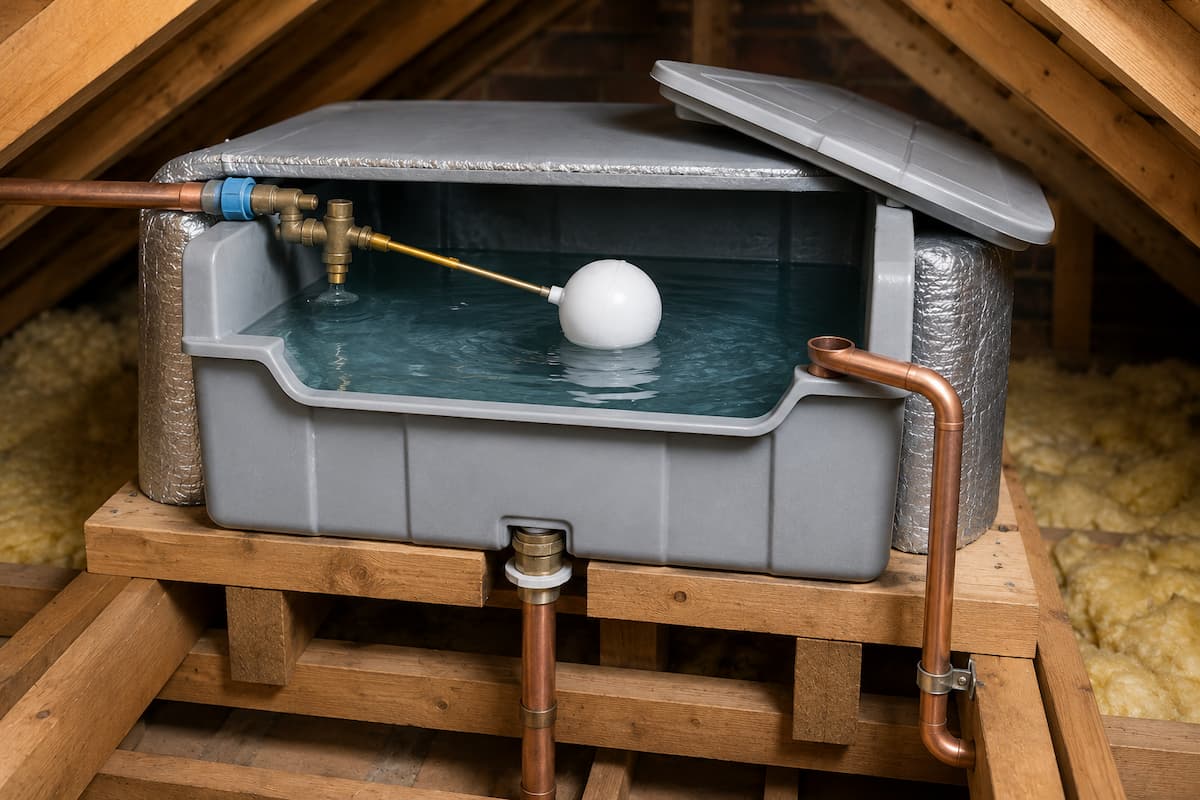
Cold water storage cisterns have been a fundamental part of domestic plumbing systems throughout the UK for many decades. Although modern mains pressure systems and combination boilers have reduced the use of cold water storage cisterns in new installations, thousands of properties still rely on them to supply water throughout the home.
For plumbers, understanding the design, operation, and maintenance of cold water storage cisterns remains an essential skill. These systems are regularly encountered during maintenance work, property renovations, fault diagnosis and plumbing upgrades.
This guide explains the purpose of cold water storage cisterns, their components, installation requirements, maintenance considerations and their continuing role within traditional plumbing systems.
The Purpose Of A Cold Water Storage Cistern
A cold water storage cistern stores water on a property for later use.
Its primary functions are to:
- Supply cold water to selected outlets
- Feed hot water cylinders
- Provide a reserve water supply
- Reduce demand on the incoming mains supply
- Support gravity fed plumbing systems
The cistern acts as a local water store, ensuring water remains available even when household demand temporarily exceeds the incoming mains supply.
The Development Of Storage Cistern Systems
Historically, water pressure and supply reliability varied significantly throughout the UK.
Many homes experienced inconsistent mains pressure, temporary supply interruptions and limited distribution infrastructure.
Cold water storage cisterns provided a practical solution by storing water within the property and using gravity to distribute it where required.
Although modern mains-pressure systems have become increasingly common, many existing properties continue to operate successfully with this traditional approach. Plumbers therefore need a good understanding of both traditional and modern water supply systems.
Types Of Cold Water Storage Cisterns
Several types of cistern have been used throughout the history of plumbing installations.
Plastic Cisterns
Plastic cisterns are the most widely used type found today.
Advantages include:
- Lightweight construction
- Corrosion resistance
- Ease of installation
- Long service life
Modern plastic cisterns are manufactured from durable materials suitable for potable water storage.
Galvanised Steel Cisterns
Older properties may still contain galvanised steel cisterns.
These were widely installed before plastic alternatives became common. Over time, corrosion often becomes an issue, leading many of these cisterns to be replaced during refurbishment work.
Sectional Cisterns
Larger buildings may use sectional cisterns assembled from multiple panels.
These systems are often found within:
- Commercial buildings
- Schools
- Hospitals
- Apartment blocks
Sectional construction allows large water storage capacities to be installed where access is restricted.
Components Of A Cold Water Storage Cistern
A typical domestic cistern contains several important components:
- Ball valve
- Float arm
- Warning pipe
- Lid
- Insulation
- Distribution outlet
- Service valve
- Inlet pipework
Each component contributes to safe and reliable operation.
Cold Water Storage Cistern Component Diagram
Understanding the position and purpose of each component is much easier when viewed as a complete system.
Lid
┌─────────────────────────────┐
│ │
│ Water Surface │
│~~~~~~~~~~~~~~~~~~~~~~~~~~~~~│
│ │
│ Float │
│ O──── Float Arm ────┐ │
│ │ │
│ Ball Valve │ ← Incoming Mains Supply
│ │
│ │
│ │
│ │
└─────────────┬───────────────┘
│
│ Distribution Outlet
▼
Warning Pipe →
The ball valve controls the water level, the warning pipe provides overflow protection, and the outlet connection distributes water throughout the plumbing system.
Ball Valves and Float Operation
The ball valve controls the water level inside the cistern.
As water leaves the cistern, the water level falls and the float drops. This opens the valve, allowing fresh mains water to enter.
As the water level rises, the float rises with it until the valve closes and the water supply stops.
A correctly adjusted ball valve maintains a consistent operating water level.
Potential faults include:
- Worn valve washers
- Debris inside the valve
- Damaged float arms
- Incorrect adjustment
Many overflowing cisterns can be traced back to issues with the float valve assembly.
Types Of Float Valve
Plumbers may encounter several different float valve designs.
These include:
- Portsmouth valves
- Part 1 float valves
- Part 2 float valves
- Equilibrium valves
Older installations often contain Portsmouth valves, whilst newer systems increasingly utilise equilibrium valves that operate more quietly and efficiently.
Understanding these designs helps engineers identify replacement components and diagnose faults more effectively.
Water Storage and Distribution
The cistern stores water before distributing it throughout the property.
Depending on the system design, the cistern may supply:
- Bathroom cold taps
- Toilets
- Hot water cylinders
- Gravity fed showers
The height difference between the cistern and the outlet creates water pressure.
The greater the vertical distance, the greater the available pressure.
This principle is known as head pressure.
Water Distribution Through The Property
The cold water storage cistern forms part of a wider plumbing system.
Incoming Mains Supply
│
▼
Cold Water Storage Cistern
│
├──── Bathroom Cold Taps
│
├──── WC Cisterns
│
└──── Hot Water Cylinder
│
▼
Hot Water Outlets
This arrangement is commonly found within traditional indirect water supply systems.
Head Pressure In Gravity Systems
Cold water storage cisterns rely on gravity rather than mains pressure.
The available pressure depends entirely on the height of stored water above the outlet.
As a general guide, ten metres of vertical height provides approximately one bar of pressure.
Most domestic cisterns are located in loft spaces and therefore operate at relatively low pressures compared with modern mains-pressure systems.
This helps explain why traditional gravity-fed showers often deliver lower flow rates than mains pressure alternatives.
Potable and Non Potable Water
One of the most important concepts for plumbers to understand is the distinction between potable and non-potable water.
Potable water is safe for drinking, food preparation and personal consumption.
Within traditional indirect systems:
- Kitchen cold taps are normally supplied directly from the mains
- Bathroom cold taps may be supplied from stored water
- Hot water cylinders are often supplied from the cistern
Historically, this arrangement reduced the risk of consuming stored water that may have become contaminated.
Understanding potable water distribution is essential for compliance with Water Regulations.
Water Regulations Requirements
Cold water storage cisterns must comply with current Water Regulations.
Requirements typically include:
These regulations are designed to protect water quality and public health.
Air Gaps and Backflow Protection
Water Regulations require suitable measures to prevent contamination of the drinking water supply.
One of the most important methods of protection is using an air gap.
An air gap creates a physical separation between the water outlet and the stored water below, preventing contaminated water from flowing back into the mains supply.
Plumbers must also understand:
- Backflow prevention
- Fluid categories
- Contamination risks
- Approved fittings
These principles form an important part of Water Regulations compliance.
Cistern Covers and Water Protection
Every cold water storage cistern should have a correctly fitted cover.
The cover helps prevent:
- Dust ingress
- Insect entry
- Vermin contamination
- Debris accumulation
Missing or damaged covers are regularly identified during inspections and can significantly affect water quality.
Insulation Requirements
Insulation performs several important functions.
It helps:
- Prevent freezing
- Reduce heat loss
- Protect stored water
- Improve system reliability
Modern installations typically include insulation around the sides and top of the cistern.
The base is often left uninsulated so that heat from the occupied space below can help reduce the risk of freezing.
Cistern Location Requirements
The location of a cold water storage cistern plays an important role in system reliability and maintenance.
Important considerations include:
- Frost protection
- Safe access
- Adequate lighting
- Sufficient working space
- Structural support
- Future maintenance access
Poor positioning can increase maintenance difficulties and raise the risk of freezing.
Supporting A Cold Water Storage Cistern
A full cistern can be extremely heavy.
Support platforms should:
- Be level
- Be structurally sound
- Distribute weight evenly
- Prevent distortion of the cistern
Poor support can result in deformation, leaks and structural damage.
Structural Loading Considerations
One area often overlooked by new plumbers is the weight imposed by stored water.
Water weighs approximately one kilogram per litre.
| Cistern Capacity | Approximate Water Weight |
|---|---|
| 50 Litres | 50 kg |
| 100 Litres | 100 kg |
| 230 Litres | 230 kg |
| 450 Litres | 450 kg |
When the weight of the cistern itself is added, the total load becomes significant. Proper support is therefore essential.
Cistern Sizing Principles
The size of a cold-water storage cistern depends on the demands placed on the plumbing system.
Factors influencing cistern size include:
- Number of occupants
- Number of bathrooms
- Hot water cylinder size
- Anticipated water demand
- Available space
A correctly sized cistern helps ensure reliable system performance whilst avoiding unnecessary storage capacity.
Warning Pipes and Overflow Protection
Every cold water storage cistern includes a warning pipe.
Its purpose is to provide a visible indication that the water level has risen above its intended operating position.
Water discharging from a warning pipe may indicate:
- Float valve issues
- Incorrect float adjustment
- Debris preventing valve closure
- Excessive incoming pressure
Any discharge from the warning pipe should be investigated promptly.
Legionella Considerations
Stored water systems require careful management to minimise health risks.
Legionella bacteria can multiply under certain conditions, particularly when water becomes stagnant.
Risk reduction measures include:
- Maintaining clean cisterns
- Correctly fitted lids
- Appropriate insulation
- Avoiding dead legs
- Regular inspection
Basic Legionella awareness forms an important part of modern plumbing practice.
Installation Issues
Several installation defects are regularly identified during inspections.
These include:
- Missing cistern covers
- Inadequate insulation
- Poor support structures
- Incorrect warning pipe installation
- Incorrect float valve settings
- Inadequate maintenance access
Attention to detail during installation helps prevent future problems.
Faults Found In Cold Water Storage Cisterns
Over time, a variety of issues can develop.
These may include:
- Overflowing cisterns
- Noisy filling
- Reduced flow rates
- Airlocks
- Contamination
- Frozen pipework
- Float valve failures
Early diagnosis helps minimise disruption and repair costs.
Airlocks In Gravity Systems
Airlocks occur when trapped air prevents water from flowing correctly through pipework.
Symptoms may include:
- Spluttering taps
- Reduced flow
- Intermittent water supply
- Complete loss of flow
Indirect systems are generally more susceptible to airlocks because they rely on gravity rather than mains pressure.
Water Quality Assessment
Visual inspection of stored water provides valuable information about system condition.
Signs that may indicate poor water quality include:
- Sediment accumulation
- Discolouration
- Debris within the cistern
- Insect activity
- Biological growth
- Deteriorating components
Any signs of contamination should be investigated and corrected promptly.
Identifying Cistern Problems On Site
Apprentice plumbers should develop a systematic approach to inspection.
Useful checks include:
- Condition of the lid
- Condition of insulation
- Water level
- Float valve operation
- Presence of overflow discharge
- Evidence of contamination
- Structural support condition
These observations often reveal the root cause of many faults.
Servicing and Inspection Checklist
Routine inspection is one of the most effective ways to maintain a cold water storage cistern.
When inspecting a cistern, plumbers should assess:
- Lid condition
- Insulation condition
- Water cleanliness
- Float valve operation
- Water level
- Warning pipe operation
- Structural support
- Signs of leakage
- Pipework condition
- Evidence of contamination
A structured inspection process helps identify developing issues before they become significant problems.
Modern Alternatives To Cold Water Storage Cisterns
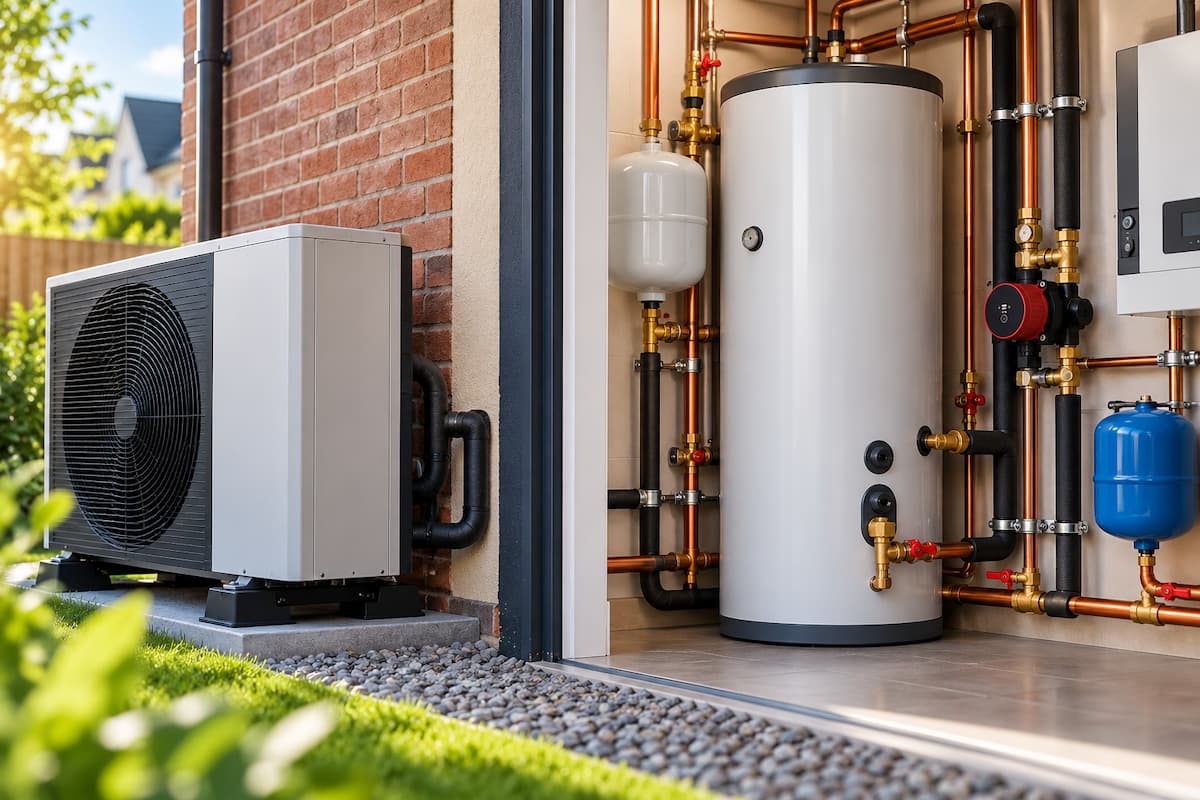
Modern plumbing systems increasingly eliminate the need for stored cold water.
Common alternatives include:
These systems often provide improved pressure, better shower performance, reduced maintenance requirements and lower contamination risks.
Cold Water Storage Cisterns In Modern Plumbing
Although modern plumbing increasingly favours mains-pressure systems, cold-water storage cisterns remain an important part of the UK’s housing stock.
Plumbers regularly encounter these systems during:
- Maintenance work
- Property renovations
- System upgrades
- Fault diagnosis
- Water Regulation inspections
A thorough understanding of cistern design, operation and maintenance remains a valuable skill for every plumbing engineer.
Plumbing Training at Staffordshire Training Services
At Staffordshire Training Services, we provide accredited plumbing training designed to build both technical understanding and practical confidence.
Our plumbing courses help learners develop a strong understanding of plumbing systems, Water Regulations, fault diagnosis and installation techniques through a combination of classroom learning and practical workshop experience.
By understanding topics such as cold water storage cisterns, apprentices and trainee plumbers build the foundations needed to progress into more advanced plumbing, heating, gas, and renewable energy qualifications.
Related Articles
- Introduction To Plumbing Systems
- Direct and Indirect Water Supply Systems
- Understanding Water Pressure In Plumbing Systems
- Water Regulations and Why They Matter for Plumbers
- Hot Water Cylinders Explained
Prefer an AI Summary?
Share with someone you know!

Accredited training and assessment centre providing professional training for plumbing, gas, & renewable energy sectors
Got any questions
01785 562146
Training courses
Quick Links
© Staffordshire Training Services 2023 - 2026 TukTuk Creative Marketing • All Rights Reserved.