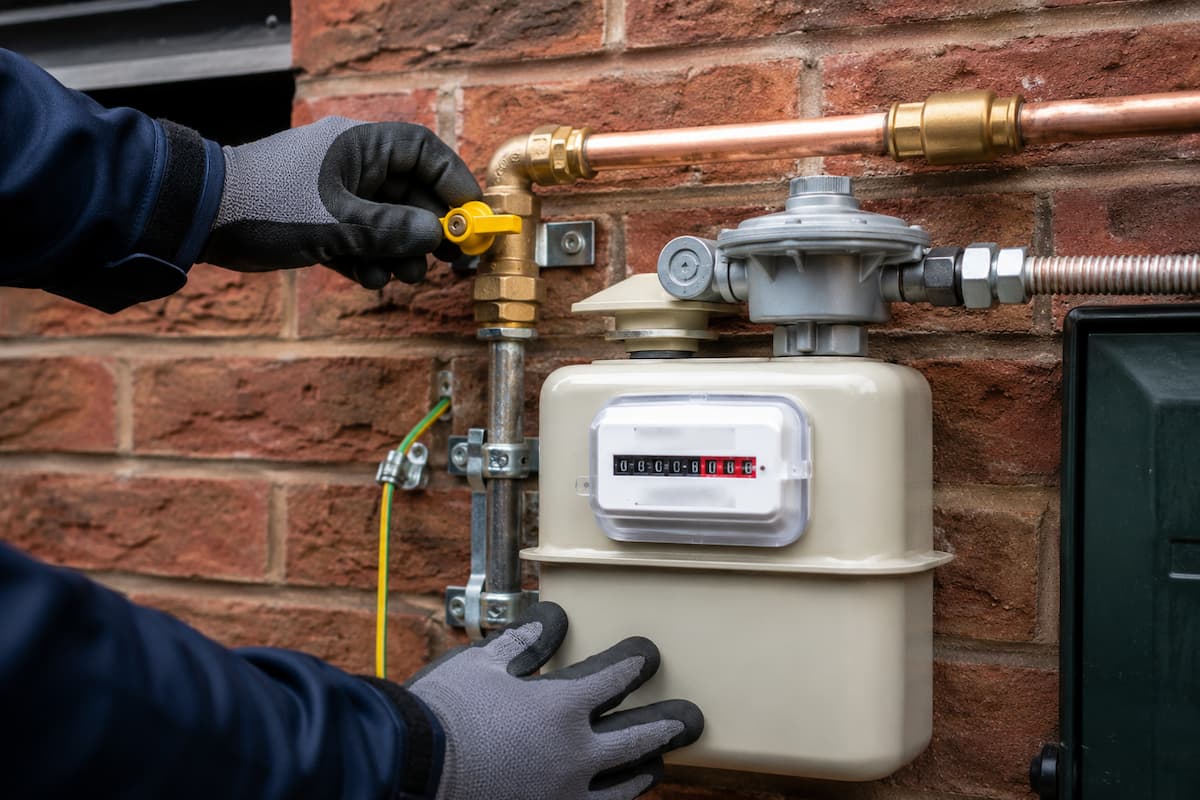
The Emergency Control Valve, commonly referred to as the ECV, is one of the most important safety components within any gas installation. It provides the primary means of isolating the gas supply and plays a critical role during commissioning, servicing, maintenance, gas-escape investigations, and emergencies.
Despite its importance, the ECV is often taken for granted. Engineers interact with it on almost every visit. Yet, defects involving Emergency Control Valves and meter installations remain a regular feature of Gas Safe inspections, unsafe situations reports and ACS assessments.
A defective ECV can prevent safe isolation of a gas installation. Poorly installed meter pipework can contribute to gas escapes. Damaged meter fittings may compromise the integrity of the entire installation.
For these reasons, every gas engineer must understand not only how to operate and test an Emergency Control Valve correctly, but also how to assess the overall safety and condition of the associated meter installation.
We examine ECV testing procedures, meter installation safety requirements, common defects, legal responsibilities and fault-finding techniques that help engineers maintain safe and compliant gas installations.
The Emergency Control Valve
The Emergency Control Valve is the primary isolation device located at the point where gas enters a property.
Its purpose is simple but essential.
In the event of a gas escape, appliance defect, pipework failure or emergency, the ECV allows the gas supply to be isolated quickly and safely.
The valve forms a critical part of the gas safety chain and is often the first component assessed when engineers arrive at an installation.
Primary Functions Of The ECV
The Emergency Control Valve performs several important functions:
- emergency isolation of the gas supply
- facilitating tightness testing procedures
- allowing maintenance and repair work
- supporting safe appliance installation
- enabling gas escape response procedures
Without a functioning ECV, many engineering activities cannot be completed safely.
During Gas Emergencies
When a gas escape occurs, rapid isolation of the gas supply is often the most effective way of reducing risk.
The ability to locate and operate the ECV quickly can significantly reduce the likelihood of:
- gas accumulation
- fire
- explosion
- injury to occupants
- property damage
For this reason, engineers should always ensure the ECV remains accessible and functional.
The ECV and Gas Soundness Testing
The Emergency Control Valve plays a direct role in gas soundness procedures.
Before tightness testing can begin, engineers often carry out:
- visual inspection
- safe to touch checks
- let by testing
- gas soundness testing
Each of these procedures relies on the ECV operating correctly.
A defective valve can compromise testing accuracy and safety.
Legal Responsibilities and Industry Standards
A range of industry standards and legal requirements govern the installation, maintenance and use of Emergency Control Valves.
Engineers must understand both their own responsibilities and those of other parties involved with the gas supply chain.
Relevant legislation includes:
- Gas Safety (Installation and Use) Regulations
- Health and Safety at Work Act
- Gas Act provisions relating to gas conveyance and safety
- applicable industry standards and procedures
Compliance with these requirements helps ensure installations remain safe for occupants and engineers alike.
IGEM Standards
Gas soundness testing and related procedures are currently guided by standards including:
- IGEM/UP/1B Edition 4
- Gas Industry Unsafe Situations Procedure
- Gas Safe Register Technical Bulletins
Engineers should ensure they are working to current editions of all relevant documents.
Duty Of Care
Every gas engineer has a duty of care to:
- identify unsafe conditions
- carry out appropriate testing
- classify unsafe situations correctly
- communicate risks to customers
- take action where danger exists
This responsibility extends beyond the appliance itself and includes the wider installation, the meter position, and the Emergency Control Valve.
Meter Installations
The meter installation acts as the interface between the incoming gas supply and the consumer’s installation.
Although engineers frequently focus on appliances and internal pipework, defects at the meter installation can have significant safety implications.
A domestic meter installation may include:
- Emergency Control Valve
- inlet pipework
- meter regulator
- gas meter
- outlet connections
- meter unions
- installation pipework
Each component contributes to the safe delivery of gas throughout the property.
Meter Locations
Meters may be located:
- externally in meter boxes
- internally within meter cupboards
- within service risers
- within communal meter rooms
Location influences:
- accessibility
- ventilation
- emergency isolation
- maintenance requirements
Poor meter positioning can create operational and safety challenges.
Accessibility Requirements
The meter installation should be accessible for:
- operation of the ECV
- meter reading
- maintenance
- emergency response
- testing procedures
Restricted access can significantly affect an engineer’s ability to work safely.
Visual Inspection Requirements
Before any testing is undertaken, a thorough visual inspection should be completed.
Visual inspection often identifies defects before instruments or testing equipment are required.
The ECV should be inspected for:
- physical damage
- corrosion
- signs of leakage
- missing handles
- evidence of tampering
The valve should appear capable of safe operation.
Meter Installation Condition
Engineers should assess:
- overall installation integrity
- condition of unions and fittings
- adequacy of pipe supports
- evidence of corrosion
- signs of mechanical damage
Even minor defects can indicate broader issues that require investigation.
Accessibility Assessment
Engineers should confirm:
- the ECV can be operated safely
- meter readings can be obtained
- testing equipment can be connected
- emergency isolation remains practical
Accessibility problems should not be overlooked.
Signs Of Previous Gas Escapes
Visual indicators may include:
- staining around joints
- corrosion patterns
- damaged fittings
- previous repair evidence
- customer reports of gas odours
These observations can help direct subsequent testing.
Emergency Control Valve Operation
Correct operation of the Emergency Control Valve is essential for both safety and testing accuracy.
Although operation appears straightforward, engineers should adopt a consistent and methodical approach.
The Valve Position
The valve should clearly indicate:
- open position
- closed position
Engineers should verify the valve position before commencing testing or maintenance activities.
Closing The Valve
When closing the ECV:
- operate the valve smoothly
- avoid excessive force
- verify complete closure
- monitor for signs of mechanical defects
Difficulty operating the valve may indicate internal wear or damage.
Opening The Valve
When reopening the ECV:
- operate gradually where appropriate
- observe installation behaviour
- verify the valve reaches the fully open position
- monitor pressure stabilisation
The valve should operate positively and predictably.
Operational Defects
Defects may include:
- stiff operation
- seized mechanisms
- damaged handles
- worn spindle assemblies
- passing valves
These faults can compromise testing procedures and emergency isolation capability.
Let By Testing Procedures
One of the most important checks performed on an Emergency Control Valve is the let by test.
This assessment helps determine whether gas is passing through the valve when it should be fully closed.
Let By Testing
The objective of the test is to confirm that the ECV effectively isolates the gas supply.
A passing valve can introduce gas into the installation during testing, affecting the accuracy of the results.
More importantly, it may prevent effective isolation during an emergency.
Typical Let By Test Sequence
Although engineers should always follow current procedures, the general process includes:
1. Confirm the installation is safe to test.
2. Close the Emergency Control Valve.
3. Establish test conditions.
4. Observe pressure behaviour.
5. Assess whether gas is passing the valve.
6. Record findings.
7. Determine whether further action is required.
Interpreting Results
Possible outcomes include:
- no evidence of let by
- slight pressure rise requiring assessment
- clear evidence of gas passing the valve
Where a valve is found to be passing, further investigation and appropriate action will be necessary.
Testing Matters
A defective ECV can affect:
- gas soundness testing
- tightness testing
- fault finding investigations
- emergency response procedures
For this reason, let by testing remains a fundamental part of safe gas engineering practice.
Let By Testing Quick Reference Table
| Stage | Engineer Action | Purpose |
|---|---|---|
| Visual Inspection | Inspect ECV and meter installation | Identify obvious defects |
| Valve Closure | Close ECV fully | Isolate gas supply |
| Test Setup | Establish test conditions | Prepare for assessment |
| Observation Period | Monitor pressure behaviour | Identify gas passing the valve |
| Result Assessment | Interpret pressure changes | Determine valve condition |
| Documentation | Record findings | Provide evidence of testing |
| Corrective Action | Follow appropriate procedures if defects are found | Maintain safety and compliance |
Meter Installation Defects
Meter installations are exposed to environmental conditions, accidental damage, ageing components and poor workmanship. As a result, defects can develop that affect both safety and operational performance.
Many of these issues are identified during routine inspections, servicing visits or tightness testing procedures.
Loose Meter Unions
Meter unions are among the most common sources of gas leaks.
Contributing factors may include:
- vibration
- poor installation
- disturbed fittings
- ageing seals
Even minor leakage at a union can result in a failed tightness test and may require immediate corrective action.
Damaged Emergency Control Valves
Physical damage to the ECV can affect its ability to operate safely.
Examples include:
- broken handles
- seized mechanisms
- damaged spindles
- evidence of tampering
A defective ECV may compromise emergency isolation procedures.
Corrosion
Corrosion remains a significant concern, particularly on older installations.
Areas commonly affected include:
- meter pipework
- exposed fittings
- steel pipe sections
- external installations
Corrosion should always be assessed carefully, as it may indicate deterioration that affects gas tightness.
Inadequate Pipework Support
Meter outlet pipework should be adequately supported to prevent movement and mechanical stress.
Poor support can contribute to:
- joint movement
- pipework distortion
- fitting failure
- premature wear
Accessibility Issues
The ECV and meter should remain accessible for:
- emergency isolation
- testing
- maintenance
- meter reading
Restricted access can significantly increase risks during emergencies.
ECV and Meter Defects Reference Table
| Defect | Typical Cause | Potential Risk | Engineer Action |
|---|---|---|---|
| Passing ECV | Internal valve wear | Isolation failure | Report and follow current procedures |
| Damaged Handle | Impact damage | Inability to operate valve | Assess safety implications |
| Loose Meter Union | Movement or poor installation | Gas escape | Investigate and repair |
| Corroded Pipework | Environmental deterioration | Pipe failure | Assess condition and replace if necessary |
| Poor Pipe Support | Installation defect | Joint stress and leakage | Improve support arrangements |
| Restricted Access | Poor installation location | Emergency isolation difficulties | Assess compliance and safety implications |
Emergency Control Valve Fault Diagnosis
A properly functioning ECV should operate smoothly, provide effective isolation and remain accessible throughout its service life.
When defects are suspected, engineers should adopt a structured diagnostic approach.
Passing Emergency Control Valves
A passing ECV allows gas to flow through the valve even when the valve is closed.
This can affect:
- let by testing
- tightness testing
- emergency isolation procedures
Passing valves are often identified during formal testing procedures rather than visual inspection.
Stiff Valve Operation
Valves that require excessive force to operate may indicate:
- internal wear
- corrosion
- contamination
- mechanical damage
Stiff operation should never be ignored, particularly where emergency isolation may be required.
Damaged Handles
Damaged handles can significantly reduce the effectiveness of the ECV.
Issues may include:
- cracked handles
- broken operating mechanisms
- missing components
The engineer should assess whether safe operation remains possible.
Spindle Defects
Wear or damage to the spindle assembly can affect:
- valve operation
- sealing performance
- reliability during emergencies
Where spindle defects are suspected, further investigation may be required.
Inaccessible Valves
An Emergency Control Valve that cannot be accessed easily may be just as problematic as a defective valve.
Engineers should consider:
- access restrictions
- obstructions
- meter position
- emergency usability
Accessibility forms part of the overall safety assessment.
Meter Installation Safety Checks
A thorough meter inspection should form part of every gas safety visit.
The objective is not simply to identify gas escapes but to assess the overall condition and safety of the installation.
Structural Condition
Engineers should inspect:
- meter brackets
- support arrangements
- mounting points
- surrounding structures
Instability can place stress on connected pipework and fittings.
Pipework Integrity
Pipework should be assessed for:
- corrosion
- damage
- signs of movement
- poor workmanship
- previous repairs
Any concerns should be investigated further.
Ventilation Requirements
Where meters are installed within enclosures, engineers should verify that ventilation arrangements remain suitable.
Blocked vents can create safety concerns and should be addressed appropriately.
Evidence Of Gas Escapes
Signs that may indicate historical or current leakage include:
- staining
- corrosion patterns
- customer reports of odours
- detector readings
- failed tightness tests
These indicators should be considered collectively rather than in isolation.
Gas Transporter and Engineer Responsibilities
One area that is frequently confusing is the division of responsibilities among the various parties involved in the gas supply chain.
Understanding these boundaries helps engineers determine appropriate actions when defects are identified.
Gas Transporter Responsibilities
The Gas Transporter is generally responsible for:
- gas mains
- service pipes
- certain upstream supply infrastructure
Defects affecting these assets may need to be reported through the appropriate channels.
Meter Asset Responsibilities
Meter ownership and maintenance may fall under the responsibility of a Meter Asset Manager or related organisation depending on the installation.
Engineers should understand local arrangements and reporting procedures.
Gas Supplier Responsibilities
The gas supplier has responsibilities relating to the provision of gas services and associated customer arrangements.
Gas Engineer Responsibilities
The engineer remains responsible for:
- identifying defects
- carrying out appropriate testing
- classifying unsafe situations
- communicating risks
- documenting findings
- taking action where danger exists
A clear understanding of these responsibilities helps ensure that defects are managed appropriately.
Meter Emergency Actions and Gas Escape Response
The primary purpose of the Emergency Control Valve is to isolate the gas supply during an emergency rapidly.
Every engineer should be confident in applying emergency response procedures when a gas escape is suspected.
Immediate Actions Following a Suspected Gas Escape
Where a gas escape is suspected, priorities include:
- protecting occupants
- eliminating sources of danger
- preventing gas accumulation
- establishing safe conditions
Safety should always take precedence over diagnostic activities.
Using The ECV To Make The Installation Safe
In many situations, closing the Emergency Control Valve will be the first action taken.
Isolation can:
- stop the flow of gas
- reduce the risk of accumulation
- allow further investigation
- protect occupants and property
The engineer should ensure the valve has been operated correctly.
Ventilation Procedures
Where gas may be present within a building:
- increase ventilation where safe to do so
- open doors and windows
- assist dispersal of gas
Ventilation helps reduce the risk of dangerous concentrations developing.
Eliminating Ignition Sources
Potential ignition sources should be avoided.
Examples include:
- naked flames
- smoking materials
- electrical switching
- sparks
- portable electrical equipment
Preventing ignition remains a fundamental objective during gas escape incidents.
Customer Safety Advice
Customers should be informed clearly regarding:
- the nature of the situation
- actions being taken
- restrictions on installation use
- further steps required
Clear communication is essential during emergencies.
Contacting Emergency Services
Where required, engineers should follow current industry procedures for notifying the Gas Emergency Service and other relevant parties.
Prompt reporting helps ensure appropriate action is taken.
Situations Where Work Should Not Continue
Certain conditions may make continued work inappropriate until the situation has been made safe.
Examples may include:
- significant gas accumulation
- uncontrolled gas escapes
- structural damage
- Immediately Dangerous situations
In such cases, safety must remain the overriding priority.
It looks like Part 3 was already provided above. For convenience, here is the complete Part 3 section again as a standalone continuation of the article.
Unsafe Situations and Meter Defects
Defects involving Emergency Control Valves and meter installations should never be assessed in isolation. Engineers must consider the wider safety implications and determine whether the defect falls within the scope of the Gas Industry Unsafe Situations Procedure.
While some defects may require monitoring or corrective work, others may present immediate risks to occupants and property.
Not To Current Standards
Certain meter installation issues may be classified as Not To Current Standards where they do not present an immediate danger but fail to meet modern requirements.
Examples may include:
- older installation arrangements
- outdated meter positions
- historical installation practices no longer used today
- minor accessibility concerns
Although corrective action may not be immediately necessary, engineers should advise customers accordingly.
At Risk Situations
An installation may be classified as At Risk where a recognised fault exists that could become dangerous if an additional fault or event occurs.
Examples may include:
- deteriorating pipework showing signs of corrosion
- damaged meter enclosures
- restricted access affecting emergency isolation
- ECV defects that reduce reliability
In these situations, engineers should follow the requirements of the Unsafe Situations Procedure and clearly communicate risks to the responsible person.
Immediately Dangerous Situations
Immediately Dangerous classifications apply where there is a current danger to life or property.
Examples may include:
- significant gas escapes
- damaged ECVs that cannot isolate a dangerous installation
- severely corroded pipework with evidence of active leakage
- uncontrolled gas release
Immediate action is required to remove the danger.
Documentation Requirements
Where unsafe situations are identified, records should include:
- defect description
- classification assigned
- actions taken
- customer communication
- recommendations issued
- any refusal to allow remedial work
Accurate documentation protects both engineers and customers.
ACS Assessment Expectations
Emergency Control Valves and meter installations are regularly featured in ACS assessments and reassessments because they are a fundamental part of gas safety procedures.
Candidates are expected to demonstrate both practical competence and technical understanding.
Engineers should be confident explaining:
- the purpose of the ECV
- let by testing procedures
- meter installation safety requirements
- unsafe situations classifications
- legal responsibilities
- emergency isolation procedures
Assessors often focus on understanding rather than memorisation alone.
Assessment Expectations
Candidates may be required to:
- identify ECV defects
- carry out let by testing
- interpret test results
- assess meter installations
- classify unsafe situations
- explain appropriate corrective actions
The ability to justify decisions is often as important as reaching the correct conclusion.
Candidate Errors
Frequent assessment issues include:
- misunderstanding let by testing outcomes
- failing to recognise accessibility concerns
- incorrect unsafe situations classifications
- poor understanding of responsibility boundaries
- weak documentation practices
Understanding the reasoning behind procedures helps reduce these errors.
Meter Installation Inspection Checklist
| Inspection Item | Complete |
|---|---|
| ECV accessible | ☐ |
| ECV operates correctly | ☐ |
| No visible ECV damage | ☐ |
| Let by test completed | ☐ |
| Meter unions inspected | ☐ |
| Pipework adequately supported | ☐ |
| No visible corrosion | ☐ |
| Ventilation satisfactory | ☐ |
| No evidence of gas escapes | ☐ |
| Unsafe situations assessed | ☐ |
| Documentation completed | ☐ |
Gas Training Courses In Staffordshire
Emergency Control Valve testing and meter installation safety are core elements of competent gas engineering practice. They underpin many of the procedures that engineers carry out daily, including gas soundness testing, servicing, appliance installation, fault-finding and emergency response.
As standards, procedures and industry guidance continue to evolve, maintaining current knowledge becomes increasingly important.
Engineers preparing for ACS gas meter installation or looking to strengthen their understanding of gas safety procedures should maintain competence in:
- let by testing procedures
- gas soundness testing
- unsafe situations classifications
- meter installation inspections
- emergency isolation procedures
- gas safety legislation
At Staffordshire Training Services, engineers can access ACS assessments, reassessments and gas training designed to support competence across all areas of domestic gas work.
Maintaining Safe Meter Installations
The Emergency Control Valve may appear to be a simple component, yet its role within a gas installation is fundamental. It provides the primary means of isolation, supports gas soundness testing procedures and plays a critical role during emergencies.
Likewise, the meter installation forms the gateway between the gas supply and the consumer’s installation. Defects affecting this area can compromise safety, disrupt testing procedures and increase risks to occupants.
Effective inspection and testing require engineers to understand:
- ECV operation
- let by testing procedures
- meter installation requirements
- unsafe situations classifications
- emergency response actions
- responsibility boundaries within the gas supply chain
A structured approach to inspection, testing and documentation helps engineers identify defects efficiently while maintaining compliance with current industry standards.
Ultimately, maintaining safe meter installations is about more than passing inspections or completing testing procedures. It is about ensuring that the first line of defence within a gas installation remains reliable, accessible, and capable of protecting people and property whenever needed.
Related Articles
- Gas Pressure, Flow, Tightness Testing and Purging Explained
- Gas Tightness Testing Fault-Finding Techniques
- Gas Pressure Testing and Appliance Performance For Engineers
- Combustion Analysis and Flue Gas Testing For Gas Engineers
- Building Regulations Part L for Gas Engineers
Prefer an AI Summary?
Share with someone you know!

Accredited training and assessment centre providing professional training for plumbing, gas, & renewable energy sectors
Got any questions
01785 562146
Training courses
Quick Links
© Staffordshire Training Services 2023 - 2026 TukTuk Creative Marketing • All Rights Reserved.