Plumbing systems are essential to every modern property across the UK. They provide clean water for drinking and washing, distribute heating throughout buildings and remove wastewater safely. Without effective plumbing systems, homes, schools, hospitals and workplaces would not function safely or efficiently.
For apprentices and new entrants to the trade, understanding the fundamentals of plumbing systems is one of the most important steps in developing technical knowledge and practical confidence. Before learning installation techniques or fault diagnosis, plumbers must first understand how systems operate, how components work together and the regulations that govern safe installation.
This introduces the main plumbing systems used in domestic properties and explains the principles every plumber should understand.
Plumbing Systems
Plumbing systems are designed to perform several critical functions within a building.
These include:
- Delivering clean drinking water
- Providing hot water safely
- Removing wastewater hygienically
- Supporting central heating systems
- Protecting water quality
- Managing pressure safely
- Improving energy efficiency
- Preventing contamination
Every plumbing system must operate safely, efficiently and in compliance with UK regulations.
Basic Domestic Plumbing System Layout
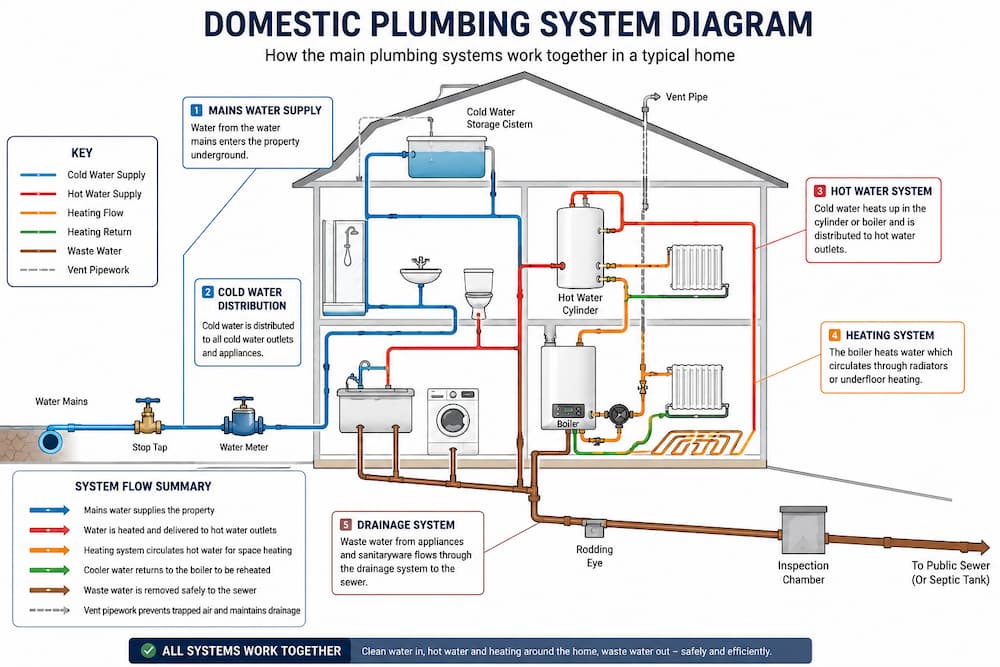
Most domestic properties contain several plumbing systems working together simultaneously.
A typical home may include:
- Incoming mains water supply
- Internal cold water distribution
- Hot water generation
- Central heating pipework
- Wastewater drainage
- Ventilation pipework
- Heating controls and valves
The mains water supply enters the property through the underground service pipe and passes through the internal stop tap. From here, water is distributed throughout the building to taps, toilets, appliances and heating systems.
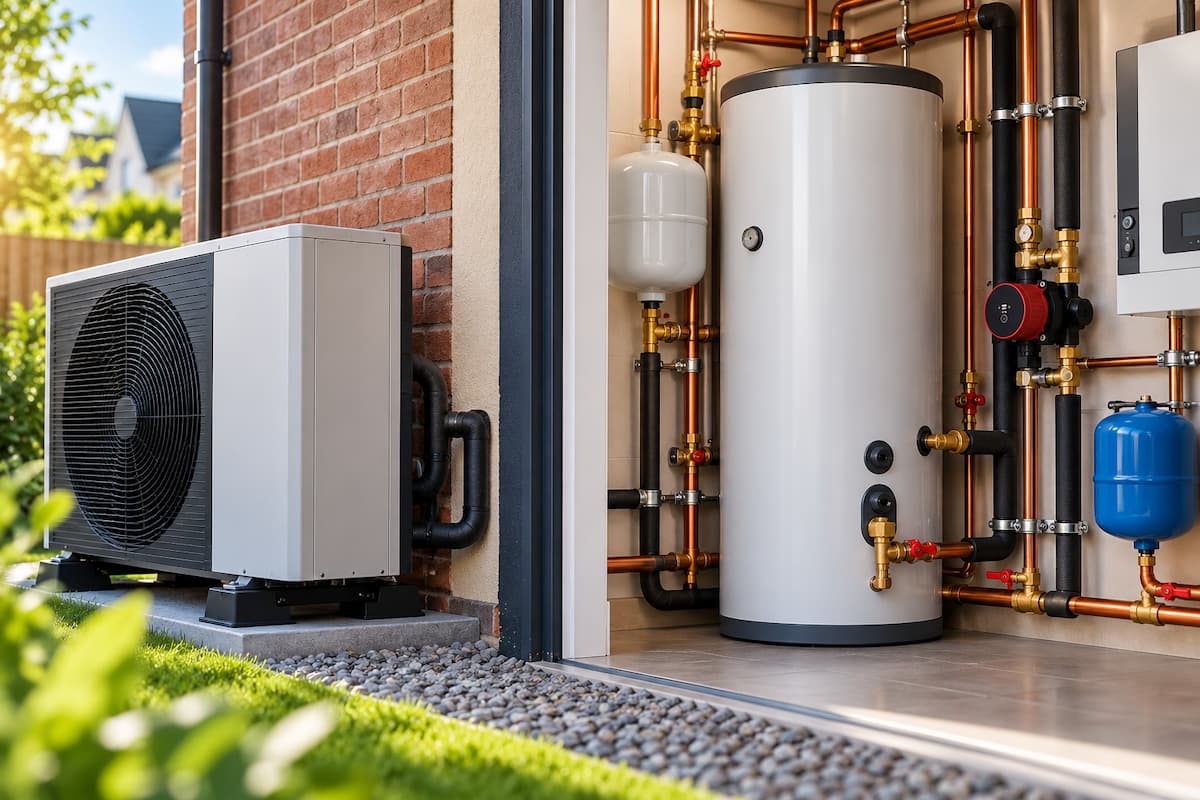
Hot water is generated either by a boiler, a hot water cylinder or a renewable heating system. Wastewater then flows through drainage pipework into the underground sewer system.
Understanding this overall layout helps apprentices visualise how plumbing systems connect inside a property.
Main Types Of Plumbing Systems
The plumbing industry uses several system designs depending on the property’s age, size, and requirements.
The main system categories include:
- Cold water supply systems
- Hot water systems
- Drainage systems
- Central heating systems
- Renewable plumbing systems
Each system has different installation methods, operating principles and maintenance requirements.
Cold Water Supply Systems
Cold water systems deliver potable water throughout the building for drinking, cleaning and general use.
There are two primary system types found in UK properties.
Direct Systems
A direct system supplies cold water directly from the mains supply to all outlets.
These systems are common in modern properties because they provide:
- Fresh potable water
- Improved pressure
- Simpler installation
- Reduced contamination risk
Direct systems commonly supply:
- Kitchen taps
- Bathroom taps
- Toilets
- Outside taps
- Appliances
Performance depends heavily on the incoming mains pressure and flow rate.
Indirect Systems
An indirect system uses a cold water storage cistern, usually installed in the loft space.
In traditional indirect systems:
- The kitchen tap is mains fed
- Bathroom cold outlets are cistern fed
- The hot water cylinder is supplied from the cistern
These systems remain common in older UK housing stock.
Advantages include:
- Stored emergency water supply
- Reduced demand on the mains
- Simple gravity operation
Disadvantages include:
- Lower outlet pressure
- Increased contamination risk
- Additional maintenance
Hot Water Systems
Hot water systems provide heated water for washing, bathing and cleaning.
Several different system designs are used across the UK.
Vented Hot Water Systems
Traditional vented systems use:
- Cold water storage cistern
- Hot water cylinder
- Open vent pipe
- Gravity fed distribution
The height of the cistern above the outlets generates water pressure.
These systems are common in older properties and are still widely encountered during maintenance work.
Unvented Hot Water Systems
Unvented systems store hot water under mains pressure.
Benefits include:
- Higher water pressure
- Improved shower performance
- Balanced hot and cold supplies
- Faster water delivery
Safety devices are critical because the system operates under pressure.
Safety components include:
- Temperature relief valves
- Pressure relief valves
- Expansion vessels
- Tundish arrangements
Engineers working on unvented systems must hold the relevant qualification in the UK.
Combination Boiler Systems
Combination boilers heat water directly from the mains without storing hot water.
Advantages include:
- Space saving installation
- Instant hot water
- Reduced pipework
- Improved efficiency
- No loft cistern required
Combi boilers are now among the most common domestic heating systems across the UK.
Drainage Systems
Drainage systems remove foul water and wastewater safely from the property.
Correct drainage installation protects public health and prevents unpleasant odours or blockages.
Drainage systems are divided into:
- Above ground drainage
- Below ground drainage
Above Ground Drainage
Above ground drainage carries wastewater from sanitary appliances to the underground drainage system.
This includes pipework connected to:
- Toilets
- Sinks
- Baths
- Showers
- Basins
- Washing machines
Important installation principles include:
- Correct pipe gradients
- Proper ventilation
- Suitable trap installation
- Prevention of foul odours
Below Ground Drainage
The underground drainage system transports wastewater away from the property.
Components include:
- Underground drainage pipework
- Inspection chambers
- Manholes
- Gullies
- Soil stacks
Incorrect installation can lead to:
- Blockages
- Structural movement
- Leaks
- Drain collapse
- Odour problems
Central Heating Systems
Central heating systems distribute heat throughout a property by circulating hot water through pipework.
Most UK systems are wet heating systems.
Core components include:
- Boiler
- Pump
- Radiators
- Pipework
- Controls
- Expansion vessel
- Valves
Open Vented Heating Systems
Traditional open vented systems use a feed and expansion cistern.
Advantages include:
- Simpler pressure management
- Traditional installation design
Disadvantages include:
- Corrosion risk
- Air ingress
- Reduced efficiency
Sealed Heating Systems
Modern heating systems are usually sealed and pressurised.
Benefits include:
- Reduced corrosion
- Better pressure control
- Cleaner installation
- Improved efficiency
These systems use expansion vessels instead of loft cisterns.
Renewable Plumbing Systems
The plumbing industry is rapidly moving towards low-carbon and renewable technologies.
Modern plumbers increasingly require knowledge of renewable heating alongside traditional plumbing skills.
Important renewable systems include:
- Air source heat pumps
- Ground source heat pumps
- Solar thermal systems
- Underfloor heating
- Rainwater harvesting
- Greywater recycling
- Hybrid heating systems
Renewable systems operate at lower temperatures and require accurate system design for efficient performance.
Water Pressure Principles
Water pressure is one of the most important concepts in plumbing.
Pressure affects:
- Water flow rates
- Shower performance
- Heating circulation
- Appliance operation
- System efficiency
Plumbers must understand:
- Static pressure
- Dynamic pressure
- Flow rates
- Head pressure
- Pressure loss
Poor pressure management can damage components and reduce system performance.
Plumbing Measurements and Units
Plumbers regularly work with technical measurements and calculations.
Common units include:
| Measurement | Typical Unit | Used For |
|---|---|---|
| Water Pressure | Bar | Checking mains pressure, system pressure and appliance requirements. |
| Pipe Size | Millimetres | Selecting suitable pipework for water, heating and drainage systems. |
| Flow Rate | Litres Per Minute | Measuring water delivery from taps, showers and appliances. |
| Heating Output | Kilowatts | Sizing boilers, radiators, heat pumps and heating circuits. |
| Temperature | Degrees Celsius | Checking hot water, heating flow temperature and safe storage temperatures. |
Understanding these units is essential for installation, testing, and fault-finding.
Pipe Sizing Basics
Correct pipe sizing is essential for efficient plumbing operation.
Pipework that is too small may cause:
- Restricted flow
- Pressure loss
- Noisy systems
- Poor appliance performance
Pipework that is oversized may cause:
- Increased installation costs
- Reduced efficiency
- Slower hot water delivery
Plumbers must consider:
- Flow demand
- Pipe length
- Pressure loss
- Number of outlets
- Appliance requirements
For example, a property with multiple bathrooms requires greater flow capacity than a small flat with one bathroom.
As systems become larger and more complex, accurate pipe sizing becomes increasingly important.
Pipework Materials
Several different pipe materials are used across the plumbing industry.
Copper Pipe
Copper remains popular because it is:
- Durable
- Heat resistant
- Reliable
- Suitable for heating systems
Copper can be joined using:
- Soldered fittings
- Compression fittings
- Press fit fittings
Plastic Pipe
Plastic pipework is widely used in modern installations.
Advantages include:
- Faster installation
- Corrosion resistance
- Flexibility
- Reduced material costs
Plastic systems are commonly used for:
- Domestic water systems
- Heating systems
- Underfloor heating
Correct clipping and support remain essential.
Water Regulations Overview
Water Regulations are designed to protect drinking water supplies from contamination and misuse.
Plumbers must understand:
- Backflow prevention
- Cross connection risks
- Fluid categories
- Safe installation methods
- Approved materials and fittings
WRAS approved products are commonly used to demonstrate compliance.
Failure to comply with Water Regulations can lead to contamination risks and enforcement action.
Plumbing Drawings and Schematics
Plumbers regularly work from technical drawings and schematics.
These may include:
- Pipework layouts
- Heating schematics
- Drainage plans
- System diagrams
- Manufacturer instructions
Understanding drawings helps engineers:
- Plan installations
- Identify components
- Follow pipe routes
- Understand flow direction
- Locate valves and controls
Reading drawings is an important skill developed through training and site experience.
Plumbing Tools and Equipment
Plumbers use a wide range of tools during installation and maintenance work.
Common tools include:
- Pipe cutters
- Pipe slices
- Adjustable spanners
- Blow torches
- Press fit tools
- Deburring tools
- Spirit levels
- Pipe freezing equipment
- Drain cleaning equipment
- Pressure testing equipment
Modern plumbing increasingly relies on specialist testing and commissioning equipment.
Tool maintenance and calibration awareness are also important for accurate testing.
Plumbing Safety Considerations
Health and safety remain a major part of plumbing work.
Important safety considerations include:
- Water contamination prevention
- Scald protection
- Legionella awareness
- Pressure safety devices
- Electrical hazards
- Safe isolation procedures
- Manual handling
- Hot works safety
Plumbers must follow safe working practices on every installation.
Typical Plumbing Problems
Understanding plumbing systems helps engineers diagnose faults more effectively.
Typical plumbing problems include:
- Low water pressure
- Leaking pipework
- Airlocks
- Blocked drains
- Frozen pipes
- Heating imbalance
- Noisy systems
- Poor hot water performance
Low Hot Water Pressure
Possible causes include:
- Blocked tap aerators
- Faulty pressure reducing valves
- Partially closed stop taps
- Scaled heat exchangers
Noisy Pipework
Possible causes include:
- Loose pipe clips
- Air within the system
- Excessive pump speed
- Pressure fluctuations
Blocked Waste Pipes
Common causes include:
- Grease build up
- Hair accumulation
- Poor pipe gradients
- Foreign objects
Fault-finding becomes easier once engineers understand the overall system operation.
Environmental and Sustainability Considerations
Modern plumbing now focuses heavily on energy efficiency and environmental performance.
Important developments include:
- Water saving fittings
- Low temperature heating
- Smart controls
- Heat pump systems
- Reduced water waste
- Improved insulation
- Rainwater harvesting
- Greywater reuse
As the UK moves towards lower-carbon heating, plumbers will play an increasingly important role in sustainable building services.
Site Professionalism
Technical ability is only one part of becoming a successful plumber.
Professional behaviour on site is equally important.
Good working practices include:
- Respecting customer property
- Keeping work areas clean
- Communicating clearly
- Arriving on time
- Wearing appropriate PPE
- Protecting flooring and surfaces
- Completing work safely
These habits help build customer trust and improve professional reputation.
Plumbing Skills Required On Site
Plumbers require both technical knowledge and practical skill.
Essential abilities include:
- Pipe installation
- Measuring and marking out
- Jointing techniques
- System testing
- Reading technical drawings
- Commissioning systems
- Fault diagnosis
- Problem solving
As technology evolves, engineers increasingly require knowledge of controls, efficiency and renewable heating systems.
Plumbing Qualifications and Career Progression
Most plumbing careers begin with Level 2 and Level 3 qualifications combined with practical site experience.
Progression routes may include:
- Plumbing apprenticeship
- NVQ Level 2 Plumbing
- NVQ Level 3 Plumbing
- Domestic heating qualifications
- Unvented hot water certification
- Gas qualifications
- Renewable energy training
- Commercial plumbing specialisms
Many engineers later progress into:
- Renewable heating
- Commercial installation
- Project management
- Self employment
- Specialist commissioning
- Training and assessment
The plumbing industry continues to offer strong career opportunities across the UK.
Plumbing Training at Staffordshire Training Services
At Staffordshire Training Services, we provide accredited plumbing, gas and renewable energy training designed to help learners develop both technical knowledge and practical confidence.
Our plumbing training supports new entrants, apprentices and experienced engineers looking to expand their qualifications into areas such as heating, gas and renewable technologies.
Through practical workshop learning and industry-relevant technical training, learners gain the skills required to progress confidently within the plumbing and heating industry.
Related Articles
- Training for a Career as a Plumber
- Understanding Water Pressure In Plumbing Systems
- Plumbing Skills That Are Always In Demand
- Plumbing Qualifications: Diploma Vs NVQ Routes
- Direct and Indirect Water Supply Systems
Prefer an AI Summary?