Vented hot water systems have been used in domestic plumbing throughout the UK for many decades. Although modern homes increasingly use unvented cylinders and combination boilers, traditional vented systems remain installed in thousands of properties and continue to be an important part of a plumber’s everyday work.
For apprentice plumbers, understanding vented hot water systems provides the foundation for learning about domestic hot water production, gravity-fed plumbing, central heating and fault diagnosis. Many of the principles used in modern heating systems have evolved from these traditional installations, making them an essential topic for anyone entering the plumbing and heating industry.
This guide explains how vented hot water systems operate, the components that make up the system, their advantages and limitations, installation principles and the practical knowledge plumbers need when working on existing installations.
The Purpose Of A Vented Hot Water System
A vented hot water system stores heated domestic water and distributes it throughout the property using gravity.
Unlike a combination boiler, which heats water as it is required, a vented system stores a supply of hot water inside a cylinder. Hence, it is immediately available when taps or showers are used.
The system is designed to:
- Store domestic hot water
- Supply multiple outlets
- Accommodate the expansion of heated water safely
- Operate without internal pressure
- Provide a reliable hot water supply
Although the system operates using relatively simple principles, every component plays an important role in maintaining safe and efficient operation.
The Development Of Vented Hot Water Systems
Traditional vented systems became widely used long before reliable mains pressure supplies were available.
Older properties often experienced:
- Variable water pressure
- Temporary interruptions to the mains supply
- Limited public water infrastructure
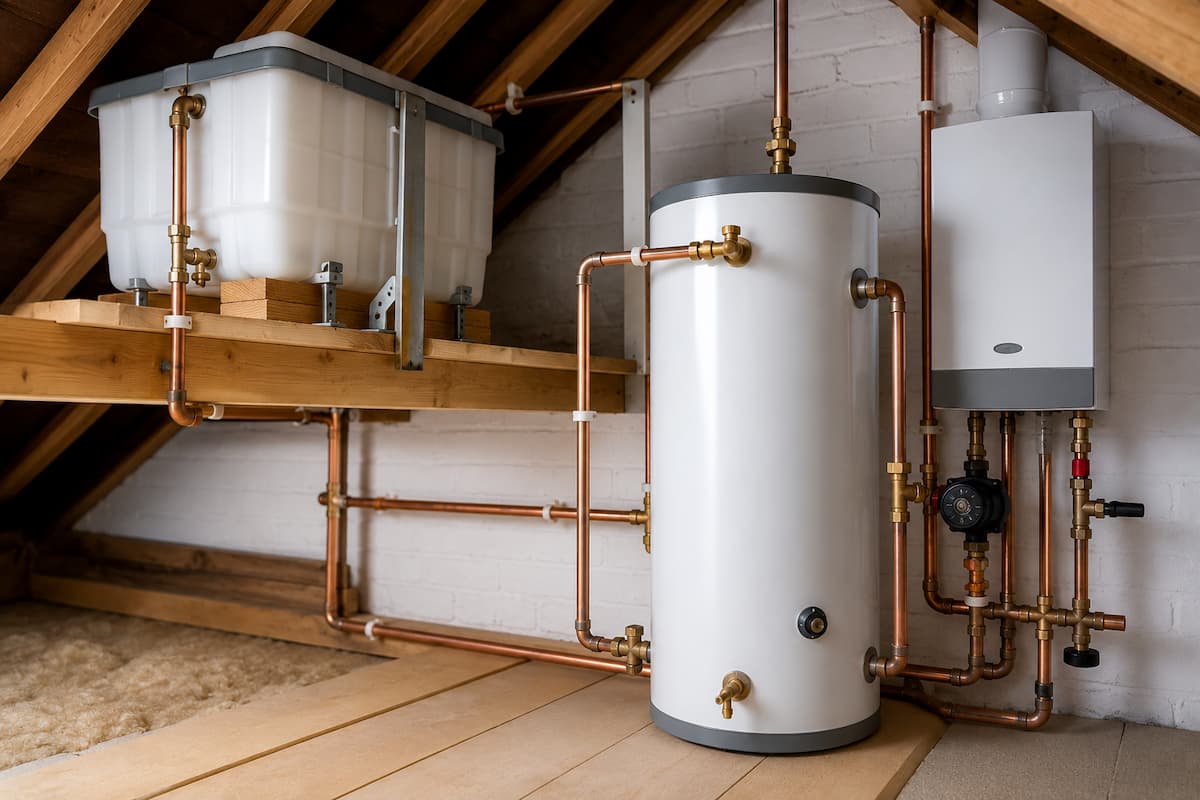
To overcome these issues, cold water was stored in a loft-mounted cistern before supplying a hot water cylinder located elsewhere in the property.
As the water heated, it expanded naturally through an open vent pipe, allowing the system to operate safely without becoming pressurised.
Many homes built during the twentieth century still operate using this proven design.
The Basic Principles Of Operation
A vented hot water system relies on gravity rather than mains pressure.
Cold water stored within the cold water storage cistern feeds the bottom of the hot water cylinder.
The water inside the cylinder is heated by:
- A gas boiler
- An oil boiler
- A solid fuel appliance
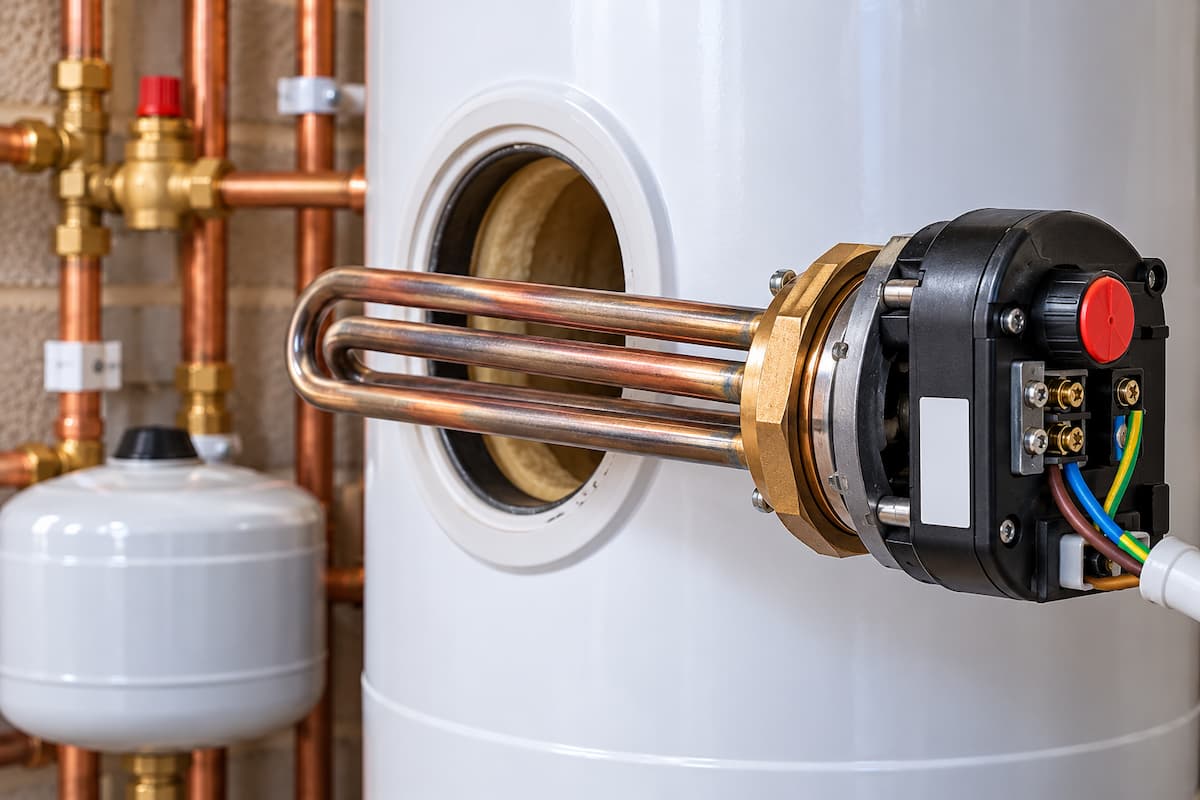
- An immersion heater
- A renewable heat source in some installations
As the stored water heats up, it naturally rises towards the top of the cylinder where it is drawn off through the hot water outlet.
Whenever hot water leaves the cylinder, fresh cold water enters through the cold feed connection to replace it.
This simple cycle continues throughout normal operation.
How A Vented Hot Water System Works
The entire system works together as one integrated plumbing installation.
The sequence is:
1. Mains water fills the cold water storage cistern.
2. The cistern supplies the hot water cylinder.
3. The boiler heats the primary heating circuit.
4. Heat passes through the cylinder coil.
5. Domestic water inside the cylinder heats up.
6. Hot water rises to the top of the cylinder.
7. Hot water flows to taps and showers when required.
8. Cold water replaces the volume removed.
Understanding this sequence helps apprentice plumbers visualise how every component contributes to the overall system.
Typical Vented Hot Water System Diagram
A simple system layout makes the operating principles easier to understand.
Cold Water Storage Cistern
│
Cold Feed │
▼
┌─────────────────┐
│ Hot Water │
Open Vent ─────┤ Cylinder │──────► Hot Water To Property
│ │
│ Heating Coil │
└──────┬──────────┘
│
Boiler Flow & Return
│
Boiler
This arrangement forms the basis of thousands of traditional domestic hot water systems throughout the UK.
The Main Components
Although layouts vary slightly, every vented hot water system contains several key components.
These include:
- Cold water storage cistern
- Hot water cylinder
- Boiler
- Primary heating pipework
- Cold feed pipe
- Open vent pipe
- Hot water distribution pipework
- Circulating pump where fitted
- Motorised valves
- Heating controls
Each component must operate correctly for the system to perform efficiently.
Cold Water Storage Cistern
The cold water storage cistern provides the water supply for the hot water cylinder.
Its responsibilities include:
- Storing cold water
- Feeding the cylinder
- Maintaining water levels
- Providing reserve capacity
- Creating gravity pressure
The cistern must be correctly installed, insulated and protected against contamination in accordance with Water Regulations.
Hot Water Cylinder
The cylinder stores domestic hot water ready for use.
It receives cold water from the storage cistern and transfers heat from the boiler through an internal heating coil.
The hottest water collects near the top of the cylinder due to thermal stratification, allowing the hottest water to reach outlets first.
Cylinder sizing should reflect the anticipated hot water demand within the property.
The Open Vent Pipe
The open vent pipe gives the system its name.
As water heats, it expands.
Within a vented system, this expansion travels safely through the vent pipe and back into the cold water storage cistern.
The vent pipe also:
- Removes trapped air
- Prevents pressure build-up
- Allows natural circulation
- Improves system safety
Without an open vent, dangerous pressure increases could occur during heating.
The Cold Feed Pipe
The cold feed connects the storage cistern to the bottom of the hot water cylinder.
Its functions are to:
- Replace hot water used at outlets
- Maintain cylinder water level
- Supply fresh domestic water
Correct sizing of the cold feed helps maintain reliable system performance.
Primary Heating Circuit
The primary heating circuit transfers heat from the boiler to the hot water cylinder.
Importantly, the water inside the primary circuit never mixes with the domestic hot water.
Instead, heat passes through the walls of the heating coil into the stored water.
This indirect heating method provides efficient heat transfer whilst keeping the two water systems separate.
Thermal Stratification
One of the most important concepts for apprentice plumbers is thermal stratification.
As water heats, it becomes less dense and rises naturally.
This creates temperature layers inside the cylinder.
The hottest water remains near the top.
Cooler water remains towards the bottom until heated.
Thermal stratification allows the cylinder to deliver the hottest available water whilst reheating the lower section efficiently.
Gravity Hot Water Distribution
Unlike mains pressure systems, vented systems distribute hot water using gravity.
The pressure available depends on the vertical distance between the storage cistern and the outlet.
This means:
- Ground floor outlets often receive higher pressure.
- Upper floor showers may have lower flow rates.
- Pipe sizing becomes particularly important.
These characteristics explain why older gravity-fed showers often produce lower pressure than modern mains pressure systems.
Advantages Of Vented Hot Water Systems
Despite their age, vented systems continue to offer several advantages.
These include:
- Simple Operating
The system uses relatively few specialised components, making operation straightforward.
- Proven Reliability
Many systems continue operating successfully after several decades with routine maintenance.
- Lower Installation Costs
Traditional vented systems generally require fewer specialist safety devices than unvented installations.
- Gravity Operation
The system continues operating without relying on mains water pressure for domestic hot water storage.
Limitations Of Vented Systems
Vented systems also have limitations.
These include:
- Lower water pressure
- Requirement for loft storage cisterns
- Larger space requirements
- Increased maintenance
- Greater potential for contamination within stored cold water
These limitations have contributed to the increasing popularity of unvented systems in modern homes.
Water Pressure Characteristics
The available pressure within a vented system depends almost entirely on the height of the cold water storage cistern above the outlet.
Typical gravity pressures are significantly lower than mains pressure systems.
This affects:
- Shower performance
- Bath filling times
- Flow rates
- Simultaneous outlet operation
Understanding these pressure characteristics is essential when diagnosing customer complaints.
Typical Applications
Vented hot water systems remain common in:
- Traditional family homes
- Older properties
- Rural housing
- Properties with conventional boilers
- Homes where gravity-fed plumbing remains in place
Plumbers working throughout the UK will continue to encounter these systems for many years.
Pipework Layout
The pipework within a vented hot water system is designed to allow water to circulate safely whilst maintaining reliable hot water production.
Although layouts vary slightly between properties, the main pipework connections remain consistent.
These include:
- Cold feed pipe
- Open vent pipe
- Primary flow
- Primary return
- Hot water outlet
- Drain cock
- Cold water storage cistern connections
Each connection has a specific purpose and contributes to the safe operation of the system.
Complete Vented Hot Water System Diagram
Understanding the relationship between the various components is much easier when viewed as a complete plumbing system.
Cold Water Storage Cistern
┌───────────────┐
│ │
│ │
└──┬─────────┬──┘
│ │
Open Vent │ │ Cold Feed
│ ▼
│ ┌──────────────┐
│ │ Hot Water │──────► Hot Water To Taps
└──►│ Cylinder │
│ │
│ Heating Coil │
└──────┬───────┘
│
Primary Flow │ Return
│
┌───────────┐
│ Boiler │
└───────────┘
This traditional arrangement remains one of the most widely recognised domestic plumbing systems throughout the UK.
The Feed and Vent Arrangement
The feed and vent arrangement is one of the defining characteristics of a vented hot water system.
The cold feed supplies fresh water from the storage cistern into the bottom of the cylinder.
The open vent pipe rises from the top of the primary circuit before terminating safely above the water level inside the storage cistern.
Together these two pipes allow:
- Safe expansion
- Air removal
- Automatic filling
- Pressure relief
The correct positioning of these connections is essential for reliable operation.
The Open Vent Principle
Water expands as its temperature increases.
Unlike an unvented cylinder, a vented system does not contain pressurised water.
Instead, expanding water rises through the open vent pipe before returning safely to the storage cistern.
This arrangement prevents excessive pressure developing inside the cylinder.
The open vent also provides a route for trapped air to leave the system naturally.
Feed and Expansion Cistern
Some systems include a separate feed and expansion cistern serving the central heating circuit.
Its purpose differs from the domestic cold water storage cistern.
The feed and expansion cistern:
- Supplies the heating circuit
- Replaces small water losses
- Accommodates expansion
- Allows air removal
Apprentice plumbers should recognise that many traditional systems contain both:
- A domestic cold water storage cistern
- A heating feed and expansion cistern
Although similar in appearance, they perform different functions.
Natural Gravity Circulation
Early vented systems often relied on gravity circulation.
As water heated inside the boiler, it naturally became lighter and rose through the primary pipework into the cylinder.
Cooler water then returned to the boiler to be reheated.
This continuous circulation occurred without pumps or electrical controls.
Although largely replaced by pumped systems, gravity circulation introduced many of the principles still used in heating design today.
Pumped Primary Circuits
Most modern vented systems now utilise circulating pumps.
The pump moves heating water continuously between:
- Boiler
- Heating coil
- Primary return
Benefits include:
- Faster cylinder recovery
- Improved efficiency
- Better temperature control
- More even heat transfer
The circulating pump only moves water within the heating circuit.
It does not pump domestic hot water to taps.
Motorised Valves
Motorised valves control the flow of heating water throughout the system.
Depending on the design, these valves direct heated water towards:
- The hot water cylinder
- The central heating system
- Both simultaneously
Typical valve arrangements include:
- Two port valves
- Three port valves
These valves operate automatically in response to heating controls.
Cylinder Thermostats
The cylinder thermostat monitors stored water temperature.
When the desired temperature has been reached, the thermostat signals the controls to stop heating the cylinder.
When the stored water cools, reheating begins automatically.
Correct thermostat operation helps:
- Improve efficiency
- Reduce fuel consumption
- Maintain hot water availability
- Reduce overheating
Most domestic cylinders operate at approximately 60°C.
Heating Programmers and Timers
Heating programmers determine when hot water should be produced.
They allow householders to schedule hot water production around daily routines.
Typical control options include:
- Timed operation
- Continuous operation
- Hot water only
- Heating only
- Heating and hot water together
Modern programmable controls improve energy efficiency whilst maintaining comfort.
Two Port and Three Port Systems
Many apprentice plumbers encounter references to two port and three port valve systems.
Two Port Systems
Separate valves independently control:
- Heating
- Hot water
This arrangement offers excellent control flexibility.
Three Port Systems
A single valve diverts heating water between:
- Cylinder
- Heating circuit
- Both simultaneously
Both arrangements remain widely installed throughout the UK.
Domestic Hot Water Distribution
Once heated, domestic hot water leaves the top of the cylinder and flows towards outlets around the property.
Typical outlets include:
- Kitchen taps
- Bathroom basins
- Baths
- Gravity fed showers
- Utility sinks
The distribution pipework should be designed to minimise heat loss whilst providing adequate flow.
Pipe Insulation
Pipe insulation improves system performance by reducing heat loss.
Insulating hot water pipework helps:
- Maintain water temperature
- Reduce energy consumption
- Improve efficiency
- Reduce reheating time
Particular attention should be given to pipework located within lofts, garages and unheated spaces.
Air Removal
Air naturally enters plumbing systems during filling, draining and maintenance.
Within vented systems, the open vent pipe provides a natural escape route.
Removing trapped air helps:
- Improve circulation
- Reduce noise
- Prevent airlocks
- Improve heating performance
Poor air removal may lead to reduced efficiency and circulation problems.
Pump Over
Pump over occurs when water is forced up the open vent pipe whilst the circulating pump is operating.
Symptoms may include:
- Noise within the storage cistern
- Warm water entering the cistern
- Water movement within the cistern
- Air entering the heating circuit
Possible causes include:
- Incorrect pipework arrangement
- Excessive pump speed
- Partial blockages
- Incorrect feed and vent positioning
Understanding pump over is important when diagnosing older heating systems.
Cold Feed Blockages
The cold feed pipe may occasionally become partially blocked.
Possible causes include:
- Corrosion products
- Sludge
- Debris
- Scale deposits
A restricted cold feed can affect circulation and lead to overheating within the primary circuit.
Prompt investigation helps prevent more serious system issues.
Airlocks
Airlocks remain one of the most frequently encountered issues within vented systems.
Symptoms include:
- No hot water circulation
- Cold radiators
- Gurgling noises
- Reduced flow
- Intermittent heating
Correct venting procedures usually restore normal circulation.
Installation Considerations
Correct installation contributes significantly to reliability.
Important considerations include:
- Correct pipe sizing
- Adequate support
- Suitable insulation
- Correct vent height
- Proper cylinder location
- Service access
- Compliance with Water Regulations
Attention to installation detail reduces future maintenance requirements.
Commissioning Procedures
Before placing a vented hot water system into service, several checks should be completed.
These include:
- Filling the system
- Removing trapped air
- Checking for leaks
- Verifying thermostat operation
- Testing heating controls
- Confirming pump operation
- Checking cylinder heating performance
Commissioning ensures the installation is operating correctly before handover.
Routine Inspection Checklist
When inspecting a vented hot water system, plumbers should assess:
- Cold water storage cistern
- Cylinder condition
- Pipe insulation
- Pump operation
- Motorised valves
- Cylinder thermostat
- Heating controls
- Feed and vent pipework
- Visible leaks
- Water quality
A structured inspection routine allows developing issues to be identified before they affect system performance.
Routine Maintenance
Routine maintenance helps keep vented hot water systems operating efficiently and safely throughout their service life.
Although these systems are relatively simple in design, regular inspections allow developing faults to be identified before they result in expensive repairs or loss of hot water.
Routine maintenance can help:
- Improve efficiency
- Extend component life
- Reduce breakdowns
- Maintain water quality
- Improve heating performance
A systematic approach should always be adopted during servicing.
Servicing The Cold Water Storage Cistern
The cold water storage cistern is one of the first components that should be inspected.
Checks should include:
- Condition of the lid
- Insulation
- Ball valve operation
- Water level
- Water cleanliness
- Warning pipe
- Structural support
Any signs of contamination, deterioration or incorrect operation should be investigated before leaving site.
Inspecting The Hot Water Cylinder
The cylinder should be inspected both externally and operationally.
Areas to assess include:
- Condition of insulation
- Pipework connections
- Signs of leakage
- Corrosion
- Cylinder thermostat
- Immersion heater where fitted
- Drain cock
A properly maintained cylinder can provide reliable service for many years.
Pump Inspection
The circulating pump is responsible for moving heating water through the primary circuit.
During inspection, engineers should assess:
- Pump operation
- Noise levels
- Vibration
- Leakage
- Isolation valves
- Electrical connections
Noisy pumps may indicate trapped air, worn bearings or excessive pump speed.
Motorised Valve Inspection
Motorised valves should move freely between operating positions.
Checks include:
- Valve movement
- Electrical operation
- Actuator condition
- Leakage
- Pipe temperature changes
Faulty valves may prevent the cylinder from heating correctly or restrict circulation to the heating system.
Heating Controls
The heating controls determine when the cylinder receives heat from the boiler.
Inspection should include:
- Programmer settings
- Cylinder thermostat
- Room thermostat
- Wiring centre
- Electrical connections
Correctly functioning controls improve both comfort and energy efficiency.
Water Quality
Water quality affects both domestic hot water and the heating system.
Visual inspection may reveal:
- Sediment
- Discolouration
- Corrosion products
- Sludge
- Biological contamination
Poor water quality may reduce efficiency and contribute to premature component wear.
Typical Customer Complaints
Many service visits begin with a simple description of a symptom rather than a diagnosis.
Typical complaints include:
- No hot water
- Hot water not hot enough
- Hot water runs out quickly
- Poor shower pressure
- Noisy pipework
- Water overflowing into the loft cistern
- Air in the system
Understanding the customer’s observations often provides valuable clues before testing begins.
No Hot Water
If no hot water is available, possible causes include:
- Boiler not operating
- Circulating pump failure
- Motorised valve fault
- Cylinder thermostat fault
- Programmer settings
- Electrical supply issues
Diagnosis should always begin with the simplest checks before investigating individual components.
Hot Water Not Hot Enough
Possible causes include:
- Incorrect thermostat setting
- Boiler temperature too low
- Poor circulation
- Scale within the heating coil
- Heating controls operating incorrectly
- Excessive household demand
Measuring cylinder temperatures helps identify whether the issue relates to heat generation or heat transfer.
Hot Water Runs Out Quickly
A shortage of hot water may indicate:
- Undersized cylinder
- Heavy household demand
- Poor cylinder recovery
- Heating controls switching off too early
- Boiler performance issues
The age and occupancy of the property should always be considered during diagnosis.
Poor Shower Pressure
Gravity-fed systems naturally provide lower pressure than mains pressure installations.
However, particularly poor performance may indicate:
- Airlocks
- Blocked pipework
- Low cistern water level
- Partially closed valves
- Scale accumulation
- Inadequate installation height
Understanding the available head pressure helps determine whether the performance is normal or indicates a fault.
Pump Over
Pump over remains one of the most recognisable faults found within vented systems.
Symptoms include:
- Water movement inside the storage cistern
- Warm water entering the cistern
- Gurgling sounds
- Air repeatedly entering the heating circuit
Possible causes include:
- Incorrect feed and vent arrangement
- Excessive pump speed
- Partial blockage
- Poor pipework design
Resolving pump over often requires careful assessment of the complete primary circuit.
Airlocks
Airlocks can interrupt water circulation within both the heating and domestic plumbing systems.
Typical symptoms include:
- Cold cylinder
- Poor heating performance
- Gurgling noises
- Reduced water flow
- Intermittent operation
Correct venting procedures usually restore normal circulation.
Sludge and Corrosion
Older vented systems may gradually accumulate corrosion products and sludge.
These deposits can:
- Restrict circulation
- Reduce boiler efficiency
- Damage pumps
- Affect motorised valves
- Reduce heat transfer
Maintaining good water quality helps protect the entire heating system.
Frozen Pipework
Cold weather can affect pipework installed within loft spaces.
Pipework most at risk includes:
- Cold feed pipes
- Open vent pipes
- Storage cistern connections
Adequate insulation and frost protection help minimise the risk of freezing.
Fault Finding Methodology
Successful fault diagnosis follows a logical sequence rather than relying on assumptions.
A structured approach includes:
1. Confirm the customer’s complaint.
2. Identify the system layout.
3. Check the boiler.
4. Inspect the circulating pump.
5. Check motorised valves.
6. Verify thermostat operation.
7. Inspect feed and vent pipework.
8. Assess cylinder performance.
9. Confirm the repair.
Working systematically improves efficiency and reduces unnecessary component replacements.
Fault Finding Flowchart
Customer Reports Fault
│
▼
Identify System Layout
│
▼
Check Boiler Operation
│
▼
Inspect Pump
│
▼
Check Motorised Valve
│
▼
Verify Thermostat
│
▼
Inspect Feed And Vent Pipework
│
▼
Assess Cylinder Heating
│
▼
Complete Repair
Following the same diagnostic routine helps plumbers work confidently across different installations.
Vented Versus Unvented Systems
Both system types continue to have a place within domestic plumbing.
| Feature | Vented System | Unvented System |
|---|---|---|
| Water Supply | Cold Water Storage Cistern | Direct Mains Supply |
| Operating Pressure | Gravity Fed | Mains Pressure |
| Loft Storage Cistern | Required | Not Required |
| Safety Principle | Open Vent | Pressure Relief Devices |
| Shower Performance | Lower | Higher |
| Installation Qualification | Standard Plumbing Competence | G3 Qualified Engineer |
Understanding the strengths of both systems allows plumbers to recommend suitable solutions for different properties.
Renewable Heating Compatibility
Traditional vented systems can often be adapted to work with renewable heating technologies.
Examples include:
- Air source heat pumps
- Ground source heat pumps
- Solar thermal systems
However, compatibility depends upon the cylinder design, heating coil size and overall system configuration.
Understanding traditional vented systems provides an excellent foundation before progressing into renewable heating training.
Practical Knowledge For Apprentice Plumbers
Every inspection provides an opportunity to build experience.
When attending a vented hot water installation, apprentice plumbers should routinely identify:
- The cold water storage cistern
- The hot water cylinder
- The boiler
- The circulating pump
- The motorised valve
- The cylinder thermostat
- The open vent pipe
- The cold feed pipe
- The primary flow and return
- The domestic hot water distribution pipework
Developing the ability to recognise every component quickly is one of the most valuable skills an apprentice can acquire.
Plumbing Training at Staffordshire Training Services
At Staffordshire Training Services, we provide accredited plumbing training that develops both technical understanding and practical confidence.
Our plumbing training courses combine classroom learning with hands-on workshop experience, allowing learners to develop a thorough understanding of domestic plumbing systems, hot water production, Water Regulations, fault diagnosis, and installation techniques.
By mastering traditional vented hot water systems, learners gain the knowledge needed to progress confidently into more advanced plumbing, heating, G3 unvented hot water and renewable energy qualifications. Understanding these systems provides an excellent foundation for working across the wide range of domestic plumbing installations found throughout the UK.
Related Articles
- Hot Water Cylinders Explained
- Unvented Hot Water Cylinders In Domestic Plumbing
- Cold Water Storage Cisterns Explained
- Direct and Indirect Water Supply Systems
- Understanding Water Pressure In Plumbing Systems
Prefer an AI Summary?