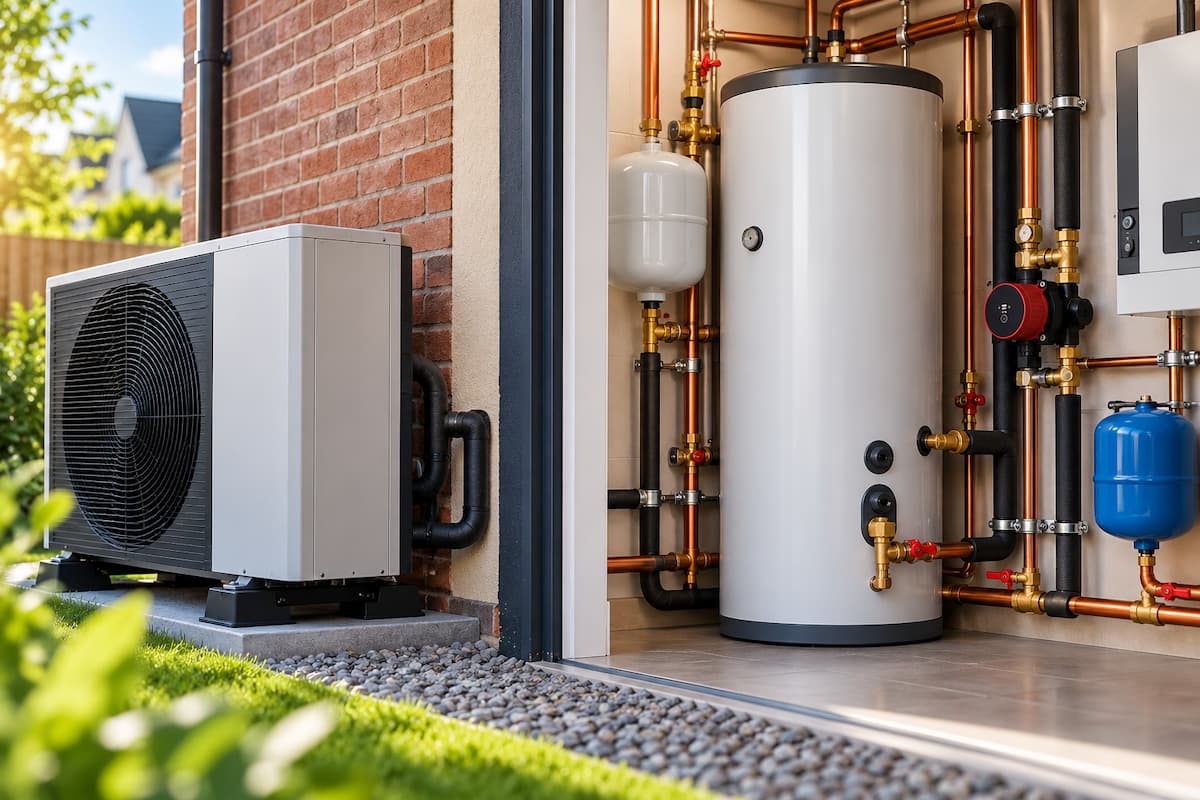
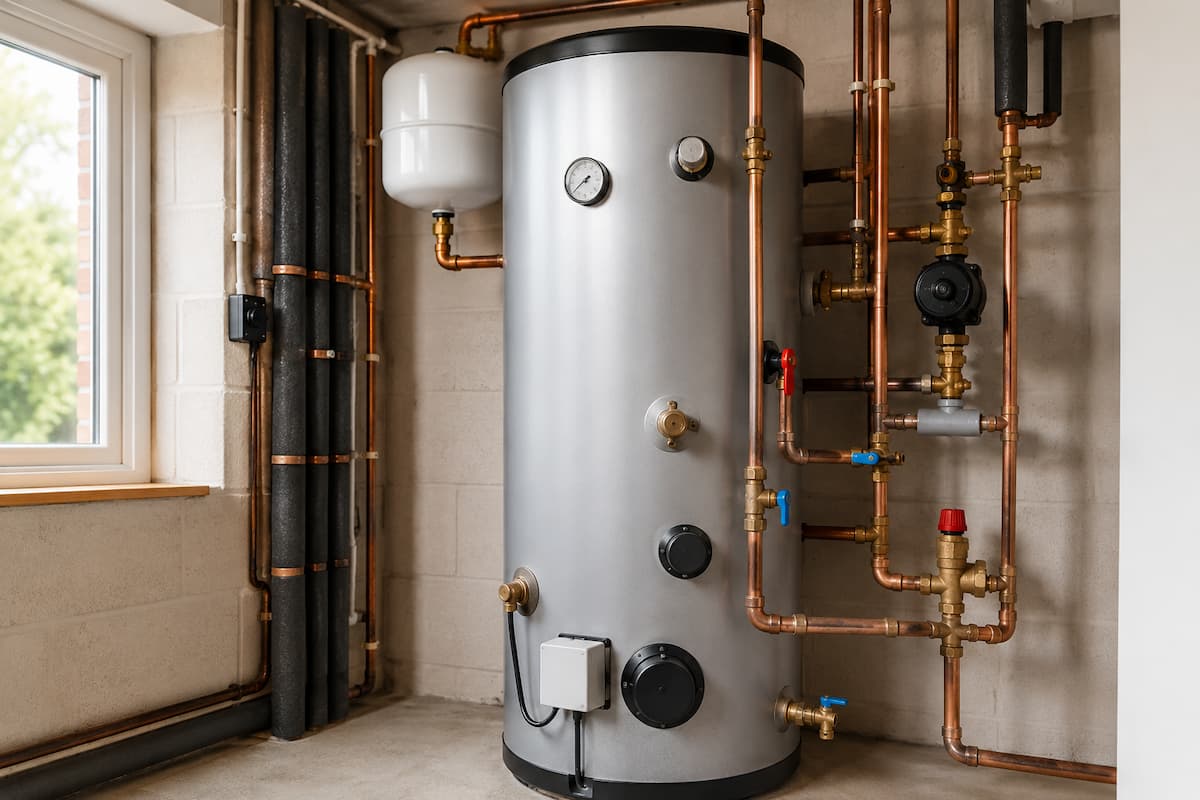
Hot water cylinders have been a central part of domestic plumbing systems for well over a century. Although combination boilers now provide instantaneous hot water in many homes, millions of properties throughout the UK continue to rely on stored hot water supplied by cylinders.
For apprentice plumbers, understanding hot water cylinders is an essential step in developing a solid foundation in domestic plumbing. Whether carrying out installations, servicing existing systems or diagnosing faults, plumbers must understand how cylinders store water, transfer heat and safely distribute hot water throughout a property.
Modern plumbing engineers will encounter both traditional vented cylinders and modern unvented cylinders, each with its own operating principles, safety devices and installation requirements. A good understanding of both systems is fundamental before progressing to advanced heating and unvented qualifications.
This guide explains the construction, operation and different types of domestic hot water cylinders used throughout the UK.
The Purpose Of A Hot Water Cylinder
A hot water cylinder stores heated water until the occupants of a property require it.
Unlike a combination boiler, which heats water on demand, a cylinder stores a volume of hot water ready for immediate use.
The cylinder provides hot water to outlets including:
- Baths
- Showers
- Basins
- Kitchen sinks
- Utility rooms
By storing heated water, the system can supply several outlets at the same time without waiting for water to heat as it passes through the appliance.
This makes hot water cylinders particularly suitable for larger homes with multiple bathrooms or high hot water demand.
Hot Water Cylinders and Boilers
Apprentice plumbers often confuse boilers with hot water cylinders.
Although they work together in many systems, they perform very different functions.
- A boiler generates heat.
- A hot water cylinder stores heated water.
The boiler transfers heat into the cylinder using one of several methods, allowing the stored water to remain hot until required.
Understanding this distinction is important because many heating faults originate either from the heat source or from the cylinder itself.
The Basic Principles Of Hot Water Storage
A hot water cylinder stores energy as heated water.
Once heated, the stored water remains available until required.
Cold water enters the bottom of the cylinder.
As the water is heated, it becomes less dense and naturally rises towards the top.
This process is known as thermal stratification.
Because the hottest water collects near the top of the cylinder, the hot water outlet is positioned at the highest point.
Meanwhile, colder replacement water enters through the lower cold feed connection.
This natural layering improves system efficiency by ensuring the hottest water is delivered first.
Thermal Stratification
One of the most important principles for apprentice plumbers to understand is thermal stratification.
Inside the cylinder, water separates into temperature layers.
The hottest water remains near the top.
Cooler water stays towards the bottom until it is heated.
This natural process means that even during periods of heavy demand, the upper section of the cylinder often continues supplying usable hot water while the lower section reheats.
Understanding thermal stratification helps plumbers diagnose heating performance problems and explains why pipe connections are positioned at different heights on the cylinder.
Types Of Hot Water Cylinder
Several different cylinder designs are found throughout UK properties.
Although their construction varies, they all perform the same basic function of storing heated water.
The main categories include:
- Direct hot water cylinders
- Indirect hot water cylinders
- Open vented cylinders
- Unvented cylinders
Each design offers different advantages depending on the plumbing system and property requirements.
Direct Hot Water Cylinders
A direct cylinder heats the stored water internally.
Heating may be provided by:
- Electric immersion heaters
- Solar immersion heaters
- Off peak electric supplies
There is no separate heating coil connected to a boiler.
Instead, the immersion heater transfers heat directly into the stored domestic water.
Direct cylinders are commonly installed in:
- Flats
- Apartments
- Properties without gas
- Holiday accommodation
They offer a relatively simple installation but generally have higher running costs when heated solely by electricity.
Indirect Hot Water Cylinders
Indirect cylinders are the most common type found within traditional domestic heating systems.
Rather than heating the stored water directly, heat is transferred from the central heating system through a heat exchanger located inside the cylinder.
The heating water remains completely separate from the domestic hot water.
Heat passes through the metal walls of the heating coil into the stored water.
This arrangement allows a gas boiler, oil boiler or heat pump to provide domestic hot water efficiently while keeping both water systems isolated.
Indirect cylinders generally offer lower running costs than direct electric cylinders when connected to efficient heating appliances.
Open Vented Hot Water Cylinders
Open vented cylinders remain common throughout older UK housing.
These cylinders are supplied from a cold-water storage cistern located in the loft.
As the water heats and expands, the open vent pipe allows expansion to occur safely without increasing system pressure.
Characteristics of open vented cylinders include:
- Gravity fed cold water supply
- Open vent pipe
- Cold water storage cistern
- Lower operating pressure
- Simple operating principles
Although reliable, these systems often deliver lower shower pressures than modern mains-pressure systems.
Unvented Hot Water Cylinders
Unvented cylinders have become increasingly popular within modern homes.
Unlike vented cylinders, they receive water directly from the incoming mains supply.
This allows the stored hot water to be delivered at mains pressure, producing significantly improved flow rates throughout the property.
Benefits include:
- Higher water pressure
- Better shower performance
- Elimination of loft storage cisterns
- Balanced hot and cold supplies
- Improved space utilisation
Because unvented cylinders operate under pressure, they incorporate several important safety devices that plumbers must understand thoroughly.
Installation and servicing of unvented hot water systems require engineers to hold the appropriate G3 qualification.
Direct and Indirect Cylinders Compared
| Feature | Direct Cylinder | Indirect Cylinder |
|---|---|---|
| Heat Source | Immersion Heater | Boiler Or Heat Pump |
| Heating Method | Direct To Stored Water | Heating Coil |
| Running Costs | Typically Higher | Generally Lower |
| Primary Heating Circuit | Not Required | Required |
| Typical Applications | Electric Only Properties | Most Domestic Heating Systems |
Open Vented and Unvented Cylinders Compared
| Feature | Open Vented | Unvented |
|---|---|---|
| Water Supply | Cold Water Storage Cistern | Mains Supply |
| Operating Pressure | Gravity Pressure | Mains Pressure |
| Cold Water Storage Cistern | Required | Not Required |
| Safety Devices | Open Vent | Multiple Pressure Safety Devices |
| Typical Shower Performance | Lower | Higher |
Cylinder Construction Materials
Hot water cylinders have been manufactured using several different materials over the years.
Copper Cylinders
Copper cylinders have traditionally been the most common type installed within UK homes.
Advantages include:
- Excellent heat transfer
- Corrosion resistance
- Ease of manufacture
- Long service life
Many vented cylinders remain manufactured from copper today.
Stainless Steel Cylinders
Modern unvented cylinders are generally manufactured from stainless steel.
Benefits include:
- High strength
- Excellent corrosion resistance
- Higher operating pressures
- Long lifespan
- Reduced maintenance
Stainless steel has become the preferred material for pressurised hot water storage due to its durability and structural strength.
Hot Water Cylinder Capacities
Cylinder size depends upon the anticipated hot water demand within the property.
Typical domestic capacities include:
| Cylinder Capacity | Typical Property |
|---|---|
| 90 Litres | Small Flat |
| 120 Litres | One Bathroom Property |
| 150 Litres | Average Family Home |
| 180 Litres | Larger Family Home |
| 210 Litres And Above | Multiple Bathrooms |
Selecting the correct cylinder size is important for ensuring sufficient hot water while avoiding unnecessary standing heat losses.
Cylinder Location Within a Property
Hot water cylinders are typically installed in locations that provide easy access for maintenance while minimising heat losses.
Typical locations include:
- Airing cupboards
- Utility rooms
- Plant rooms
- Dedicated service cupboards
The location should allow sufficient space for servicing, inspection and replacement where necessary.
Good access is particularly important for unvented cylinders because their safety devices require regular inspection.
Hot Water Cylinder Components
Although hot water cylinders vary in design, most contain core components that work together to store, heat, and safely distribute domestic hot water.
Understanding the purpose of each component helps apprentice plumbers install, commission and diagnose systems more effectively.
Typical components include:
- Cold water inlet
- Hot water outlet
- Primary heating coil
- Immersion heater
- Thermostat
- Temperature and pressure relief valve
- Expansion vessel
- Drain cock
- Open vent connection
- Cylinder insulation
Each component has a specific role in maintaining system safety and performance.
Hot Water Cylinder Component Diagram
The internal arrangement of a hot water cylinder is easier to understand when viewed as a complete system.
Hot Water Outlet
│
▼
┌──────────────────────┐
│ │
│ Stored Hot Water │
│ │
Open Vent ───┤ │
│ │
│ Heating Coil │◄──── Primary Flow
│ (Indirect Only) │
│ │
│ │
│ │
Cold Feed ──►│ │
└──────────┬───────────┘
│
▼
Drain Cock
Immersion Heater ─────► Side Of Cylinder
Thermostat ───────────► Controls Water Temperature
This simplified layout illustrates the main components found within a traditional indirect hot water cylinder.
Cold Water Inlet
The cold water inlet supplies fresh water into the bottom of the cylinder.
As hot water is drawn from outlets around the property, an equal volume of cold water enters through the cold feed connection.
Introducing cold water at the base of the cylinder helps maintain thermal stratification by preventing unnecessary mixing with the hotter water above.
Correct positioning of the cold feed contributes to efficient operation.
Hot Water Outlet
The hot water outlet is positioned at the highest point of the cylinder.
This location allows the hottest stored water to leave the cylinder first.
Because hot water naturally rises, locating the outlet at the top ensures maximum water temperature is delivered to taps and showers.
Correct installation of this connection is essential for efficient system performance.
Primary Heating Coil
Indirect cylinders contain a primary heating coil connected to the central heating system.
The heating water flowing through the coil never mixes with the stored domestic hot water.
Instead, heat passes through the walls of the copper or stainless steel coil into the surrounding stored water.
This arrangement provides:
- Safe separation of water systems
- Efficient heat transfer
- Lower running costs
- Reliable operation
The heating coil acts as a heat exchanger rather than a storage vessel.
Direct Heating Using Immersion Heaters
Direct cylinders generally rely on immersion heaters.
The immersion heater consists of an electric heating element inserted directly into the stored water.
As electricity passes through the element, heat is transferred directly into the cylinder.
Immersion heaters are commonly used:
- As the primary heat source in electric only properties
- As a backup heat source
- During boiler maintenance
- To provide additional hot water
Many cylinders include dual immersion heaters to take advantage of off peak electricity tariffs.
Cylinder Thermostats
The cylinder thermostat controls the temperature of the stored water.
Once the target temperature has been reached, the thermostat switches off the heat source.
When the water temperature falls below the set point, heating resumes automatically.
Correct thermostat settings help:
- Reduce energy consumption
- Improve efficiency
- Prevent overheating
- Reduce Legionella risk
Most domestic cylinders are set between 60°C and 65°C.
Recommended Hot Water Temperatures
Correct water temperature is essential for both safety and hygiene.
General guidance is:
| Water Location | Typical Temperature |
|---|---|
| Stored Hot Water | 60°C |
| Hot Water Leaving Cylinder | Around 60°C |
| Bath Water | Maximum 44°C using mixing valves where required |
Maintaining adequate storage temperatures helps reduce the risk of bacterial growth whilst allowing safe delivery temperatures to be maintained through thermostatic controls.
Cylinder Insulation
Modern cylinders include high-performance insulation designed to minimise standing heat loss.
Insulation provides several benefits:
- Improved energy efficiency
- Lower heating costs
- Reduced reheating frequency
- Improved hot water availability
Today’s factory insulated cylinders retain heat significantly better than older copper cylinders fitted with removable insulation jackets.
Standing Heat Loss
Even correctly insulated cylinders gradually lose heat over time.
This is known as standing heat loss.
Factors affecting standing heat loss include:
- Cylinder insulation quality
- Ambient room temperature
- Cylinder size
- Water temperature
- Installation quality
Reducing standing heat loss improves overall system efficiency.
Open Vent Pipe
Traditional vented cylinders include an open vent pipe.
The vent pipe performs several important functions.
It allows:
- Expansion of heated water
- Escape of trapped air
- Prevention of excessive pressure
- Safe operation of vented systems
Without an open vent, pressure could build up in the cylinder during heating.
Expansion Of Heated Water
As water heats, it expands.
This expansion must be accommodated safely.
In open-vented systems, expansion occurs through the vent pipe.
In unvented systems, expansion is controlled by an expansion vessel or an internal air bubble, depending on the cylinder design.
Understanding expansion is fundamental when working on hot water systems.
Expansion Vessels
Modern unvented cylinders normally incorporate an expansion vessel.
The vessel contains compressed air separated from the water by a flexible diaphragm.
As water expands upon heating, the diaphragm compresses to accommodate the increased volume.
Expansion vessels help:
- Stabilise pressure
- Protect pipework
- Prevent excessive pressure rise
- Reduce operation of safety valves
Regular inspection of expansion vessels forms part of routine servicing.
Temperature and Pressure Relief Valves
Temperature and pressure relief valves are among the most important safety devices fitted to unvented cylinders.
Their purpose is to prevent dangerous increases in pressure or temperature.
If abnormal conditions occur, the valve automatically discharges water through dedicated discharge pipework.
These valves protect:
- Occupants
- Property
- Pipework
- The cylinder itself
They must never be removed, isolated or tampered with.
Pressure Reducing Valves
Many unvented systems include a pressure reducing valve fitted to the incoming mains supply.
Its purpose is to maintain a consistent operating pressure throughout the cylinder.
Benefits include:
- Stable system pressure
- Improved appliance protection
- Reduced pipe stress
- Improved reliability
Incoming mains pressures vary considerably throughout the UK, making pressure regulation important.
Tundishes and Discharge Pipework
Unvented cylinders include a tundish installed within the discharge pipework.
The tundish provides a visible air break that allows engineers and homeowners to identify when a safety valve has discharged.
Visible water flowing through the tundish indicates that further investigation may be required.
Correct installation of discharge pipework is an important safety requirement under Building Regulations.
Heat Transfer Within The Cylinder
Heat transfer occurs naturally inside the cylinder.
The heating coil warms the surrounding water.
As the heated water becomes less dense, it rises towards the top of the cylinder.
Cooler water falls towards the bottom, where it is heated in turn.
This continuous circulation distributes heat evenly throughout the stored water.
Efficient heat transfer improves recovery times and reduces fuel consumption.
Domestic Hot Water Distribution
Once heated, domestic hot water is distributed throughout the property.
Typical outlets include:
- Kitchen sinks
- Bathroom basins
- Baths
- Showers
- Utility sinks
Pipework should be designed to:
- Minimise heat loss
- Reduce dead legs
- Deliver adequate flow rates
- Maintain suitable pressure
Good system design improves both efficiency and customer satisfaction.
Pipework Connections
A typical indirect cylinder includes several pipe connections.
These commonly include:
- Cold feed
- Hot draw off
- Primary flow
- Primary return
- Open vent
- Drain cock
Understanding each connection allows plumbers to identify systems quickly during installation and servicing.
Installation Considerations
Correct installation contributes significantly to system performance and reliability.
Important considerations include:
- Suitable structural support
- Pipe insulation
- Adequate servicing access
- Correct valve orientation
- Manufacturer’s clearances
- Safe discharge arrangements
Attention to installation detail reduces future maintenance issues.
Commissioning Procedures
Before a new hot water cylinder is placed into service, several commissioning checks should be completed.
Typical procedures include:
- Filling the system
- Venting trapped air
- Leak inspection
- Thermostat operation
- Heating performance
- Safety device checks
- Control operation
Commissioning confirms the installation is operating safely and efficiently before handover.
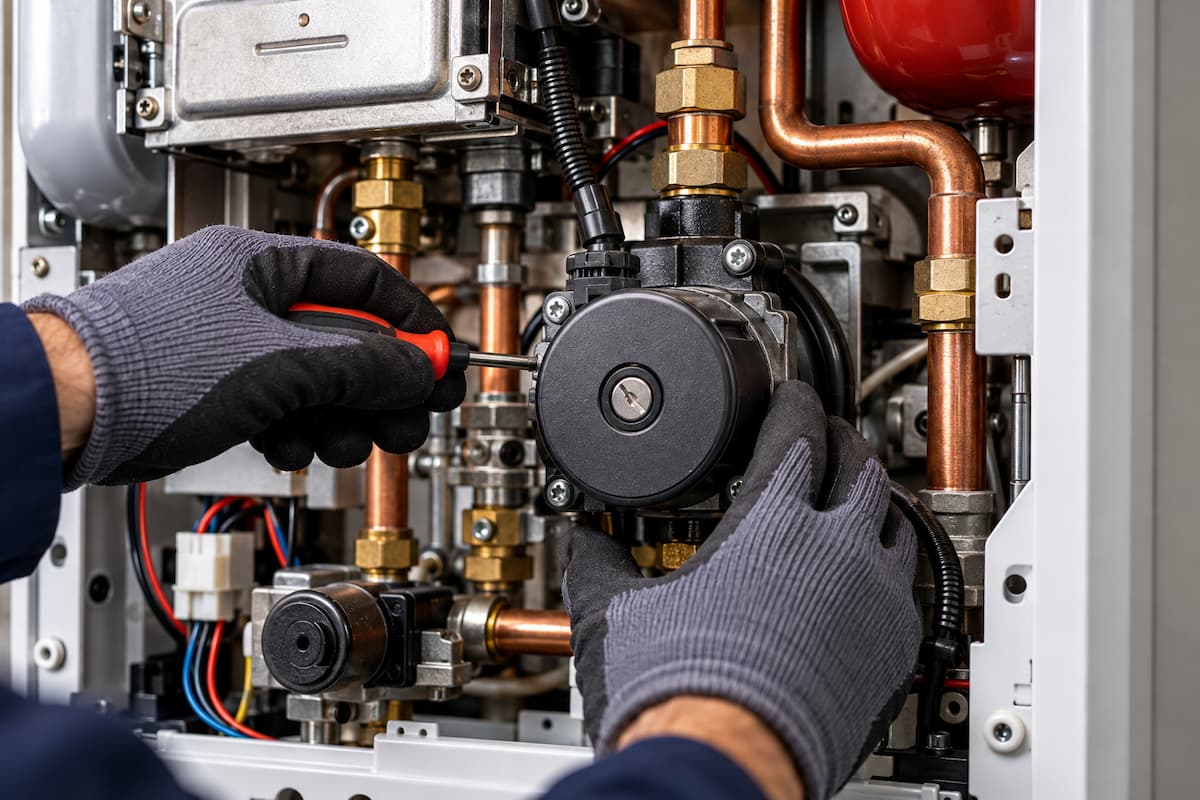
Preparing For Servicing
Routine servicing helps maintain performance and extends equipment life.
Before beginning work, plumbers should:
- Isolate electrical supplies where necessary
- Isolate water supplies
- Follow manufacturer guidance
- Confirm safe working conditions
- Check system pressure where applicable
Safe preparation is an essential part of professional plumbing practice.
Although maintenance requirements vary between vented and unvented systems, regular inspection allows developing issues to be identified before they become significant problems.
Routine maintenance can help:
- Improve system efficiency
- Maintain safe operation
- Reduce energy consumption
- Extend equipment life
- Prevent unnecessary breakdowns
Manufacturers’ servicing instructions should always be followed.
Inspection Checklist
Developing a structured inspection routine is an important habit for apprentice plumbers.
During an inspection, engineers should assess:
- External condition of the cylinder
- Pipework connections
- Signs of leakage
- Insulation condition
- Thermostat operation
- Immersion heater condition
- Control valves
- Drain cock
- Corrosion
- Discharge pipework
- Expansion vessel where fitted
Systematic inspections reduce the likelihood of faults being overlooked.
External Condition Assessment
The external condition of a cylinder often provides valuable information about the overall health of the system.
Areas to inspect include:
- Dents or impact damage
- Signs of corrosion
- Water staining
- Damaged insulation
- Loose pipe supports
- Evidence of previous leaks
Small defects identified early can often prevent larger repairs later.
Pipework Inspection
Pipework connected to the cylinder should be checked carefully.
Inspection points include:
- Joint integrity
- Valve condition
- Pipe insulation
- Pipe supports
- Signs of corrosion
- Evidence of leakage
Poor pipework installation may reduce efficiency and increase maintenance requirements.
Immersion Heater Inspection
Immersion heaters should be checked for signs of deterioration.
Inspection includes:
- Electrical connections
- Thermostat operation
- Signs of overheating
- Leakage around the boss
- Cable condition
Any electrical work should only be carried out by suitably competent persons.
Thermostat Performance
Cylinder thermostats should operate within the manufacturer’s specified temperature range.
Incorrect thermostat settings may result in:
- Insufficient hot water
- Excessive energy consumption
- Overheating
- Increased safety risks
A thermostat that fails to control water temperature correctly should be replaced.
Expansion Vessel Inspection
Where fitted, expansion vessels require periodic inspection.
Engineers should assess:
- External condition
- Mounting brackets
- Air charge pressure
- Signs of waterlogging
- Pipework connections
A failed expansion vessel can lead to excessive pressure increases and repeated discharge through safety valves.
Safety Devices
Safety devices protect both the plumbing system and its occupants.
Depending on the cylinder type, these may include:
- Temperature and pressure relief valves
- Pressure reducing valves
- Expansion vessels
- Thermostats
- Thermal cut outs
- Open vent pipework
These components should never be isolated or removed.
Regular inspection ensures they remain operational.
Legionella Prevention
Maintaining suitable water temperatures is one of the most effective methods of preventing Legionella bacteria.
General guidance includes:
- Store hot water at approximately 60°C.
- Avoid prolonged water stagnation.
- Maintain insulation.
- Minimise dead legs.
- Flush infrequently used outlets where appropriate.
Good plumbing design and regular maintenance both help reduce microbiological risks.
Heat Loss Reduction
Improving system efficiency is not limited to the heat source.
Reducing heat loss throughout the hot water system can significantly lower energy consumption.
Methods include:
- High performance cylinder insulation
- Pipe insulation
- Correct thermostat settings
- Minimising unnecessary pipe lengths
- Maintaining system controls
Even relatively small improvements can reduce annual heating costs.
Customer Complaints
Many service visits begin with a customer describing a symptom rather than identifying the actual fault.
Listening carefully to the complaint often provides valuable diagnostic information.
Typical complaints include:
- No hot water
- Water not hot enough
- Water too hot
- Poor hot water pressure
- Running out of hot water
- Water discharging from pipework
- Noisy cylinder
Each complaint requires a systematic approach rather than the unnecessary replacement of components.
No Hot Water
Possible causes include:
- Boiler fault
- Failed immersion heater
- Faulty programmer
- Defective thermostat
- Electrical supply issues
- Air within the primary heating circuit
Testing should always begin with the simplest possibilities before progressing to more complex diagnosis.
Insufficient Hot Water
If hot water is available but quickly runs out, possible causes include:
- Undersized cylinder
- Thermostat setting too low
- Heating appliance not operating correctly
- Excessive household demand
- Scale build-up reducing efficiency
Accurate diagnosis requires understanding both the heating appliance and the cylinder.
Excessively Hot Water
Excessively hot water may indicate:
- Thermostat failure
- Incorrect thermostat setting
- Control fault
- Wiring fault
Excessive temperatures present a scalding risk and should always be investigated promptly.
Poor Hot Water Pressure
Poor pressure may originate from several sources.
Possible causes include:
Open Vented Systems
- Low head pressure
- Airlocks
- Restricted pipework
- Partially closed valves
Unvented Systems
- Pressure reducing valve issues
- Blocked inlet filters
- Restricted pipework
- Mains supply limitations
Understanding the system type is the first stage of accurate diagnosis.
Water Discharging Through Safety Pipework
Visible discharge from safety pipework should never be ignored.
Possible causes include:
- Expansion vessel fault
- Temperature and pressure relief valve operation
- Excessive mains pressure
- Control malfunction
The underlying cause should always be identified before replacing components.
Fault Finding Methodology
Professional plumbers rarely diagnose faults through guesswork.
A logical sequence provides more reliable results.
A typical approach includes:
1. Confirm the customer complaint.
2. Identify the cylinder type.
3. Check operating controls.
4. Inspect pipework.
5. Measure temperatures.
6. Check pressures where appropriate.
7. Inspect safety devices.
8. Test individual components.
9. Confirm the repair.
Working methodically reduces unnecessary replacement of serviceable parts.
Fault Finding Flowchart
Customer Reports Fault
│
▼
Identify Cylinder Type
│
▼
Check Heat Source
│
▼
Inspect Controls
│
▼
Measure Temperature
│
▼
Inspect Pipework
│
▼
Check Safety Devices
│
▼
Repair And Recommission
Following a consistent diagnostic process helps engineers work efficiently and confidently.
System Upgrades
Many existing properties continue to improve their hot water systems.
Typical upgrades include:
- Replacing ageing cylinders
- Installing factory insulated cylinders
- Converting vented systems to unvented systems
- Improving insulation
- Installing smart heating controls
- Integrating renewable heating technologies
Any upgrade should be planned with consideration for the property’s water supply, heating demand and applicable regulations.
Renewable Heating and Hot Water Cylinders
As renewable heating becomes more widespread, hot water cylinders continue to play an important role.
Heat pumps generally operate at lower flow temperatures than traditional boilers.
To maximise efficiency, cylinders used with heat pumps are often designed with:
- Larger heating coils
- Improved insulation
- Greater storage capacity
- Enhanced heat transfer characteristics
Understanding these design differences is becoming increasingly important for modern plumbers.
Practical Knowledge For Apprentice Plumbers
When inspecting a hot water cylinder for the first time, apprentice plumbers should develop a routine to build a complete picture of the installation.
Questions to ask include:
- Is the cylinder vented or unvented?
- Is it direct or indirect?
- What is the heat source?
- Are all safety devices present?
- Is there any sign of leakage?
- Is the cylinder adequately insulated?
- Are discharge arrangements installed correctly?
- Is servicing access available?
- Does the installation appear to comply with current standards?
Developing these observational skills early helps engineers diagnose faults more accurately and complete work more efficiently throughout their careers.
Preparing For G3 Unvented Training
Although all plumbers should understand the principles of hot water storage, installation and servicing of unvented hot water systems require additional competence.
Hot Water Systems and Safety Course (Previously known as Unvented G3) develops knowledge in areas including:
- Building Regulations
- Safety devices
- Expansion control
- Discharge pipework
- Commissioning procedures
- Servicing requirements
- Safe installation practices
A strong understanding of traditional vented systems provides an excellent foundation before progressing to G3 qualifications.
Plumbing Training at Staffordshire Training Services
At Staffordshire Training Services, we provide accredited plumbing courses, as well as heating and renewable energy training, designed to develop practical skills alongside technical understanding.
Our programmes help learners build confidence in domestic hot water systems through classroom learning, practical workshop exercises and real fault diagnosis.
By understanding the operation of direct and indirect cylinders, vented and unvented systems, safety devices, and commissioning procedures, learners develop the knowledge needed to progress to more advanced plumbing, heating, G3 unvented hot water, and renewable energy qualifications.
Mastering hot water cylinders is an important milestone in every plumber’s development, providing the technical foundation needed to install, maintain and diagnose one of the most important systems found in homes across the UK.
Related Articles
- Introduction To Plumbing Systems
- Cold Water Storage Cisterns Explained
- Direct and Indirect Water Supply Systems
- Understanding Water Pressure In Plumbing Systems
- Water Regulations and Why They Matter for Plumbers
Prefer an AI Summary?