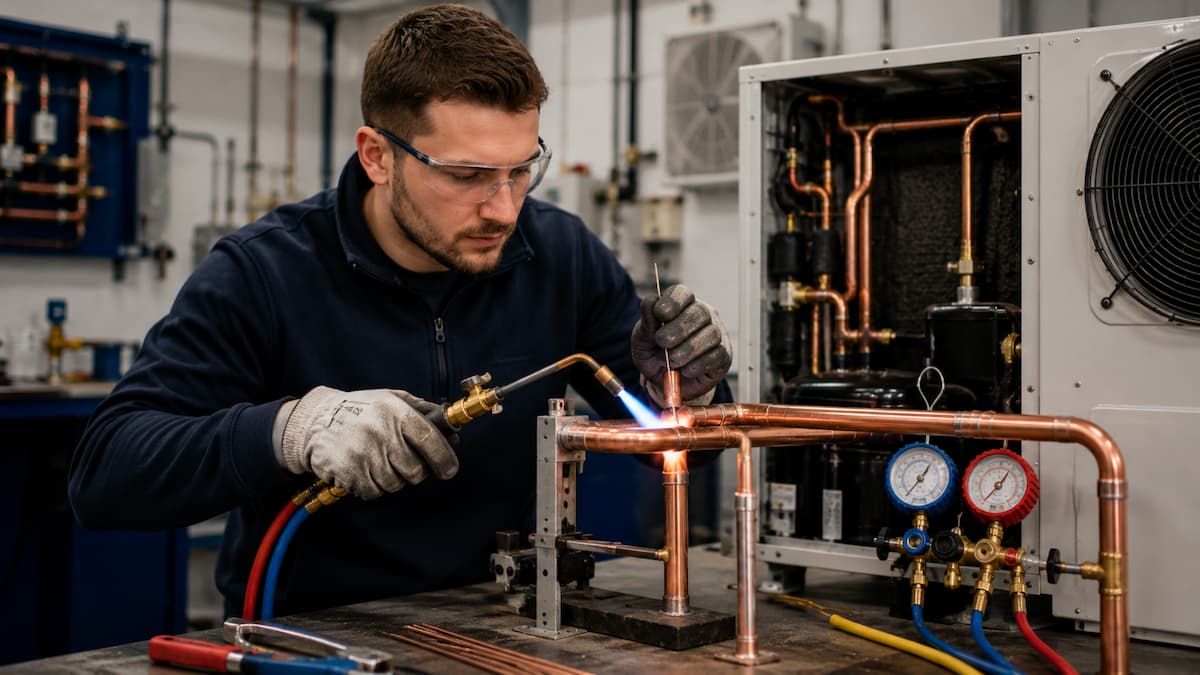
For engineers working in refrigeration, air conditioning, and heat pump systems, technical knowledge alone is not enough. Producing reliable refrigerant pipework requires practical skills that directly influence system performance, efficiency, and reliability. One of the most important of these skills is oxy fuel brazing.
Every refrigerant circuit relies on strong, leak-free joints. Poor brazing can lead to refrigerant leaks, costly repairs, reduced system efficiency, and potential breaches of F-Gas regulations. For this reason, oxy fuel brazing has become an essential competency for engineers working within the Refrigeration, Air Conditioning and Heat Pump (RACHP) sector.
At Staffordshire Training Services, our Level 3 Award in Oxy Fuel Brazing within the RACHP Sector provides engineers with the practical skills needed to produce brazed joints while supporting safe, compliant installation practices.
Brazing In Refrigeration Systems
Unlike traditional plumbing systems that may use compression fittings or soldered joints, refrigerant pipework is designed to operate under high pressure and demanding operating conditions. Brazed joints provide the strength and durability needed to withstand these conditions over many years of service.
Copper pipework is widely used throughout refrigeration and heat pump installations because of its excellent thermal properties and long service life. Creating reliable joints between these pipes is essential to maintaining the integrity of the entire refrigerant circuit.
Every connection forms part of a sealed system. If one joint fails, refrigerant can escape, affecting system performance and increasing repair costs.
Professional brazing helps ensure every joint remains strong, clean, and capable of performing throughout the life of the equipment.
Supporting F-Gas Compliance
F-Gas certification gives engineers the legal authority to install, service, maintain, and repair refrigerant systems. However, compliance is about more than holding the correct qualification.
Engineers also have a responsibility to minimise refrigerant emissions and maintain systems that operate safely and efficiently. Producing high-quality brazed joints plays an important part in meeting these responsibilities.
Poor workmanship can increase the likelihood of refrigerant leaks, leading to unnecessary environmental impact and potential legal consequences. Well-executed brazing helps maintain a sealed refrigerant circuit, reducing the risk of refrigerant loss and supporting compliance with current F-Gas regulations.
Good installation practices and proper refrigerant handling work together to protect both the customer and the environment.
Systems That Require Brazing Skills
Oxy fuel brazing is used across a wide range of refrigeration and renewable heating applications. Engineers regularly use these techniques when working on:
- Air conditioning systems
- Refrigeration equipment
- Air source heat pumps
- Ground source heat pumps
- Commercial cooling systems
- Refrigerated display equipment
- Cold room installations
As demand for renewable heating continues to increase, more engineers are moving into heat pump installation. Since many heat pumps use refrigerants within their operating cycle, brazing has become an increasingly valuable skill for installers entering this growing sector.
Building Strong Refrigerant Pipework
Producing a reliable brazed joint begins long before heat is applied. Careful preparation and attention to detail are essential throughout every stage of the process.
Engineers must prepare the pipe correctly, clean all mating surfaces, select suitable filler materials, and apply heat evenly to produce a consistent joint. Controlling heat input is particularly important, as excessive temperatures can damage components while insufficient heat may result in weak joints.
Once completed, every joint should be inspected to ensure it meets the required standard before pressure testing and commissioning begin.
Developing these techniques takes practice, making practical training an important part of becoming a competent RACHP engineer.
Preventing Refrigerant Leaks
One of the primary objectives of every refrigeration installation is maintaining a completely sealed refrigerant circuit.
While mechanical failures can occur over time, many refrigerant leaks originate from poor installation practices. Weak or contaminated brazed joints can develop leaks that reduce efficiency, increase running costs, and require expensive repairs.
Quality brazing helps engineers achieve:
- Reliable pressure integrity
- Reduced refrigerant loss
- Improved energy efficiency
- Longer system life
- Greater customer satisfaction
By producing consistently strong joints, engineers help protect the environment while delivering systems that perform as intended.
Supporting Heat Pump Installations
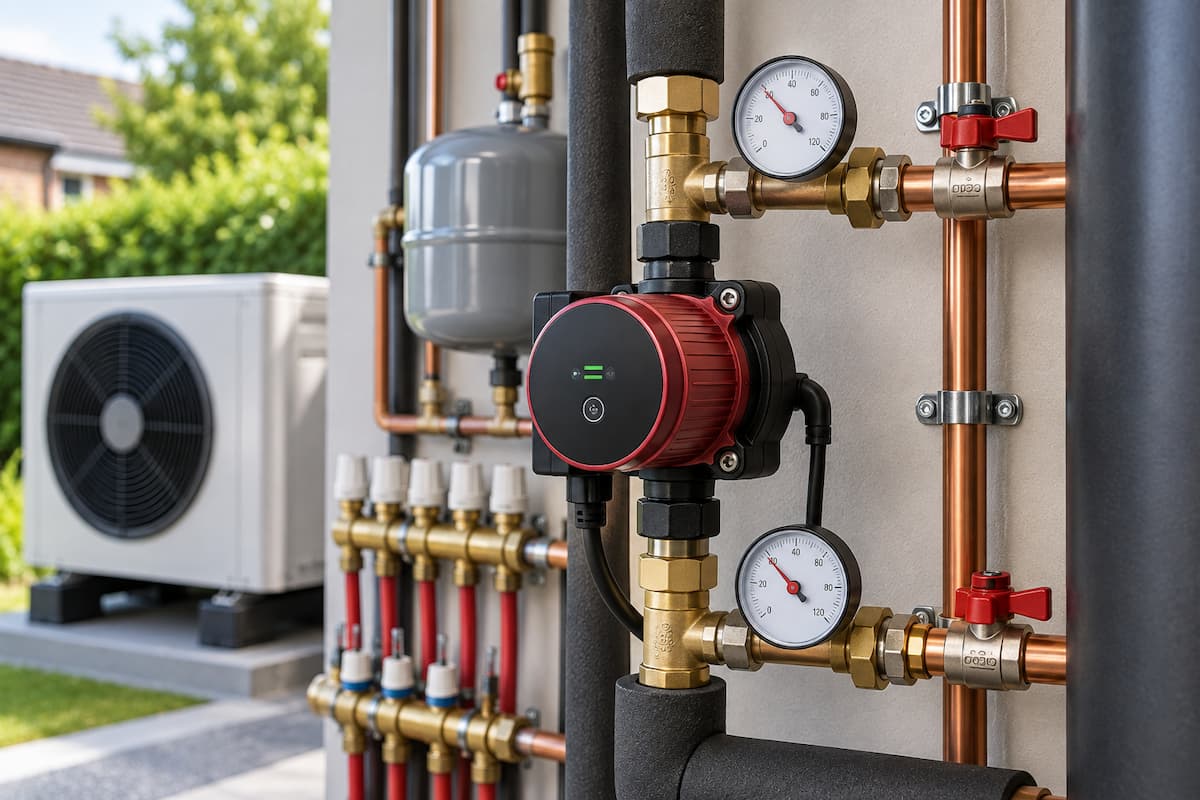
Heat pumps continue to play an increasingly important role in the UK’s transition towards lower carbon heating. These systems rely on refrigerants to transfer heat efficiently, making both F Gas certification and brazing competence valuable qualifications.
Installing a heat pump involves far more than connecting water pipework. Engineers must also produce secure refrigerant connections that can withstand years of operation without leaking.
Many installers therefore choose to combine:
Together, these qualifications provide the knowledge and practical skills needed to install, commission, maintain, and repair complete renewable heating systems.
Practical Skills Developed During Training
The Level 3 Award in Oxy Fuel Brazing within the RACHP Sector focuses on developing practical competence in realistic workshop conditions.
Throughout the course, learners develop skills in:
- Safe operation of oxy fuel equipment
- Preparing pipework and fittings
- Producing high-quality brazed joints
- Connecting RACHP pipework
- Working in accordance with current Health and Safety requirements
- Following recognised industry procedures
Training combines classroom learning with extensive hands-on workshop practice, allowing engineers to build confidence before working on live installations.
Career Opportunities
Oxy fuel brazing is a valuable addition to the skill set of any engineer working with refrigerant systems. Combined with F-Gas certification, it supports a wide range of career opportunities across the HVAC and renewable heating industries.
Qualified engineers may progress into roles such as:
- Refrigeration Installation Engineer
- Air Conditioning Engineer
- Heat Pump Installer
- Service and Maintenance Engineer
- Commissioning Engineer
- Refrigeration Technician
- F Gas Certified Engineer
For self-employed engineers, these additional skills can also expand the range of services offered to domestic and commercial customers.
Training With Staffordshire Training Services
At Staffordshire Training Services, our Level 3 Oxy Fuel Brazing Course is delivered at our approved LCL Awards training centre in Stafford.
The four-day programme combines technical instruction with practical workshop assessment, ensuring learners develop the confidence to apply their skills in real working environments.
Our experienced instructors bring extensive industry knowledge to every session, helping engineers understand not only the techniques involved but also the standards expected across the RACHP sector.
For engineers looking to build a complete refrigeration and renewable heating skill set, our Oxy Fuel Brazing course complements our Level 3 F Gas Training and Heat Pump Training courses, creating a well-rounded pathway into today’s growing HVAC industry.
Building Your Engineering Skills
As refrigeration, air conditioning, and heat pump technologies continue to evolve, employers and customers increasingly expect engineers to possess both technical knowledge and practical competence.
Oxy fuel brazing is one of the core skills that underpins successful refrigerant installations. It supports reliable pipework, helps prevent refrigerant leaks, contributes to F Gas compliance, and improves the performance of every system.
By combining professional brazing skills with F Gas certification and renewable heating qualifications, engineers place themselves in an excellent position to meet industry demand and build a rewarding career across the RACHP sector.
Whether you are entering the industry or expanding your existing expertise, Staffordshire Training Services provides the practical training needed to develop the confidence, competence, and recognised qualifications that today’s engineering professionals require.
Related Articles
- Getting Started with F-Gas Training
- F-Gas Legal Responsibilities For Installers
- F-Gas Training and Certification in Staffordshire
- Heat Pump Fault Finding For Renewable Installers
- Combine F-Gas and Heat Pump Training for More Opportunities
Prefer an AI Summary?