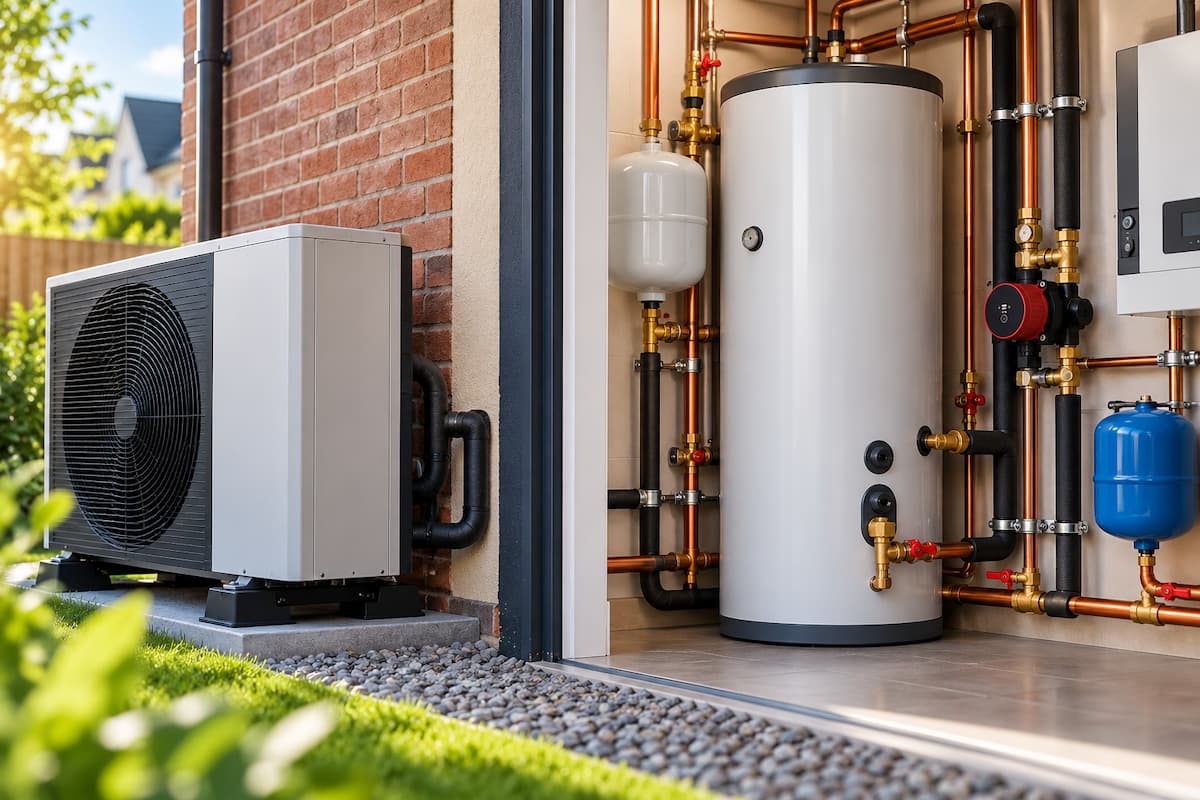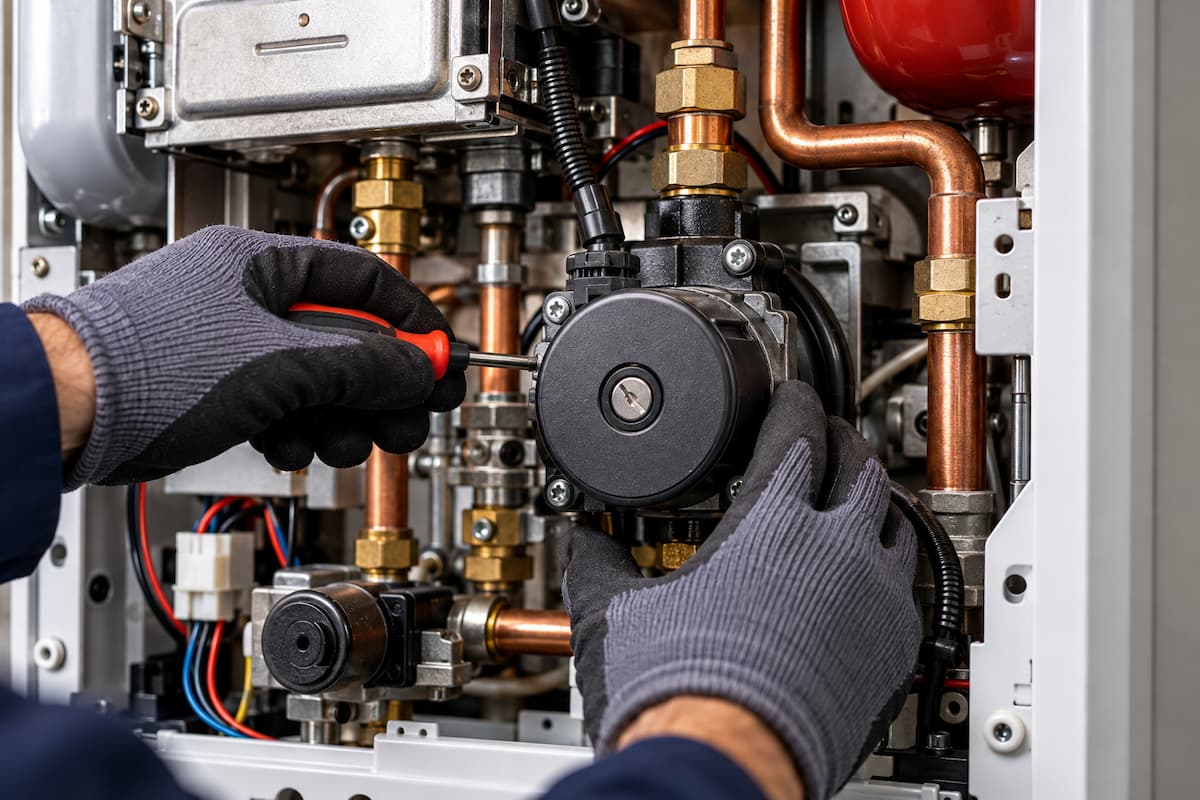
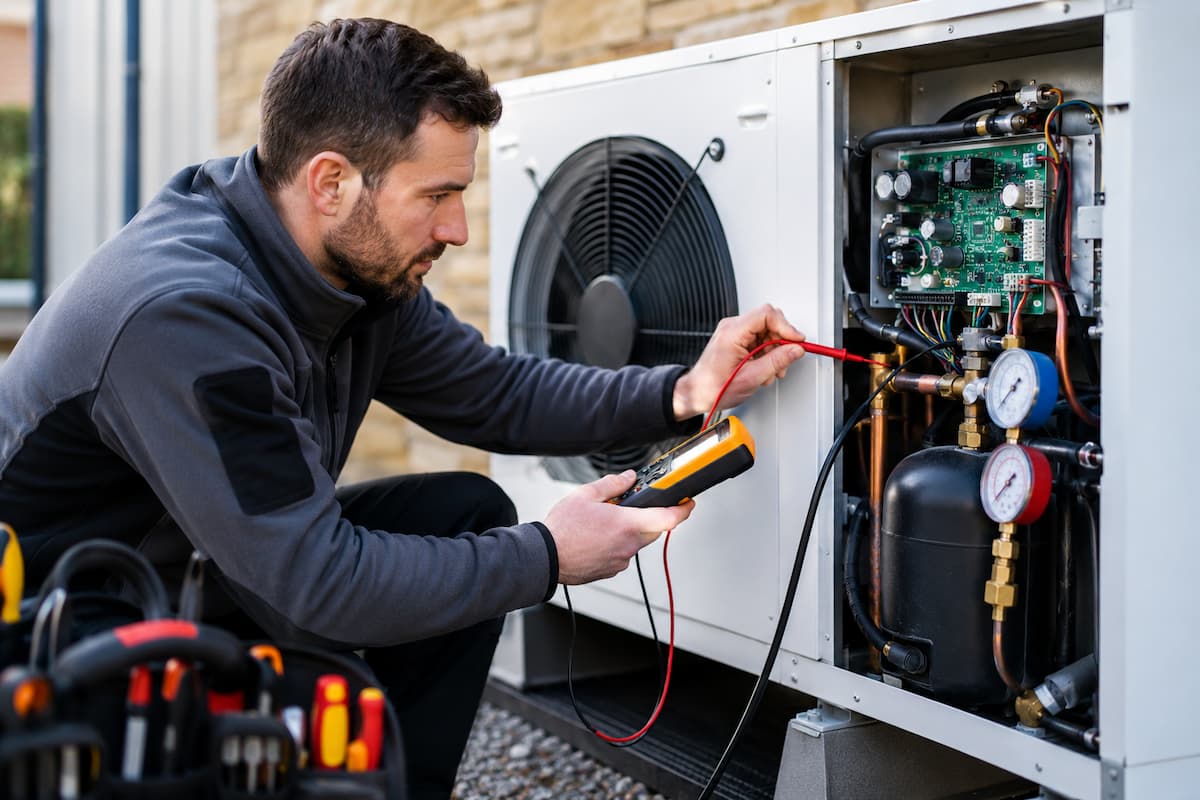
Heat pumps are highly reliable heating systems when they are designed, installed and commissioned correctly. However, as with any heating technology, faults can occur due to installation issues, poor commissioning, incorrect settings, or component failures.
Effective fault finding is about identifying the root cause rather than simply reacting to symptoms. A property that feels cold does not automatically indicate a faulty heat pump. The issue could be related to incorrect weather compensation settings, undersized emitters, poor system balancing, inadequate flow rates or even poor insulation.
For renewable installers, a logical and structured approach to fault-finding saves time, reduces unnecessary component replacements, and improves customer confidence.
Understanding the complete heating system is essential. The heat pump, hydraulic circuit, controls, emitters and building fabric all influence overall performance.
A Structured Fault Finding Process
Successful fault finding follows a consistent process.
Rather than replacing components based on assumptions, installers should gather evidence before reaching conclusions.
A structured approach typically follows these stages:
- Confirm the customer’s reported issue.
- Review the installation design.
- Check operating conditions.
- Inspect the hydraulic system.
- Verify electrical operation.
- Review control settings.
- Analyse performance data.
- Confirm the repair through testing.
This systematic method reduces diagnostic time and prevents unnecessary disruption.
Safety Before Fault Finding
Safety should always be the first consideration before beginning any fault-finding work.
Heat pumps combine electrical systems, pressurised water circuits and refrigeration components. Each presents its own hazards.
Before carrying out any work, installers should:
- Safely isolate electrical supplies.
- Confirm circuits are dead before opening electrical panels.
- Allow pressurised components to cool if necessary.
- Follow manufacturer safety procedures.
- Wear appropriate personal protective equipment.
- Never interfere with the sealed refrigeration circuit unless appropriately qualified and certified.
A safe working environment protects both the engineer and the customer.
The Customer’s Complaint
Many service visits begin with a statement such as:
“The house isn’t warm enough.”
This describes a symptom rather than identifying the fault.
The installer should gather as much information as possible before beginning diagnosis.
Useful questions include:
- Has the problem always existed?
- Did the issue begin after a recent service or adjustment?
- Does the problem affect heating, hot water or both?
- Does the fault occur continuously or only during certain weather conditions?
- Have any settings been changed?
- Are any fault codes displayed?
The answers often help narrow the investigation before any tools are used.
Reviewing The Original System Design
Before assuming equipment failure, installers should compare the installed system with the original design.
Checks should include:
- Heat loss calculations
- Heat pump sizing
- Radiator sizing
- Underfloor heating design
- Weather compensation settings
- Flow temperature design
- Domestic hot water requirements
Many reported faults originate from design issues rather than equipment defects.
A correctly commissioned heat pump cannot compensate for an incorrectly designed heating system.
Visual Inspection
A thorough visual inspection often identifies faults before diagnostic equipment is required.
Inspect:
- Pipe insulation
- Water leaks
- Condensate drainage
- Valve positions
- Expansion vessel condition
- Filters
- Outdoor unit airflow
- Electrical connections
- Damaged insulation
- Signs of corrosion
Simple observations can frequently prevent unnecessary dismantling.
Heat Pump Fault Codes
Most modern heat pumps provide fault information through their controller.
Fault codes are intended to assist diagnosis, not replace it.
Installers should:
- Record the fault code.
- Check whether the fault is active or historic.
- Review recent operating history.
- Consult manufacturer documentation.
- Confirm the underlying cause before resetting the fault.
Simply clearing fault codes without investigating the cause may result in repeat call-outs.
Poor Heating Performance
One of the most common customer complaints is insufficient heating.
Several factors can contribute to poor heating performance.
Possible causes include:
- Incorrect weather compensation settings
- Low flow temperatures
- Incorrect heating curve
- Air within the system
- Poor balancing
- Dirty filters
- Low flow rates
- Undersized radiators
- Incorrect heat loss calculations
- Poor insulation within the property
Rather than assuming the heat pump is underperforming, installers should evaluate the complete heating system.
High Electricity Consumption
Customers often notice increased electricity bills before identifying heating performance issues.
High energy consumption may result from:
- Excessive flow temperatures
- Incorrect weather compensation
- Frequent compressor cycling
- Backup heater operation
- Dirty system water
- Poor insulation
- Incorrect heating schedules
- Oversized heat pump operation
Monitoring electricity consumption alongside system temperatures often helps identify inefficiencies.
Flow Rate Problems
Correct flow rate is fundamental to heat pump operation.
If insufficient water passes through the heat exchanger, efficiency falls, and fault conditions may develop.
Causes include:
- Airlocks
- Closed valves
- Dirty strainers
- Blocked filters
- Incorrect pump settings
- Undersized pipework
- Sludge within the heating system
Symptoms may include:
- Frequent fault codes
- Reduced heating output
- High flow temperatures
- Compressor cycling
- Poor domestic hot water recovery
Flow rate should always be verified before assuming component failure.
Hydraulic Faults
Many heat pump faults originate within the hydraulic system rather than the heat pump itself.
Areas requiring inspection include:
- Circulation pumps
- Buffer vessels
- Low loss headers
- Mixing valves
- Automatic air vents
- Expansion vessels
- Pressure gauges
A single restriction within the hydraulic circuit can reduce performance throughout the entire heating system.
Installers should verify that water can circulate freely through every part of the system.
Air Within The Heating System
Entrained air is a frequent cause of poor heating performance.
Air can restrict circulation, reduce heat transfer and create excessive pump noise.
Symptoms include:
- Gurgling pipework
- Cold radiators
- Poor circulation
- Variable flow temperatures
- Air repeatedly collecting within radiators
Commissioning should remove most trapped air, but installers should always consider air ingress when fault-finding.
Dirty Filters and Magnetic Separators
Heat pump systems rely on unrestricted water circulation.
Magnetic filters and strainers collect debris that would otherwise circulate through the heating system.
Over time, they may become restricted.
Installers should inspect:
- Magnetic filters
- Y strainers
- Dirt separators
- Circulation pump strainers
Restricted filters reduce flow rates and may trigger flow-related fault codes.
Regular servicing significantly reduces this risk.
System Pressure Problems
Incorrect system pressure can affect circulation and overall performance.
Pressure that is too low may introduce air into the system.
Excessive pressure may indicate expansion vessel issues.
Checks should include:
- Cold system pressure
- Operating pressure
- Expansion vessel charge
- Pressure relief valve operation
- Signs of leakage
Pressure should always be assessed before replacing hydraulic components.
Domestic Hot Water Faults
Domestic hot water complaints often differ from space heating faults.
Issues include:
- Slow cylinder recovery
- Water not reaching target temperature
- Frequent reheating
- Backup heater operation
- Incorrect priority settings
Installers should confirm:
- Cylinder sensor operation
- Cylinder thermostat settings
- Control logic
- Heat pump operating mode
- Weather compensation interaction
Understanding the distinction between space-heating and hot-water operation is essential for accurate diagnosis.
Fault Finding Example
Consider a recently installed air source heat pump serving a four bedroom detached property.
The customer reports that the house never feels warm during colder weather, despite the heat pump running continuously.
A structured investigation indicates that the weather compensation curve was set too low during commissioning. Flow rates are correct, system pressure is stable, and no fault codes are present.
After increasing the heating curve and confirming radiator performance, the property reaches the required indoor temperatures without unnecessarily raising the maximum flow temperature.
This example demonstrates that many apparent heat pump faults are actually commissioning or control issues rather than equipment failures.
Electrical Fault Diagnosis
Modern heat pumps depend on sophisticated electrical systems to control compressors, circulation pumps, sensors and safety devices. An electrical fault may not always generate an obvious error code, making systematic testing essential.
Installers should begin by verifying:
- Incoming supply voltage
- Protective devices
- Electrical isolation
- Earth continuity
- Fuse integrity
- Terminal connections
- Communication wiring
- PCB indicators
Loose terminals, damaged cables and poor connections can all produce intermittent faults that are difficult to diagnose without a structured approach.
Electrical testing should always follow manufacturer procedures and current electrical safety regulations.
Sensor Faults
Heat pumps rely on multiple sensors to regulate heating performance. If one sensor provides inaccurate information, the system may continue operating but with significantly reduced efficiency.
Installers should verify the operation of:
- Outdoor air temperature sensors
- Flow temperature sensors
- Return temperature sensors
- Domestic hot water cylinder sensors
- Room temperature sensors
- Buffer vessel sensors where fitted
Typical symptoms of sensor faults include:
- Incorrect flow temperatures
- Excessive electricity consumption
- Poor weather compensation
- Incorrect domestic hot water temperatures
- Frequent cycling
- Unexpected fault codes
Comparing live sensor readings against actual measured temperatures is often the quickest way to confirm sensor performance.
Weather Compensation Faults
Weather compensation is designed to improve efficiency, but incorrect settings are a frequent cause of customer complaints.
Installers should assess:
- Heating curve settings
- Outdoor sensor location
- Flow temperature limits
- Room temperature stability
- Customer control adjustments
Common problems include:
| Symptom | Likely Cause |
|---|---|
| Property feels cold | Heating curve too low |
| Property overheats | Heating curve too high |
| High electricity consumption | Flow temperatures set too high |
| Comfort varies throughout the day | Poor weather compensation setup |
Many apparent heating faults can be resolved simply by adjusting the weather compensation curve.
Heating Curve Assessment
The heating curve should be reviewed whenever comfort or efficiency issues are reported.
Installers should remember that the original commissioning settings represent a starting point rather than the final adjustment.
Questions to consider include:
- Does the property reach design temperature?
- Does the heat pump operate continuously?
- Are radiators correctly sized?
- Has the building insulation changed?
- Have customer heating habits changed?
Small heating curve adjustments often produce significant improvements in both comfort and efficiency.
Control Faults
Modern renewable heating systems include sophisticated control strategies.
Faults may occur within:
- Room thermostats
- Smart heating controls
- Time schedules
- Weather compensation controllers
- Domestic hot water controls
- Internet connected control platforms
Incorrect programming can easily be mistaken for equipment failure.
Installers should verify that customer settings match the original commissioning parameters before investigating further.
Smart Heating Controls
Many systems now include mobile applications and remote monitoring platforms.
While these improve usability, they can also introduce additional variables during fault-finding.
Checks should include:
- Internet connectivity
- Software updates
- Remote scheduling
- User overrides
- Manufacturer app settings
Customers may unknowingly override installer settings via mobile applications, resulting in apparent heating faults.
Compressor Cycling
Short cycling remains one of the most common operational problems affecting heat pump efficiency.
Frequent compressor starts increase wear and reduce seasonal performance.
Possible causes include:
- Incorrect weather compensation
- Oversized heat pump
- Low system volume
- Poor hydraulic design
- Flow restrictions
- Incorrect control settings
Monitoring compressor starts over time often provides valuable diagnostic information.
A correctly operating system should run steadily for longer periods rather than repeatedly starting and stopping.
Defrost Cycle Problems
Air source heat pumps periodically enter defrost mode during colder weather.
The defrost operation is normal and should not be automatically considered a fault.
However, installers should investigate if:
- Defrost cycles occur excessively
- Ice remains on the outdoor coil
- Water fails to drain correctly
- Condensate freezes beneath the unit
- Recovery after defrost is unusually slow
Possible causes include:
- Restricted airflow
- Dirty outdoor heat exchanger
- Sensor faults
- Drainage issues
- Refrigerant related problems
Understanding normal defrost behaviour helps prevent unnecessary service visits.
Refrigerant Awareness
Renewable heating engineers should understand the symptoms of refrigerant-related issues, even if they are not qualified to work on sealed refrigeration circuits.
Possible indicators include:
- Reduced heating capacity
- Low suction pressures
- Frequent fault codes
- Long compressor run times
- Poor domestic hot water performance
Only engineers holding the appropriate F-Gas qualifications should carry out work involving the refrigeration circuit.
Where refrigerant faults are suspected, installers should follow manufacturer procedures and legal requirements.
Flow and Return Temperature Analysis
Comparing flow and return temperatures provides valuable information about system performance.
Abnormal temperature differences may indicate:
- Poor circulation
- Incorrect flow rates
- Blocked filters
- Air within the system
- Balancing issues
- Heat exchanger problems
Trend analysis is often more valuable than relying on a single temperature reading.
Measurements should be taken after the system has stabilised under normal operating conditions.
Performance Monitoring
Modern heat pumps generate large amounts of operating data.
Installers should review:
- Flow temperature
- Return temperature
- Outdoor temperature
- Compressor frequency
- Compressor runtime
- Electrical consumption
- Flow rate
- Domestic hot water temperatures
This information provides a clearer picture of system behaviour than fault codes alone.
COP and SCOP Assessment
Performance should always be assessed against expected operating conditions.
Useful indicators include:
- Instantaneous COP
- Seasonal SCOP
- Daily electricity consumption
- Flow temperature trends
- Heating runtime
- Hot water recovery times
Poor performance does not necessarily indicate equipment failure.
System design, weather compensation, emitter sizing and customer usage patterns all influence efficiency.
Using Performance Data
Many manufacturers provide detailed operating logs.
These can reveal:
- Changes in heating demand
- Increasing compressor starts
- Flow temperature adjustments
- Defrost frequency
- Fault history
- Control changes
Historical data often helps identify intermittent faults that are not visible during a service visit.
Remote Diagnostics
Connected heat pumps increasingly allow remote diagnosis.
Remote monitoring platforms can provide:
- Live operating data
- Historical performance trends
- Fault notifications
- Control settings
- Software updates
These systems enable installers to diagnose many issues before attending site, reducing unnecessary visits and improving customer service.
Fault Finding Example
A customer reports that electricity consumption has increased significantly despite outdoor temperatures being similar to those of the previous winter.
No active fault codes are present.
The installer reviews operating data and discovers:
- Higher average flow temperatures
- More frequent compressor starts
- Increased use of the immersion heater
- A recently altered heating schedule
Investigation confirms that the customer disabled weather compensation and selected a permanently high flow temperature after believing the radiators should feel hotter.
After restoring the original settings and explaining how low temperature heating works, electricity consumption decreases while comfort levels improve.
This example highlights the importance of analysing operating data rather than relying solely on fault codes.
Structured Fault Finding Workflow
Successful fault finding follows a logical process. Jumping directly to replacing components can increase costs, extend repair times and fail to resolve the underlying issue.
A structured approach allows installers to eliminate potential causes systematically before identifying the root problem.
A typical workflow should follow these stages:
- Confirm the customer’s reported issue.
- Review fault history and operating data.
- Carry out a visual inspection.
- Verify electrical operation.
- Check hydraulic performance.
- Assess system controls.
- Confirm weather compensation settings.
- Review emitter performance.
- Test the system under normal operating conditions.
- Confirm the fault has been resolved before leaving the site.
Following the same diagnostic routine on every visit reduces the likelihood of overlooking simple faults.
Heat Pump Fault Finding Flowchart
The following table provides a simple guide for diagnosing common heat pump problems.
| Reported Problem | Initial Checks | Possible Cause |
|---|---|---|
| Poor room temperatures | Flow temperature, emitters, balancing | Heating curve, undersized radiators, low flow |
| No heating | Electrical supply, controls, fault codes | Control fault, electrical issue, safety lockout |
| No hot water | Cylinder settings, sensors, priority controls | Sensor fault, programming issue |
| High electricity consumption | Flow temperatures, weather compensation | High flow temperatures, immersion heater operation |
| Frequent cycling | Flow rates, controls, system volume | Oversized system, poor commissioning |
| Outdoor unit icing | Defrost operation, airflow, drainage | Restricted airflow, drainage issue, sensor fault |
| Uneven room temperatures | System balancing, radiator outputs | Hydraulic imbalance, airlocks |
Using a structured decision process helps engineers identify faults more efficiently while reducing unnecessary component replacement.
Case Study – One
A recently commissioned air source heat pump serves a modern detached property.
The customer reports that several bedrooms remain cooler than the rest of the house.
Inspection confirms:
- Heat pump operating normally
- No fault codes
- Correct electrical supply
- Stable system pressure
Further investigation identifies poorly balanced radiators on the first floor.
Following hydraulic balancing, room temperatures stabilise without altering the weather compensation settings or increasing the flow temperature.
This demonstrates that heating distribution problems are often mistaken for heat pump faults.
Case Study – Two
A customer reports rapidly increasing electricity bills during winter.
The system appears to be heating the property successfully.
Reviewing operating data identifies:
- Flow temperature permanently fixed at 55°C
- Weather compensation disabled
- Increased compressor cycling
Following discussions with the customer, the installer discovers the controls had been manually adjusted in an attempt to produce hotter radiators.
After restoring weather compensation and reducing flow temperatures, energy consumption returns to expected levels while maintaining comfortable indoor temperatures.
Case Study – Three
A recently installed system repeatedly reports low flow faults.
Inspection identifies:
- Correct electrical operation
- Clean filters
- Correct pump settings
Further investigation reveals trapped air within several sections of the heating circuit following recent maintenance work.
After removing the air and verifying system pressure, normal circulation returns and the fault no longer appears.
This highlights the importance of considering simple hydraulic issues before replacing components.
Avoiding Fault Finding Mistakes
Many service visits become unnecessarily complicated because installers focus on symptoms rather than causes.
Mistakes include:
- Clearing fault codes without investigation
- Replacing components before testing
- Ignoring commissioning records
- Overlooking weather compensation settings
- Assuming the heat pump itself is at fault
- Ignoring heat loss calculations
- Failing to review operating history
- Skipping hydraulic checks
A structured diagnostic approach is usually faster than replacing parts based on assumptions.
Documentation During Fault Finding
Accurate records help both the installer and the customer.
Fault finding records should include:
- Customer complaint
- Fault codes
- Operating temperatures
- Flow rates
- Pressure readings
- Control settings
- Work completed
- Replacement components
- Final performance checks
Good documentation also provides valuable information during future servicing visits.
Customer Communication
Successful fault finding extends beyond technical diagnosis.
Installers should explain:
- The identified fault
- Why the issue occurred
- The work carried out
- Any changes made to system settings
- Recommended maintenance
- Expected system behaviour
Most callbacks occur because customers do not understand how a heat pump operates after repairs are completed.
Taking the time to explain weather compensation, low temperature heating, and normal operating behaviour can significantly improve customer satisfaction.
Preventative Maintenance
Faults can be prevented through regular servicing.
Routine maintenance should include:
- Cleaning magnetic filters
- Checking system pressure
- Inspecting electrical connections
- Verifying sensor operation
- Reviewing weather compensation settings
- Checking condensate drainage
- Inspecting the outdoor heat exchanger
- Reviewing operating data
Preventative maintenance not only reduces faults but also helps maintain system efficiency throughout its working life.
Digital Diagnostic Tools
Modern renewable heating engineers increasingly use digital tools to support fault finding.
Diagnostic resources include:
- Manufacturer commissioning software
- Remote monitoring portals
- Mobile service applications
- Data logging equipment
- Digital temperature probes
- Flow measurement equipment
- Thermal imaging cameras
These tools provide valuable performance data that allows engineers to diagnose faults more accurately and verify repairs before leaving the site.
Building A Logical Diagnostic Mindset
Experienced engineers rarely diagnose faults by chance.
Instead, they develop a structured approach based on observation, measurement and evidence.
Every service visit provides an opportunity to compare design expectations with actual system performance.
Over time, this experience allows installers to recognise common fault patterns, identify recurring commissioning issues and resolve problems more efficiently.
Developing a logical diagnostic process is one of the most valuable skills a renewable installer can acquire.
Heat Pump Training In Staffordshire
As heat pump installations become increasingly common across the UK, the ability to diagnose and resolve faults efficiently is an essential skill for renewable heating engineers.
At Staffordshire Training Services, our Air Source Heat Pump Systems (Level 3), Ground Source Heat Pump Systems (Level 3) and Air and Ground Source Heat Pump Systems Combined Course (Level 3) provide engineers with the practical knowledge needed to understand heat pump operation from initial design through to commissioning, optimisation and fault finding.
Renewable energy training courses cover the principles behind heat loss calculations, low temperature heating systems, weather compensation, system controls, commissioning procedures, and diagnostic techniques. By understanding how every part of the system interacts, engineers are better equipped to identify faults accurately, improve system performance and deliver greater confidence to their customers.
As the renewable heating sector continues to evolve, structured fault finding and performance optimisation will remain among the most valuable technical skills for engineers working with modern heat pump systems.
Related Articles
- Quick Heat Pump Guide for Installers
- Radiator Sizing For Heat Pumps
- Weather Compensation and Heat Pump Efficiency
- Heat Pump Commissioning Procedures For Renewable Installers
- Heat Pump System Design Basics for Gas Engineers Transitioning to Renewables
Prefer an AI Summary?