Gas pressure testing is a fundamental part of safe gas engineering. It allows engineers to assess gas supply performance, confirm appliance operating conditions and identify faults that may affect combustion, efficiency and safety.
Incorrect gas pressure can directly impact appliance operation. Poor pressure conditions may lead to unstable combustion, reduced efficiency, appliance lockouts and increased carbon monoxide production.
For engineers, understanding pressure testing is essential for commissioning, servicing, fault-finding and regulatory compliance.
Gas Pressure In Appliance Operation
Gas appliances are designed to operate within specific pressure ranges. If gas pressure falls outside these parameters, appliance performance can be affected significantly.
Correct gas pressure supports:
- stable combustion
- safe burner operation
- correct appliance output
- efficient fuel usage
- safe flue performance
Poor pressure conditions may cause:
- incomplete combustion
- ignition problems
- unstable flames
- reduced appliance efficiency
- combustion faults
- appliance shutdown
Gas pressure testing helps engineers identify these issues before they become serious.
Standing Pressure
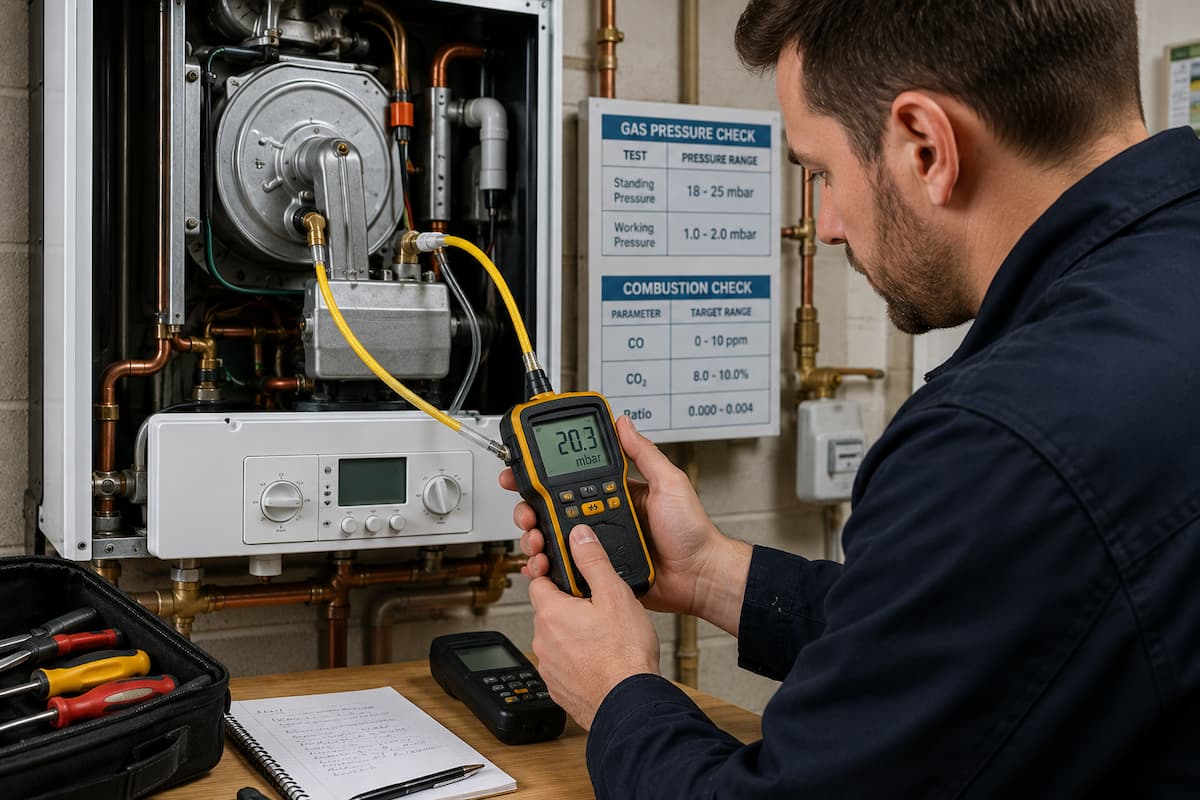
Standing pressure is measured when no gas appliances are operating.
This test helps engineers assess:
- incoming gas supply condition
- supply stability
- meter and regulator performance
Standing pressure provides a baseline before the appliance is placed under load.
Unstable or incorrect standing pressure may indicate:
- supply problems
- regulator faults
- upstream gas issues
Standing pressure alone does not confirm appliance performance. Further checks are required during operation.
Working Pressure
Working pressure is measured while the appliance is operating under load.
This helps engineers assess:
- gas supply performance during appliance operation
- pressure drop within the installation
- suitability of pipework sizing
- appliance operating conditions
Working pressure is one of the most important operational checks carried out during commissioning and servicing.
Low working pressure may result from:
- undersized pipework
- excessive pipe length
- restrictions within the installation
- meter or regulator issues
Working pressure must always be compared against manufacturer guidance.
Burner Pressure and Appliance Setup
Some appliances require burner pressure checks as part of commissioning or fault diagnosis.
Burner pressure relates directly to appliance combustion performance and heat output.
Engineers should understand:
- correct testing procedures
- appliance specific requirements
- effects of incorrect burner pressure
- relationship between burner pressure and combustion quality
Incorrect burner pressure may cause:
- poor combustion
- excessive gas usage
- unstable flames
- overheating or poor heat output
Modern appliances increasingly rely on manufacturer specific commissioning procedures, making accurate setup essential.
Gas Rate Testing and Appliance Performance
Gas rate testing helps confirm whether an appliance is receiving the correct gas input.
This process supports:
- appliance commissioning
- efficiency assessment
- fault diagnosis
- combustion verification
An incorrect gas rate may indicate:
- pressure issues
- appliance setup faults
- supply restrictions
- meter problems
Gas rate checks should always be interpreted alongside pressure readings and combustion analysis.
Basic Gas Rate Calculation Example
A basic gas rate check involves measuring gas usage over a set period and comparing the result against the manufacturer’s information.
A simplified example may involve:
- timing a meter revolution or usage interval
- recording the volume of gas used
- converting this into appliance input values
- comparing the result with appliance data
This helps engineers confirm:
- appliance input performance
- combustion conditions
- commissioning accuracy
Gas rate calculations should never be viewed in isolation. They form part of a wider pressure and combustion assessment.
Relationship Between Pressure and Combustion
Gas pressure directly affects combustion quality and appliance behaviour.
Low pressure may lead to:
- incomplete combustion
- unstable burner operation
- poor flame picture
- increased carbon monoxide production
- delayed ignition
Excessive pressure may cause:
- overheating
- excessive gas consumption
- unsafe combustion conditions
- excessive flame lift or instability
Pressure problems may also affect combustion ratios and appliance modulation performance.
Pressure testing and combustion analysis should therefore be considered together rather than as separate procedures.
Modern Condensing Boiler Pressure Behaviour
Modern condensing boilers operate differently from older fixed-rate appliances. Many now use modulation systems that adjust burner output according to demand.
Engineers should understand:
- gas demand changes during operation
- pressure readings may vary between low and high load
- appliance behaviour may change during modulation
- dynamic pressure fluctuations may indicate supply or setup issues
Modern appliances require engineers to observe operating behaviour over time rather than relying on a single pressure reading.
Gas Pressure Testing Procedure
A structured procedure improves safety and consistency.
Preparation
Before testing, engineers should:
- inspect the installation visually
- confirm appliance condition
- identify appropriate test points
- prepare suitable testing equipment
- check for signs of unsafe conditions
Testing
During testing, engineers should:
- measure standing pressure
- operate the appliance under load
- monitor working pressure stability
- compare readings against manufacturer guidance
- assess combustion behaviour during operation
After Testing
After testing, engineers should:
- interpret readings correctly
- investigate abnormal results
- record findings clearly
- carry out corrective action where required
Pressure Testing Safety
Pressure testing must always be carried out safely and methodically.
Engineers should:
- use correct test points
- avoid unnecessary gas escape during testing
- ensure test nipples are reinstated correctly
- confirm tightness after testing
- check for leakage after reconnecting the equipment
Safe testing procedures protect both the engineer and the installation.
Stabilisation and Reading Accuracy
Pressure readings may fluctuate during appliance startup or when operating conditions change.
Engineers should:
- allow readings to stabilise fully
- avoid rushed interpretation
- observe appliance behaviour during operation
- consider multiple appliance demand where appropriate
Unstable readings may indicate:
- supply restrictions
- regulator instability
- airflow or combustion issues
- intermittent faults
Consistent testing methods improve accuracy and fault diagnosis.
Pressure Loss Principles and Pipework Sizing
Pressure loss occurs naturally as gas travels through pipework. The installation design has a major influence on appliance performance.
Factors affecting pressure loss include:
- pipe diameter
- pipe length
- number of fittings and bends
- appliance demand
- simultaneous appliance operation
Excessive elbows, tees and long pipe runs can increase resistance and reduce available pressure at the appliance.
Engineers should understand that pipe sizing is not simply about appliance connection size. It involves maintaining suitable pressure throughout the installation under operational demand.
Causes of Pressure Drop
Pressure drop within a gas installation can affect appliance safety and performance.
Common causes include:
- undersized pipework
- excessive pipe length
- restrictions or blockages
- poor installation practices
- faulty regulators
- meter performance issues
- excessive appliance demand
Pressure drop should always be investigated systematically.
Meter and Regulator Related Faults
Meter and regulator performance can significantly affect appliance operation.
Engineers may encounter:
- unstable regulator operation
- restricted gas flow
- fluctuating supply conditions
- regulator lock up behaviour
- inconsistent pressure under load
These faults may create intermittent appliance problems that are difficult to diagnose without structured testing.
Pipework Sizing and Appliance Demand
Pipework sizing directly affects appliance performance, particularly when multiple appliances operate together.
Engineers should consider:
- total appliance demand
- simultaneous appliance operation
- pipe length and routing
- allowable pressure loss
- future appliance additions
A system may appear satisfactory when a single appliance operates, yet develop significant pressure issues under full-load conditions.
Multiple appliance demand testing can help identify hidden supply problems.
Gas Pressure and Carbon Monoxide Risk
Incorrect gas pressure can contribute to unsafe combustion conditions and carbon monoxide production.
Engineers should recognise that:
- low pressure may create incomplete combustion
- unstable burner operation may affect flue performance
- incorrect appliance setup may increase CO production
- worsening combustion readings may relate to pressure instability
Pressure checks form part of wider carbon monoxide prevention and combustion safety procedures.
When pressure-related combustion problems create unsafe operating conditions, engineers may need to apply unsafe situation procedures.
Indicators Of Pressure Issues
Engineers should recognise practical warning signs linked to pressure problems.
These may include:
- unstable flames
- delayed ignition
- repeated lockouts
- poor appliance performance
- unusual combustion readings
- fluctuating burner operation
- customer reports of inconsistent heating or hot water
These indicators should prompt further investigation.
Fault Scenario
An engineer attends a property where the customer reports intermittent boiler lockouts and inconsistent hot water performance.
During testing:
- standing pressure appears stable
- working pressure drops significantly under load
- combustion readings become unstable during high demand
- the installation contains a long pipe run with multiple fittings
Further investigation identifies undersized pipework causing excessive pressure loss during operation.
In this situation, the engineer should:
- assess installation demand fully
- confirm pressure behaviour under load
- evaluate pipework sizing
- carry out corrective action
- retest combustion and operational performance after repair
This type of scenario demonstrates why pressure testing, combustion analysis and installation assessment must be considered together.
Pressure Fault Diagnosis Table
| Pressure Symptom | Possible Cause | Engineer Focus |
|---|---|---|
| Low working pressure | Undersized pipework or restriction | Inspect installation layout and supply performance |
| Unstable pressure readings | Regulator or supply instability | Assess supply condition and appliance operation |
| High burner pressure | Incorrect appliance setup | Check commissioning settings |
| Poor combustion with low pressure | Insufficient gas supply | Assess working pressure and combustion readings |
| Appliance lockouts | Pressure instability or supply fault | Investigate operational pressure conditions |
| Inconsistent appliance performance | Variable supply conditions | Check standing and working pressure stability |
Standing Pressure Vs Working Pressure Table
| Pressure Type | Measured Condition | Purpose | Engineer Focus |
|---|---|---|---|
| Standing Pressure | No appliances operating | Assess incoming supply condition | Supply stability and regulator condition |
| Working Pressure | Appliance operating under load | Assess operational gas supply | Pipework performance and appliance operation |
Gas Pressure Testing Workflow Table
| Stage | Engineer Action | Key Focus | Risk If Missed |
|---|---|---|---|
| Visual Inspection | Inspect installation and appliance condition | Identify obvious faults or damage | Unsafe conditions overlooked |
| Equipment Setup | Connect suitable pressure testing equipment | Accurate readings | False results |
| Standing Pressure Test | Measure pressure with appliances off | Assess supply condition | Supply issues missed |
| Working Pressure Test | Measure pressure under appliance load | Assess operational performance | Pressure drop overlooked |
| Combustion Observation | Assess appliance behaviour during operation | Link pressure to combustion quality | Unsafe combustion not identified |
| Result Interpretation | Compare readings with manufacturer guidance | Correct diagnosis | Incorrect conclusions |
| Corrective Action | Investigate and resolve faults | Restore safe operation | Fault remains unresolved |
| Documentation | Record results and actions clearly | Compliance and evidence | Poor professional protection |
Appliance Performance Checklist
| Check | Description | Complete |
|---|---|---|
| Standing Pressure | Incoming supply pressure checked | ☐ |
| Working Pressure | Operational pressure verified | ☐ |
| Gas Rate | Appliance gas input assessed | ☐ |
| Combustion Performance | Combustion readings checked | ☐ |
| Burner Operation | Flame stability and operation observed | ☐ |
| Manufacturer Guidance | Readings compared against appliance data | ☐ |
| Documentation | Results and actions recorded | ☐ |
Engineer Errors During Pressure Testing
Mistakes during pressure testing can lead to unsafe conclusions and missed faults.
Common issues include:
- incorrect use of test points
- failing to allow readings to stabilise
- relying on assumptions instead of measurements
- ignoring pressure fluctuations
- failing to compare readings with manufacturer data
- overlooking pressure drop during multiple appliance operation
- misreading manometers
- poor interpretation of working pressure behaviour
A methodical testing process improves accuracy and safety.
Gas Pressure Testing In ACS Assessment
Gas pressure testing forms an important part of ACS assessment and ACS reassessment.
Candidates are expected to:
- carry out safe testing procedures
- interpret readings correctly
- understand the relationship between pressure and combustion
- identify causes of abnormal readings
- explain corrective actions clearly
Common ACS mistakes include:
- using incorrect test points
- rushing stabilisation
- failing to compare readings against appliance data
- poor interpretation of pressure drop
- overlooking appliance behaviour during operation
Strong understanding supports both assessment performance and real-world competence.
Gas Training Courses In Staffordshire
Engineers across Staffordshire can strengthen their technical knowledge, commissioning skills and fault-finding ability through training at Staffordshire Training Services.
Gas training courses focus on engineering practice, helping candidates build confidence in both technical procedures and regulatory responsibilities.
Strong understanding of gas pressure testing, combustion performance, and appliance operation supports safer installations, more accurate fault-finding, and higher professional standards across all areas of gas work.
Safe Appliance Operation Through Accurate Pressure Testing
Gas pressure testing plays a vital role in appliance safety, combustion performance and system reliability. Correct standing pressure, working pressure and gas rate checks help engineers identify faults early and maintain safe operation.
By understanding the relationship between pressure, combustion and appliance performance, engineers can improve commissioning standards, reduce unsafe conditions and support system efficiency.
Strong pressure-testing knowledge supports safer installations, stronger ACS performance, and higher professional standards across all areas of gas work.
Related Articles
- Combustion Principles For Gas Engineers
- Tightness Testing and Gas Soundness For Engineers
- Ventilation and Flueing Requirements For Gas Appliances
- Combustion Analysis and Flue Gas Testing For Gas Engineers
- Free Gas Tightness Testing and Pressure Drop Calculator
Prefer an AI Summary?