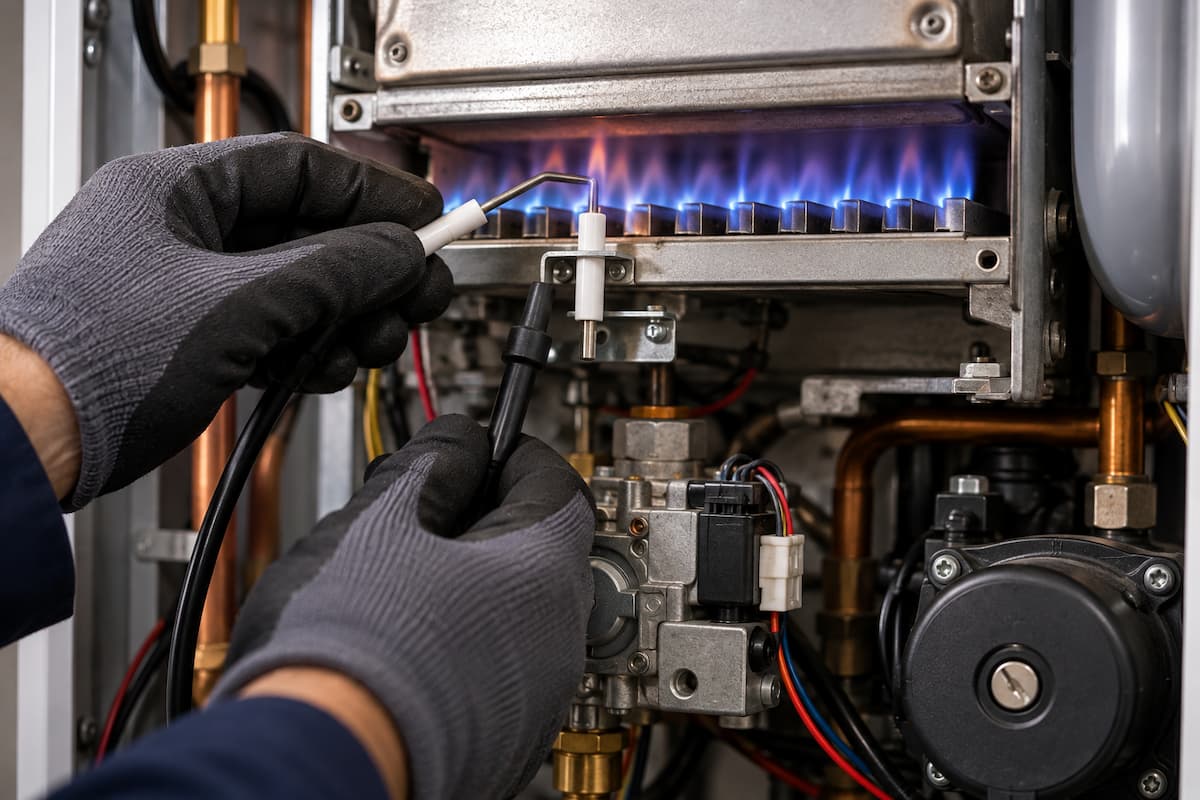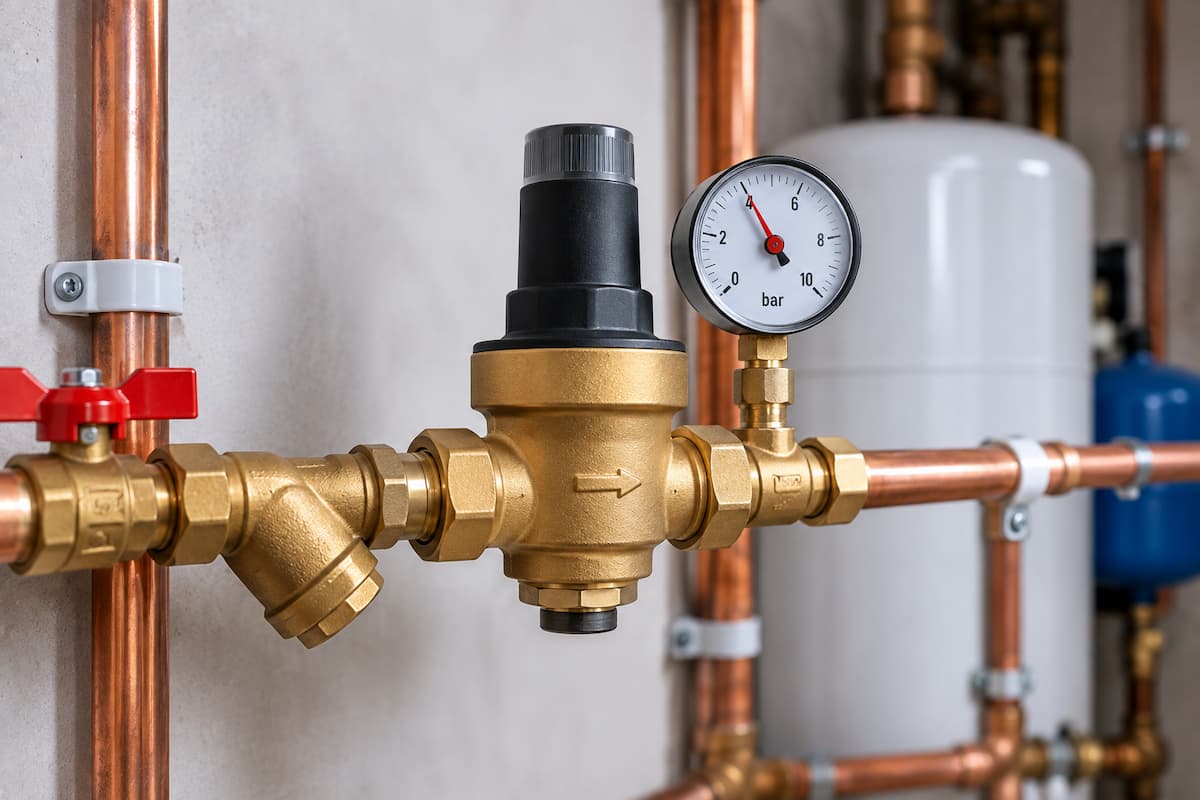
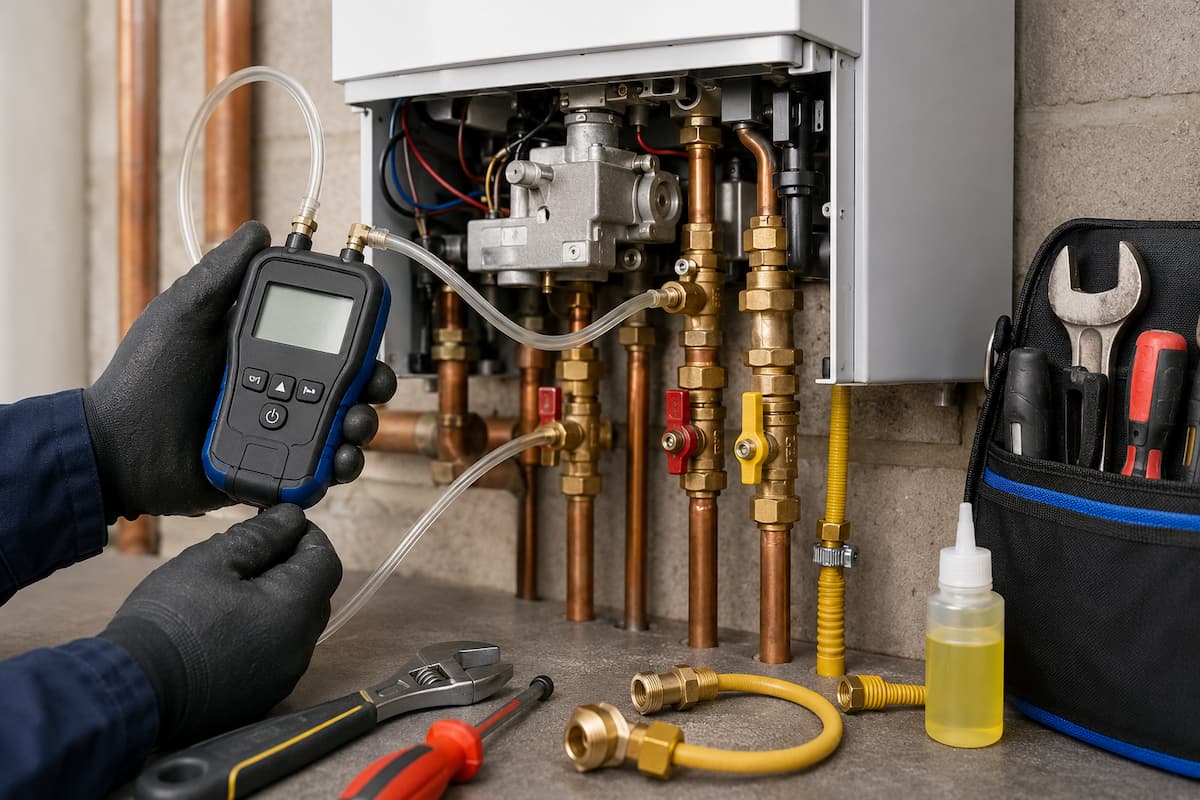
Gas engineering is built on a foundation of safety, accuracy and technical competence. While appliance installation and servicing are often the most visible aspects of the profession, understanding gas pressure, gas flow, tightness testing and purging is equally important.
These principles underpin the safe operation of every gas installation. Whether commissioning a new boiler, replacing an appliance or investigating a suspected gas leak, engineers must be able to assess system performance, verify gas soundness and apply safe testing procedures.
For trainees and experienced engineers alike, these topics form a significant part of both industry practice and ACS assessment. Recent updates introduced through IGEM/UP/1B Edition 4 have further reinforced the importance of accurate testing and professional judgement when assessing gas installations.
Gas Pressure In Domestic Installations
Gas pressure is the force that moves gas through pipework and into appliances. Without sufficient pressure, appliances cannot operate as intended, leading to poor performance, reduced efficiency and potential safety concerns.
Every domestic gas installation is designed to deliver an adequate gas supply to appliances under a range of operating conditions. Engineers must therefore understand not only how to measure pressure, but also how to interpret the results.
Gas Pressure Fundamentals
Gas pressure is typically measured using a manometer connected to designated test points within the installation.
Pressure readings help engineers determine whether:
- The gas supply is adequate
- Pipework is performing correctly
- Appliances are receiving the required gas volume
- Potential faults exist within the installation
Pressure testing is a routine part of commissioning, servicing and fault diagnosis.
Standing Pressure
Standing pressure is the pressure present within the installation when no gas is being consumed.
The reading is usually taken before appliances are operated and provides a baseline reference point for the gas supply entering the property.
Standing pressure checks can help identify supply issues and provide valuable information before further testing begins.
Working Pressure
Working pressure is measured while an appliance is operating.
This test determines whether the installation can maintain sufficient pressure under load conditions.
If pressure falls excessively during operation, the cause may include:
- Undersized pipework
- Excessive pipe length
- Restrictions within the installation
- Problems with the incoming supply
Incorrect Gas Pressure
Incorrect gas pressure can affect appliance performance in several ways.
Consequences include:
- Reduced heating output
- Ignition difficulties
- Incomplete combustion
- Increased carbon monoxide production
- Appliance lockouts
- Reduced efficiency
Understanding pressure behaviour is therefore essential when diagnosing faults and commissioning installations.
Gas Flow In Pipework Systems
Pressure and flow are closely linked, but they are not the same thing.
While pressure describes the force behind the gas supply, flow refers to the volume of gas moving through the system.
Appliances require both sufficient pressure and sufficient flow to operate correctly.
Gas Flow Principles
Modern heating appliances can have significant gas demand, particularly larger boilers and multiple-appliance installations.
The pipework system must be capable of delivering enough gas to meet demand without excessive pressure loss.
Pipe Sizing and Flow Requirements
Correct pipe sizing is fundamental to installation design.
Engineers must consider:
- Appliance gas rates
- Total pipe length
- Number of bends and fittings
- System demand
Poor pipe sizing can restrict gas flow and create operational problems throughout the installation.
Symptoms Of Poor Gas Flow
Insufficient gas flow may present as:
- Slow appliance ignition
- Flame instability
- Poor heating performance
- Appliance fault codes
- Customer complaints about heating or hot water
Understanding flow characteristics helps engineers identify these issues quickly and accurately.
Tightness Testing Fundamentals
Tightness testing is one of the most important safety procedures carried out by gas engineers.
The purpose of a tightness test is to verify that the gas installation is gas-tight and free from leaks.
Purpose Of Tightness Testing
Tightness testing is performed to:
- Confirm installation soundness
- Detect gas leaks
- Verify safety before commissioning
- Assess existing installations during servicing and maintenance
It is a critical step in protecting property and occupants.
Equipment Used During Tightness Testing
Engineers typically use:
- Digital manometers
- U gauge manometers
- Test nipples
- Approved leak detection fluids
Modern digital manometers offer increased accuracy and improved readability during testing procedures.
Preparing For A Tightness Test
Before testing begins, engineers should:
- Carry out a visual inspection
- Confirm safe working conditions
- Identify connected appliances
- Establish the appropriate testing procedure
Preparation is essential for obtaining accurate results.
Tightness Testing Under IGEM UP 1B Edition 4
IGEM/UP/1B Edition 4 introduced important updates to domestic gas tightness testing procedures.
The revisions are designed to improve consistency, support accurate fault diagnosis and enhance overall safety.
Overview Of Edition 4 Changes
One of the most significant changes involves the treatment of connected appliances during testing.
Previous testing approaches could make it difficult to determine whether a pressure loss originated from installation pipework or an appliance.
Edition 4 addresses this issue through revised testing procedures and greater emphasis on appliance isolation.
Appliance Isolation Requirements
The revised procedures recognise that leakage may originate from either:
- The installation pipework
- A connected appliance
By isolating appliances where practicable, engineers can better identify the true source of any pressure loss.
This improves fault diagnosis and helps prevent unnecessary remedial work.
Appliance Leakage Versus Installation Leakage
Appliance leakage may occur due to:
- Worn seals
- Faulty gas valves
- Internal appliance components
Installation leakage may occur due to:
- Pipe joints
- Meter connections
- Isolation valves
- Mechanical damage
Distinguishing between these sources is essential for effective fault finding.
Revised Testing Sequence
The updated process generally involves:
- Initial tightness testing
- Isolation of appliances where practicable
- Repeat testing
- Evaluation of results
- Investigation of any pressure loss
This systematic approach provides greater confidence in the final diagnosis.
Situations Where Isolation Is Not Practicable
There are circumstances where appliance isolation cannot reasonably be achieved.
Examples include:
- Older appliance configurations
- Limited accessibility
- Appliance design restrictions
In these situations, engineers must apply professional judgement while maintaining safety.
Engineering Judgement Requirements
Edition 4 places greater emphasis on engineering judgement.
Engineers must consider:
- Installation characteristics
- Accessibility
- Risk factors
- Available evidence
Decisions should be clearly documented and supported by the findings of the investigation.
Leak Identification and Investigation
When a pressure loss is detected, identifying the source becomes the next priority.
A structured approach helps ensure faults are located efficiently.
Leak Locations
Typical leakage points include:
- Appliance connections
- Meter unions
- Isolation valves
- Pipe joints
- Flexible connections
Leak Detection Techniques
Engineers may use:
- Pressure testing
- Approved leak detection fluids
- Visual inspection
- Systematic isolation procedures
A methodical process reduces the risk of misdiagnosis.
Confirming The Source Of Leakage
Effective fault finding requires evidence based decision making.
Engineers should avoid assumptions and follow a logical testing sequence until the source of leakage has been confirmed.
Purging Fundamentals
Purging is the process of safely removing air or gas from pipework systems.
This procedure is essential whenever new installations are commissioned, or significant alterations are made.
Purpose Of Purging
Purging ensures:
- Safe introduction of gas
- Removal of air from pipework
- Reliable appliance ignition
- Stable combustion conditions
Without effective purging, unsafe gas mixtures may develop within the installation.
Hazards Associated With Purging
Potential risks include:
- Flammable gas-air mixtures
- Delayed ignition
- Incomplete combustion
- Fire and explosion hazards
For this reason, purging procedures must always be carried out correctly.
Purging New Installations
When introducing gas into a new installation, engineers must follow recognised procedures to displace air from the system safely.
The process requires careful control and verification before appliances are commissioned.
Purging Existing Installations
Purging may also be necessary following:
- Appliance replacement
- Pipework modifications
- Major repairs
- Recommissioning activities
Understanding these procedures is essential for safe working practice.
Tightness Testing During Commissioning
Commissioning provides an opportunity to verify that the installation is safe before being placed into service.
New Installations
Before appliances are operated, engineers must confirm:
- Gas soundness
- Correct pressure
- Adequate flow
- Safe operation
Appliance Replacements
When replacing appliances, testing ensures the existing installation remains safe and suitable for continued use.
Tightness Testing During Servicing and Maintenance
Routine servicing provides an opportunity to identify developing problems before they become serious faults.
Routine Safety Checks
Engineers should verify:
- Installation soundness
- Appliance condition
- Ventilation provision
- Flue performance
Investigating Customer Reports
Common complaints that may require testing include:
- Smell of gas
- Appliance shutdowns
- Poor heating performance
- Intermittent operation
Pressure testing often forms part of the diagnostic process.
Gas Escapes and Emergency Procedures
Every gas engineer must be prepared to respond appropriately to suspected gas escapes.
Recognising A Gas Escape
Potential indicators include:
- Smell of gas
- Audible gas leaks
- Pressure losses during testing
Emergency Isolation Procedures
Where necessary, engineers may need to:
- Isolate the gas supply
- Ventilate the property
- Eliminate ignition sources
- Follow emergency procedures
Reporting Requirements
Appropriate records should be maintained, and customers should be informed of any required actions.
Testing Mistakes
Even experienced engineers can encounter issues if procedures are not followed carefully.
Testing Errors
Common mistakes include:
- Incorrect equipment setup
- Inadequate stabilisation periods
- Failure to isolate appliances where required
- Misreading results
Interpretation Errors
Incorrect conclusions may lead to:
- Misidentified faults
- Unnecessary work
- Repeat visits
Accurate interpretation is just as important as accurate measurement.
Avoiding Repeat Visits
Following a structured testing process helps engineers:
- Identify faults more efficiently
- Reduce unnecessary disruption
- Improve customer confidence
Tightness Testing In ACS Assessment
Pressure testing, tightness testing and purging form important elements of ACS assessment.
Candidates are expected to demonstrate:
- Safe working practices
- Correct testing procedures
- Accurate interpretation of results
- Professional decision making
Understanding the reasoning behind each procedure is just as important as memorising the process itself.
Practical Application On Site
Gas pressure, flow, tightness testing and purging are used throughout a gas engineer’s career.
Situations include:
- New boiler installations
- Appliance replacements
- Suspected gas leaks
- Servicing and maintenance visits
- System alterations and upgrades
Engineers who understand these principles are better equipped to diagnose faults, maintain safety and deliver quality workmanship.
Gas Training With Staffordshire Training Services
At Staffordshire Training Services, learners develop a thorough understanding of gas pressure, flow, tightness testing and purging through both classroom learning and practical application.
Gas Training is delivered by experienced engineers who bring real industry knowledge into every session. Learners gain hands-on experience using testing equipment, carrying out practical exercises and applying current industry standards.
These topics form a key part of both our
Our focus is not simply on helping learners pass assessments. We aim to develop engineers who understand the principles behind every procedure and can apply them safely and professionally throughout their careers.
Related Articles
- Gas Purging Procedures For Gas Engineers
- Update To Tightness Testing Standards
- Gas Tightness Testing Fault-Finding Techniques
- Gas Pressure Testing and Appliance Performance For Engineers
- Ventilation and Flueing Requirements For Gas Appliances
Prefer an AI Summary?