Starting a plumbing career involves more than gaining practical skills. Employers, contractors and industry bodies increasingly expect recognised qualifications that demonstrate both technical understanding and workplace competence.
For learners entering the trade, understanding the difference between a plumbing diploma and an NVQ route is an important first step. Each pathway supports professional development in different ways, and choosing the right option depends on your experience, career goals and access to workplace training.
At Staffordshire Training Services, learners can access flexible plumbing qualifications designed to support both new entrants and experienced tradespeople across the West Midlands.
Starting A Plumbing Career
Plumbing continues to offer strong career prospects throughout the UK. Demand remains high for qualified installers, maintenance engineers and heating professionals across domestic and commercial sectors.
Many people entering plumbing today come from a wide range of backgrounds. Some are school leavers beginning their first trade qualification, while others are adults retraining for a more practical and stable career.
Regardless of experience, recognised qualifications provide the foundation needed to progress confidently within the industry.
Diploma and NVQ Differences
Although both qualifications support progression into plumbing careers, they serve different purposes.
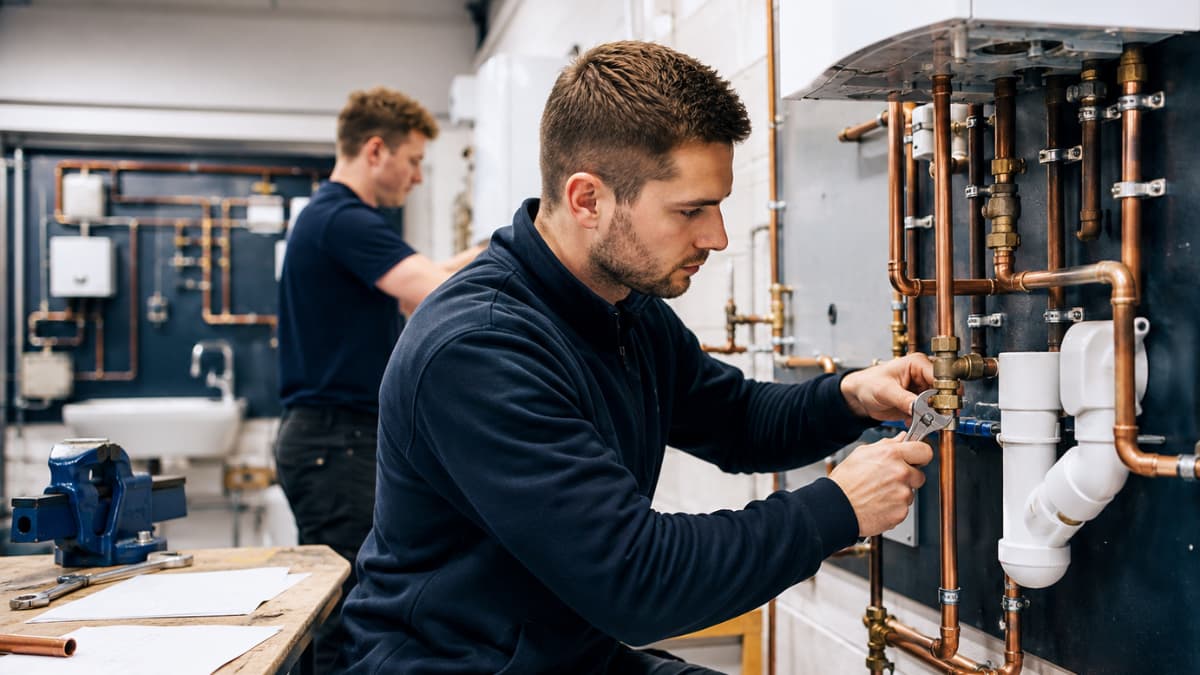
A plumbing diploma focuses on developing technical knowledge and practical workshop skills within a controlled training environment. Learners gain experience installing and maintaining plumbing systems while building their understanding of regulations, safety procedures and industry standards.
An NVQ qualification goes further by assessing occupational competence within a real workplace setting. Candidates demonstrate their ability to carry out plumbing work safely and effectively on site while gathering evidence of professional experience.
In simple terms, the diploma develops core ability, while the NVQ confirms competence in real working conditions.
Centre Based Training
For learners without access to plumbing work, centre-based training provides an accessible route into the trade.
The Diploma in Plumbing and Heating at Staffordshire Training Services is delivered through weekly day-release classes over 42 weeks. Training takes place within a realistic workshop environment using industry-standard equipment and practical installations.
Learners develop skills across key areas, including:
- Cold water systems
- Hot water systems
- Drainage and sanitation
- Central heating circuits
- Water regulations
- Health and safety practices
This pathway is particularly valuable for career changers and adult learners looking to retrain without needing an employer or apprenticeship placement at the start of training.
Workplace Experience
The NVQ Diploma in Plumbing and Heating combines classroom learning with supervised workplace experience.
Alongside attending weekly training sessions, learners must have access to plumbing work where they can safely apply their skills in a professional setting. Evidence from on-site tasks is recorded within a portfolio and assessed against industry standards.
Workplace evidence may include installations, maintenance tasks, testing procedures and system repairs completed under appropriate supervision.
This route is often suited to learners already working within the industry or those able to secure practical site experience during training.
NVQ Upskill Pathway
Some learners complete a diploma before later moving into employment or gaining site access. In these situations, an NVQ Upskill Pathway allows them to convert existing qualifications into a full NVQ without repeating previous learning.
This flexible route focuses specifically on workplace evidence and NVQ assessment requirements. It supports experienced learners seeking professional recognition, industry cards or progression opportunities with larger employers.
Training Timescales
Training routes vary depending on experience, existing qualifications and access to practical work.
The Diploma in Plumbing and Heating and the full NVQ Diploma are typically delivered over 42 weeks through weekly day-release classes. The NVQ Upskill Pathway is more flexible and can be completed over a timeframe suited to the learner’s individual progress and workplace opportunities.
This flexibility allows many learners to balance training alongside employment or other commitments.
Assessment and Coursework
Both diploma and NVQ routes include a mixture of theoretical and practical assessments.
Learners complete online examinations, written assessments and observed practical tasks designed to reflect real industry expectations. NVQ learners also complete workplace observations and portfolio evidence as part of their qualification.
Training focuses not only on technical ability but also on understanding legislation, regulations, and safe working practices essential to modern plumbing.
Skills Employers Value
Plumbing employers look for more than technical ability alone. Strong communication, reliability and professional conduct are equally important within customer-facing environments.
Qualified plumbers are expected to solve problems efficiently, work safely and adapt to different property types and systems. Good organisation and attention to detail also play an important role, particularly when working with heating systems, water regulations and installation standards.
Training that combines theory with practical experience helps learners develop these broader professional skills alongside technical competence.
Industry Misconceptions
Many people assume plumbing can only be entered through a traditional apprenticeship route. In reality, flexible training pathways now allow learners to retrain through centre-based courses and structured qualifications.
Another common misconception is that plumbing only involves domestic repairs. Modern plumbers may work across housing developments, commercial properties, renewable systems and large maintenance contracts.
There is also growing recognition that mature learners often bring valuable life experience, communication skills, and a work ethic to the trade.
Career Progression
Recognised plumbing qualifications can support progression into a wide range of roles across the sector.
Qualified plumbers may pursue opportunities with national companies, regional contractors or independent businesses. Holding an NVQ qualification can also support applications for the JIB PMES CSCS Blue Plumber Card and approved plumber schemes.
As experience grows, many plumbers continue developing their skills through specialist training in areas such as water regulations, hot water systems and renewable technologies.
Plumbing Career Earnings
Plumbing can provide a stable earning potential and career progression.
Newly qualified plumbers may begin in employed installation or maintenance roles before progressing into specialist sectors or self-employment. Experienced plumbers working across heating, commercial maintenance or renewable systems may significantly increase their earning potential over time.
Qualifications also support access to larger employers and contractor opportunities that require recognised industry credentials.
Demand Across The West Midlands
The West Midlands continues to see strong demand for qualified plumbing professionals across domestic and commercial sectors.
Housing development, property maintenance and infrastructure upgrades all contribute to the need for skilled installers and maintenance engineers. Growing investment in energy efficiency and heating upgrades is also creating further opportunities for qualified tradespeople.
Training locally allows learners to build skills while remaining connected to employment opportunities across the region.
Plumbing Training In Stafford
Training locally can make qualification pathways more accessible and manageable. Staffordshire Training Services supports learners across the West Midlands through structured training delivered at a dedicated centre in Stafford.
Plumbing courses are taught by experienced engineers and instructors with extensive industry knowledge, ensuring learners receive practical guidance aligned with current industry expectations.
With flexible pathways, recognised qualifications and hands-on learning, aspiring plumbers can progress towards careers with confidence.
Building Trade Skills
Becoming a qualified plumber is a structured journey rather than a single step. With flexible pathways that accommodate different backgrounds and levels of experience, learners can progress steadily towards professional status.
Through accredited training, experienced instruction and a supportive learning environment, Staffordshire Training Services enables aspiring plumbers to build skills, confidence and career prospects within the West Midlands.
Related Articles
- NVQ Vs Diploma In Plumbing
- Introduction To Plumbing Systems
- Training for a Career as a Plumber
- Water Regulations and Why They Matter for Plumbers
- Pathways to Becoming a Qualified Plumber in the West Midlands
Prefer an AI Summary?