Water pressure is one of the most important principles in plumbing and heating systems. It affects the performance of taps, showers, heating circuits and appliances throughout a property. Poor pressure management can lead to weak flow rates, noisy pipework, inefficient heating and damage to plumbing components.
For apprentices and trainee plumbers, understanding water pressure is essential before progressing to system installation, commissioning, and fault-finding. Pressure-related faults are among the most common issues encountered on-site, making this a core topic for every plumbing engineer.
This guide explains the fundamentals of water pressure, the different types of pressure found within plumbing systems, and the common causes of pressure-related faults.
Water Pressure
Water pressure refers to the force that pushes water through pipework and plumbing systems.
Without sufficient pressure:
- Water will not flow properly
- Showers perform poorly
- Appliances may fail to operate correctly
- Heating systems may circulate inefficiently
Too much pressure can also create problems, including:
- Leaking fittings
- Pipe stress
- Excessive noise
- Premature component failure
Correct pressure management is essential for safe and efficient plumbing operation.
The Difference Between Pressure and Flow
Pressure and flow are often confused, but they are not the same thing.
Pressure
Pressure is the force applied to the water inside the pipework.
It is commonly measured in:
- Bar
- PSI
- Metres head
Flow Rate
Flow rate is the volume of water moving through the system over a period of time.
It is usually measured in:
- Litres per minute
A system may have high pressure but poor flow if there is a restriction within the pipework.
Similarly, good flow rates may be reduced if several outlets are used simultaneously.
Understanding the relationship between pressure and flow is essential for diagnosing plumbing faults.
Static and Dynamic Pressure
Plumbers regularly encounter two different types of pressure.
Static Pressure
Static pressure is the pressure within the system when no water is flowing.
This is commonly measured with all outlets turned off.
Static pressure is often higher than working pressure because no water movement is occurring.
Dynamic Pressure
Dynamic pressure refers to the pressure within the system while water is flowing.
This provides a more realistic indication of the system’s actual performance.
Dynamic pressure may drop due to:
- Pipe restrictions
- Undersized pipework
- Multiple outlets operating together
- Poor mains supply
Dynamic pressure testing is important during fault diagnosis.
Water Pressure Units
Plumbers use several common units when measuring water pressure.
| Measurement | Typical Unit | Purpose |
|---|---|---|
| Water Pressure | Bar | Measuring system and mains pressure |
| Flow Rate | Litres Per Minute | Checking appliance and outlet performance |
| Head Pressure | Metres Head | Gravity fed system pressure measurement |
| Pipe Size | Millimetres | Determining suitable pipework capacity |
Water Flow Rate Testing
Flow rate testing helps plumbers assess system performance and identify restrictions within the plumbing system.
Flow rates are commonly measured using:
- Flow cups
- Measuring jugs
- Digital flow meters
The engineer measures the volume of water delivered over a fixed period.
Typical domestic flow requirements include:
| Outlet | Typical Flow Requirement |
|---|---|
| Basin Tap | 5 to 8 L/min |
| Kitchen Tap | 8 to 12 L/min |
| Shower | 10 to 16 L/min |
Poor flow rates may indicate:
- Blocked filters
- Restricted pipework
- Pressure reducing valve faults
- Supply limitations
Flow testing is an important part of diagnosing customer complaints.
Water Pressure In Domestic Plumbing Systems
Water pressure varies depending on the plumbing system design.
Mains Pressure Systems
Modern homes commonly use mains pressure systems.
Pressure is supplied directly from the local water authority through the incoming mains supply.
Advantages include:
- Stronger shower performance
- Improved appliance operation
- Balanced hot and cold supplies
- Better overall flow rates
However, pressure can vary depending on:
- Location
- Demand on the local network
- Property elevation
- Incoming supply condition
Gravity Fed Systems
Traditional gravity systems use a cold water storage cistern located in the loft.
The height difference between the cistern and the outlet creates pressure.
This is known as head pressure.
In gravity systems:
- Greater vertical distance creates higher pressure
- Upper floor outlets may have weaker flow
- Shower performance is often lower
These systems are still common in older UK properties.
Mains Pressure Vs Gravity Fed Systems
| Feature | Mains Pressure System | Gravity Fed System |
|---|---|---|
| Pressure Source | Water authority mains supply | Height of stored water |
| Typical Pressure | 1 to 5 bar | 0.1 to 0.5 bar |
| Shower Performance | Generally strong | Often weaker |
| Storage Cistern Required | No | Yes |
Head Pressure
Head pressure is created by the vertical height of stored water above the outlet.
As a general guide:
- 10 metres of height creates approximately 1 bar of pressure
This means a loft cistern positioned 5 metres above a shower outlet provides approximately:
5 metres ≈ 0.5 bar
This is why older gravity-fed showers often feel weaker than modern mains-pressure systems.
Common Causes Of Low Water Pressure
Low water pressure is one of the most common plumbing complaints.
Possible causes include:
- Partially closed stop taps
- Blocked filters
- Scaled pipework
- Faulty pressure reducing valves
- Leaking pipework
- Undersized pipework
- Shared supply problems
- Water authority supply issues
Accurate diagnosis requires systematic testing.
Pipe Sizing and Pressure Loss
Pipe sizing has a major effect on water pressure and flow performance.
Undersized pipework can create:
- Pressure drops
- Reduced flow
- Noisy systems
- Poor appliance operation
Long pipe runs also increase resistance and friction loss.
Plumbers must consider:
- Pipe diameter
- Pipe length
- Number of outlets
- Simultaneous demand
- Appliance requirements
Correct pipe sizing improves both system efficiency and customer satisfaction.
Water Hammer
Water hammer is a pressure shockwave that occurs when flowing water suddenly stops in the pipework.
This commonly creates:
- Loud banging noises
- Pipe vibration
- Stress on fittings and valves
Common causes include:
- Fast closing valves
- Washing machine solenoid valves
- Poor pipe support
- Excessive system pressure
Water hammer can damage plumbing systems over time if left unresolved.
Solutions may include:
- Improved pipe clipping
- Pressure reduction
- Shock arrestors
- Air chambers
Understanding water hammer is important in fault diagnosis.
Pressure Reducing Valves
Pressure reducing valves, often called PRVs, are used to control incoming pressure.
These valves help protect plumbing systems from excessive pressure.
They are commonly installed on:
- Unvented hot water systems
- Commercial plumbing systems
- High pressure mains supplies
Excessive pressure can damage:
- Taps
- Appliances
- Flexible hoses
- Cylinders
- Valves
Correct PRV installation helps maintain stable system performance.
Expansion and Pressure Increase
As water heats up, it expands.
In sealed systems, this expansion increases pressure within the system.
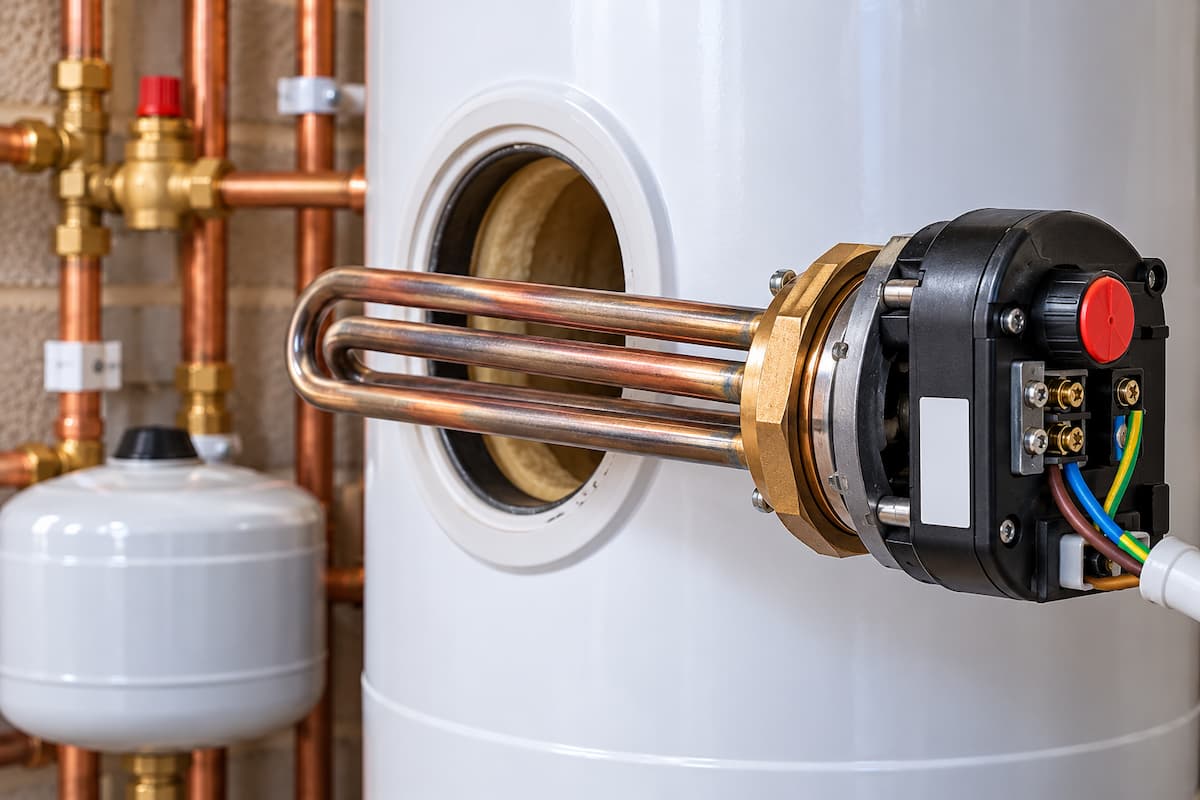
Expansion vessels are used to absorb this increase in pressure safely.
Without adequate expansion control:
- Pressure relief valves may discharge
- Pipework stress increases
- System components may fail
Expansion management is especially important in:
- Sealed heating systems
- Unvented hot water systems
- Renewable heating systems
Pressure Testing Procedures
Pressure testing confirms the integrity of plumbing systems and helps identify leaks before commissioning.
Pressure testing may involve:
- Water pressure testing
- Air pressure testing
- System isolation testing
The process generally includes:
- Filling the system safely
- Removing trapped air
- Pressurising the system
- Monitoring pressure stability
- Inspecting for leaks
Pressure testing must always follow manufacturer instructions and site safety procedures.
Pressure Gauges and Testing Equipment
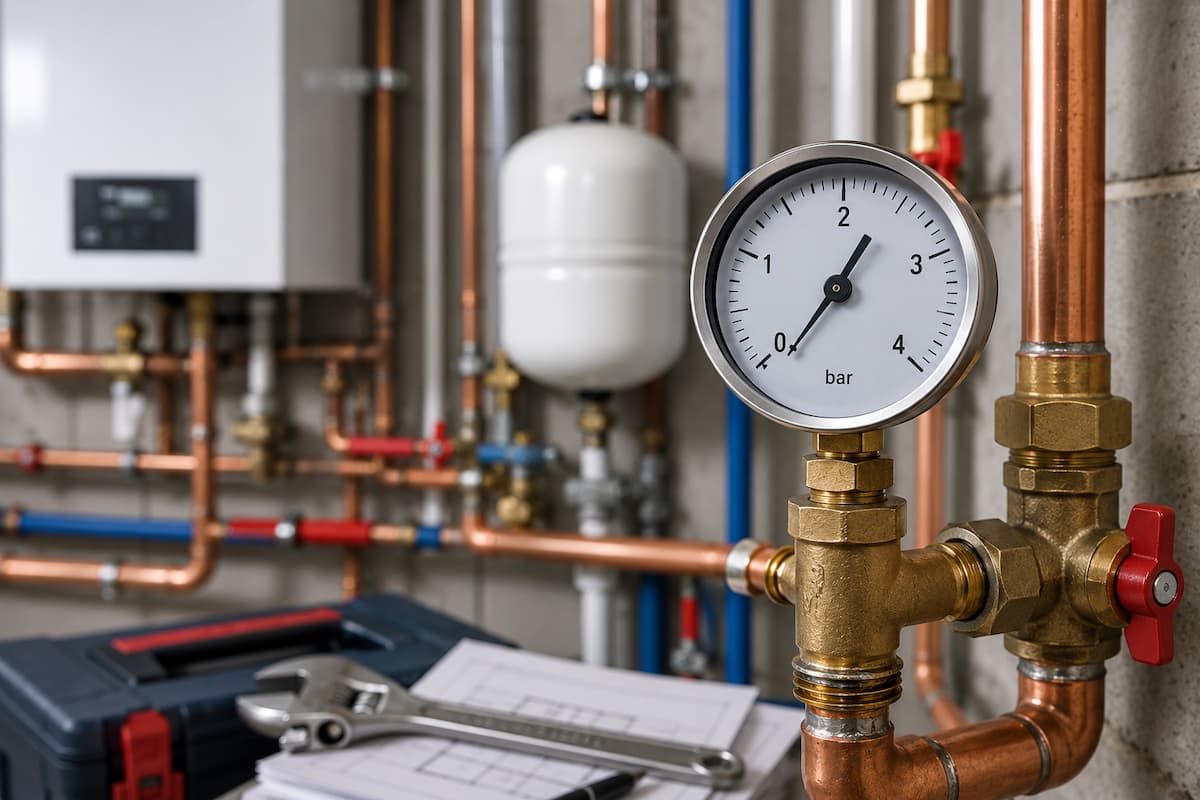
Pressure gauges are essential diagnostic tools used throughout the plumbing industry.
Plumbers use gauges to:
- Measure mains pressure
- Check heating system pressure
- Test sealed systems
- Diagnose faults
Typical sealed heating systems operate between:
- 1 bar and 1.5 bar when cold
Pressure gauges may indicate faults such as:
- Low system pressure
- Over pressurisation
- Expansion vessel failure
- System leaks
Understanding gauge readings improves diagnostic accuracy.
Pumped Plumbing Systems
Some plumbing systems require pumps to improve water pressure and flow.
Common pump types include:
- Positive head pumps
- Negative head pumps
- Twin impeller shower pumps
- Booster pumps
Pumps are often installed within:
- Gravity fed shower systems
- Large domestic properties
- Commercial plumbing systems
Incorrect pump installation can create:
- Noise
- Cavitation
- Air ingress
- Poor system performance
Correct system design and installation remain essential.
Water Pressure and Showers
Shower performance is heavily influenced by both pressure and flow rate.
Different shower types require different operating pressures.
Gravity Fed Showers
These often require:
- Pump assistance
- Dedicated supplies
- Minimum head height
Mains Pressure Showers
These operate directly from the incoming mains supply or an unvented cylinder.
Performance is generally stronger and more consistent.
Correct system design is essential for reliable shower operation.
Water Pressure and Heating Systems
Heating systems also rely on correct pressure levels.
Low pressure in sealed heating systems can cause:
- Boiler lockouts
- Poor circulation
- Cold radiators
- Air ingress
Pressure that rises excessively during operation may indicate:
- Faulty expansion vessel
- Overfilling
- System faults
Renewable Heating and Pressure Management
Renewable heating systems require accurate pressure and flow management to operate efficiently.
This is especially important within:
- Air source heat pump systems
- Ground source heat pump systems
- Low temperature heating systems
- Underfloor heating systems
Poor circulation or incorrect pressure can significantly reduce system efficiency.
Renewable systems also require:
- Correct system balancing
- Suitable flow rates
- Accurate commissioning
- Proper expansion arrangements
As the industry moves towards low-carbon heating, pressure management becomes increasingly important.
Common Pressure Related Faults
Understanding pressure behaviour helps plumbers diagnose faults efficiently.
Weak Shower Performance
Possible causes include:
- Poor mains supply
- Blocked filters
- Incorrect pipe sizing
- Gravity system limitations
Boiler Pressure Loss
Possible causes include:
- Heating system leaks
- Faulty expansion vessel
- Pressure relief valve discharge
- Bleeding radiators
Noisy Pipework
Possible causes include:
- Excessive pressure
- Water hammer
- Poor pipe clipping
- Restricted flow
Customer Complaint Scenario One
Complaint:
“Weak upstairs shower performance.”
Possible causes:
- Gravity fed system limitations
- Blocked shower head
- Incorrect pump installation
- Partially closed valves
Customer Complaint Scenario Two
Complaint:
“Boiler pressure keeps dropping.”
Possible causes:
- Heating system leak
- Failed expansion vessel
- Faulty pressure relief valve
- Undetected radiator leak
Practical fault-finding experience develops over time through testing and system understanding.
Water Pressure Safety Risks
Incorrect pressure management can create serious safety issues.
Potential risks include:
- Burst pipes
- Scalding
- Pressure relief discharge
- Appliance damage
- Leaking fittings
- System failure
Plumbers must always install safety devices correctly and follow manufacturer instructions.
Water Regulations and Pressure Safety
Plumbers must install systems in compliance with Water Regulations and manufacturer instructions.
Important considerations include:
- Backflow prevention
- Pressure control
- Expansion arrangements
- Safe discharge pipework
- Approved fittings and materials
Improper pressure management can pose safety risks and cause system damage.
Modern Plumbing and Pressure Management
Modern plumbing systems increasingly rely on accurate pressure control.
This is especially important within:
- Heat pump systems
- Unvented hot water systems
- Smart plumbing systems
- Commercial installations
- Multi bathroom properties
As plumbing systems become more advanced, pressure management skills become increasingly important for engineers.
Plumbing Training at Staffordshire Training Services
At Staffordshire Training Services, we provide accredited plumbing, heating and renewable energy training designed to develop both technical understanding and practical confidence.
Our plumbing training courses help learners understand core plumbing principles, such as water pressure, flow rates, system operation, and fault diagnosis, through practical workshop experience and industry-relevant technical instruction.
These skills form the foundation for progression into heating, gas and renewable energy sectors across the UK plumbing industry.
Related Articles
- Introduction To Plumbing Systems
- Plumbing Qualifications: Diploma Vs NVQ Routes
- Water Regulations and Why They Matter for Plumbers
- Direct and Indirect Water Supply Systems
- Pathways to Becoming a Qualified Plumber in the West Midlands
Prefer an AI Summary?