Domestic gas metering is a specialist area of gas work that requires engineers to demonstrate both core gas safety knowledge and practical competence. For engineers progressing from initial gas training, the appropriate ACS assessment provides a route to proving that competence and moving towards Gas Safe registration for the relevant scope of work.
The ACS Domestic Gas Meter Installation Course at Staffordshire Training Services combines two days of training with two days of assessment at our Stafford training centre. Successful candidates achieve the ACS Core Domestic Gas Metering qualification, CMA3.
For somebody completing a Managed Learning Programme, this can represent an important transition from structured training into formally assessed occupational competence. It is therefore useful to know exactly where CMA3 fits into the qualification pathway, which candidates it suits, and the standard expected during assessment.
ACS Domestic Gas Metering and CMA3
ACS stands for Accredited Certification Scheme. Rather than a single qualification covering every type of gas work, ACS includes different categories based on the work an engineer intends to undertake.
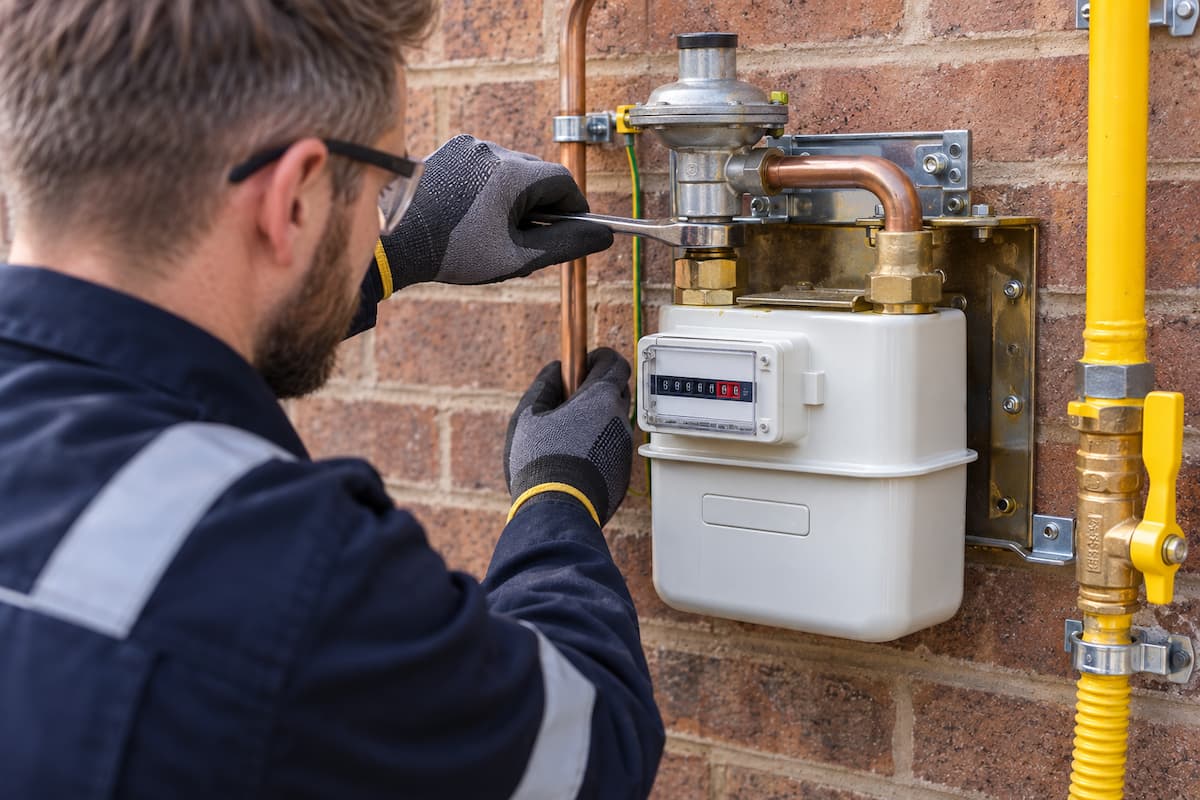
CMA3 covers core domestic gas safety for domestic gas metering work. The Staffordshire Training Services course focuses on domestic gas meters up to 6m³, with the option of domestic medium pressure meter regulators.
Successful completion results in an ACS Core Domestic Gas Metering CMA3 certificate accredited by LCL Awards.
This distinction matters for new engineers. Gaining competence in one ACS category should not be interpreted as permission to undertake every type of gas work. An engineer’s qualifications and Gas Safe registration must reflect the categories of work they are competent and registered to carry out.
Candidates Suited To The Course
The course is primarily intended for people who have completed an appropriate Gas Managed Learning Programme or hold an equivalent qualification and want to progress into domestic gas metering work.
It may suit someone who:
- Has recently completed an MLP or equivalent gas qualification
- Wants to gain their first ACS gas certificate
- Intends to become qualified for domestic gas meter installation
- Has trained elsewhere but now wants to complete the relevant training and assessment in Stafford
You do not need to have completed your previous training with Staffordshire Training Services. Candidates holding suitable qualifications from other providers can also apply.
The course is not an alternative to initial gas training for someone with no relevant qualification. Candidates need to hold an appropriate MLP certificate or equivalent before enrolling.
Progression From MLP To ACS
One area that can confuse new entrants is the difference between completing gas training and achieving ACS certification.
The Gas Managed Learning Programme course structure develops the underlying knowledge and practical experience required for a career in gas. Candidates complete centre training alongside supervised workplace experience and build evidence of their competence.
Completing that training does not, by itself, mean somebody can immediately start carrying out unrestricted gas work.
An appropriate progression can be viewed as:
Gas training → Training Completion Certificate → Relevant ACS assessment → Gas Safe registration for the appropriate categories
CMA3 can therefore be an important next stage for candidates whose intended scope of work includes domestic gas metering.
Course Structure In Stafford
The ACS Domestic Gas Meter Installation Course consists of four days in total at the Staffordshire Training Services centre in Stafford.
The programme is divided into two days of training followed by two days of assessment. This separation gives candidates time to work through the relevant knowledge and practical requirements before demonstrating their competence under assessment conditions.
Training is delivered in day-long sessions by experienced gas engineers and trainers.
Core Gas Safety Knowledge
Meter installation cannot be separated from wider gas safety principles. Engineers working on domestic metering installations need to recognise that the meter forms part of a larger gas installation in which pressure, flow, isolation and soundness are closely connected.
Candidates therefore need a sound grounding in core gas safety, not just the mechanical process of installing a meter. Safe working procedures, recognising unsafe conditions, and the responsibilities attached to working on gas installations all form part of professional competence.
Knowledge of gas pressure, flow, tightness testing and purging is particularly relevant around metering because changes made at the supply end of an installation can affect the safety and operation of everything downstream.
Domestic Gas Meter Installation
Practical competence is central to the CMA3 route.
Candidates need to approach domestic meter work systematically, paying attention to the condition of the installation and the individual components being worked on.
Training helps candidates develop the practical discipline required to carry out metering work safely rather than treating installation as a sequence of isolated mechanical tasks.
The course covers domestic gas meters up to 6m³ and may include domestic medium-pressure meter regulators.
Emergency Control and Isolation
An engineer working around domestic meters also needs a clear appreciation of emergency control arrangements.
The emergency control valve lets you shut off the gas supply to the installation. Its position, condition and operation therefore have direct safety implications. Correct emergency control valve testing and meter installation safety should be considered as part of the wider condition of the installation rather than simply concentrating on the meter being fitted or replaced.
For a trainee, the important principle is that safe isolation must always form part of the overall approach to gas work.
Pressure and Gas Supply Checks
Gas pressure provides valuable information about an installation’s condition and performance.
An engineer needs to understand the difference between a gas supply being present and an installation supplying gas correctly under operating conditions.
Pressure checks can help identify problems associated with the incoming supply, metering arrangement or installation pipework. Accurate measurement is only part of the skill. Candidates also need to interpret the result correctly and decide whether further investigation is necessary.
Tightness Testing and Gas Soundness
Any work affecting a gas installation must consider gas soundness.
Correct tightness testing and gas soundness procedures enable an engineer to establish whether an installation is sufficiently gas tight and investigate potential leakage where required.
This involves more than connecting a manometer and recording a figure. The engineer needs to prepare the installation correctly, follow the appropriate test procedure and interpret pressure changes accurately.
For candidates preparing for assessment, being methodical is particularly important. Skipping a stage or incorrectly interpreting a result can turn an otherwise familiar practical task into an assessment problem.
Purging and Safe Commissioning
Air may be present within pipework following installation work or isolation. Purging establishes the required gas atmosphere safely before the installation or relevant section is returned to operation.
The procedure must be controlled because gas-air mixtures can create an ignition risk. Correct gas purging procedures therefore form part of the wider safety process associated with putting an installation back into service.
Trainees need to appreciate the purpose behind the procedure rather than viewing purging as simply another sequence to memorise.
Skills and Professional Judgement
ACS assessment is designed to establish competence. This means candidates need to demonstrate more than theoretical recall.
Practical gas work involves observing an installation, recognising potential problems, selecting an appropriate procedure and responding correctly to the findings.
A candidate may know the correct sequence for a task but still need to demonstrate that they can:
- Work safely
- Use equipment correctly
- Take accurate measurements
- Recognise abnormal conditions
- Interpret results
- Make appropriate decisions
- Complete the task methodically
These habits become increasingly important once an engineer starts working independently.
Assessment Methods
Assessment for the Staffordshire Training Services CMA3 course takes place over two days following the two training days.
Candidates can expect several methods of assessment, including:
- Multiple choice questions
- Short written responses
- Scenario based questions
- Observed practical tasks
This mix matters because gas competence cannot be demonstrated through a written examination alone.
Knowledge questions establish whether candidates understand the relevant principles, while scenarios test their ability to apply those principles. Practical assessment then provides an opportunity to demonstrate safe and competent working.
There are no credit or honours classifications. Candidates either meet the required standard or are referred.
If a candidate needs to retake a module, Staffordshire Training Services provides a free resit for each module and can provide further guidance on areas requiring development.
Preparing For CMA3 Assessment
Preparation should focus on competence rather than memorising answers immediately before assessment.
Candidates benefit from revisiting core areas of their previous gas training, particularly where those principles apply directly to metering. Gas safety procedures, isolation, pressure measurement, tightness testing, purging, meter installation principles and recognition of unsafe situations are all useful areas to revisit.
Practical familiarity is equally important. Candidates should be comfortable using testing equipment and following procedures in the correct sequence.
The two training days provide an opportunity to revisit these areas before formal assessment begins.
Foundation and Refresher Routes
CMA3 is not solely relevant to engineers taking the qualification for the first time.
Staffordshire Training Services also offers a refresher version for engineers who currently hold the ACS Core Domestic Gas Metering CMA3 certificate or have previously held it within the applicable eligibility period.
The refresher course revisits essential knowledge while bringing candidates up to date with relevant changes in industry practice.
If a previous CMA3 certificate has expired for more than 12 months, candidates need to undertake the Foundation version rather than the refresher route. Checking existing certification dates before booking is therefore important.
CMA3 and Other Domestic ACS Qualifications
One of the most useful concepts for trainees to grasp is that ACS certification is based around categories of competence.
CMA3 concerns core domestic gas metering. Engineers intending to work across domestic appliances may instead need the relevant ACS Domestic Gas Safety and Appliances Initial Assessment, depending on their existing training, experience and intended scope of work.
Qualified engineers approaching the end of their current certification period may require an ACS Domestic Gas Safety and Appliances Reassessment rather than an initial route.
The correct course therefore depends on your existing qualifications, previous ACS categories and the gas work you intend to undertake.
Progression Towards Gas Safe Registration
ACS certification provides evidence of competence that can support an application for Gas Safe registration within the appropriate categories.
Gas Safe registration is the legal requirement for businesses carrying out gas work within the scope of the Gas Safety Installation and Use Regulations in Great Britain.
For somebody progressing from an MLP, achieving the appropriate ACS certificate represents a significant transition. Training builds the foundation, while ACS assessment demonstrates competence against relevant industry requirements.
Registration must match the categories of gas work the engineer or business intends to undertake.
Gas Meter Training With Staffordshire Training Services
The ACS Domestic Gas Meter Installation Course at Staffordshire Training Services combines focused training with formal assessment at our Stafford centre.
Candidates complete two days of training followed by two days of assessment, with experienced engineers and trainers supporting the development and demonstration of practical competence.
For new entrants progressing from an MLP, CMA3 provides an important route to gaining an initial ACS certificate and moving towards Gas Safe registration for the relevant categories. Existing CMA3 engineers can also access refresher training where they meet the eligibility requirements.
Our wider gas training courses in Stafford support engineers at different stages of their careers, from initial training and apprenticeships through to ACS assessment, reassessment and specialist gas qualifications.
The aim throughout is the same: to develop engineers who can apply their knowledge safely, demonstrate their competence and approach gas work with professional confidence.
Related Articles
- Guide to ACS Renewal and Reassessment
- A Guide To Domestic Gas ACS Reassessment
- ACS Initial Assessment For Domestic Gas Explained
- Qualifications Needed To Become a Gas Safe Engineer
- Gas Safety (Installation and Use) Regulation Failures Found During ACS
Prefer an AI Summary?