Water supply systems form the backbone of domestic plumbing installations throughout the UK. Every tap, shower, toilet and appliance relies on a properly designed water distribution system to provide a safe and reliable supply of water.
For apprentice plumbers and engineers entering the trade, understanding the difference between direct and indirect water supply systems is fundamental. These systems influence water pressure, installation methods, maintenance requirements and the performance of plumbing fixtures throughout a property.
Although modern homes increasingly utilise mains-pressure systems, many existing properties still operate on traditional indirect systems. As a result, plumbers regularly encounter both systems during installation, maintenance and fault-finding work.
This guide examines the principles, components, advantages and disadvantages of direct and indirect water supply systems and explains where each system is commonly used.
Water Supply Systems
A water supply system is designed to distribute potable water throughout a building safely and efficiently.
The system must:
- Deliver clean drinking water
- Maintain suitable pressure
- Prevent contamination
- Meet household demand
- Comply with Water Regulations
- Protect public health
The design of the system affects everything from shower performance to hot water production.
The History Of Indirect Water Systems
Before modern water infrastructure became widespread, many homes relied on stored water systems to ensure a consistent supply throughout the day. Mains water pressure was often unreliable and could vary significantly depending on location and demand.
Cold water storage cisterns provided a practical solution by storing water on the property and supplying it via gravity. These systems also enabled hot water cylinders to operate without pumps or pressurised equipment.
Although modern mains pressure systems have become increasingly common, many traditional indirect systems remain in service throughout the UK. As a result, plumbers must understand both system types when carrying out installation, maintenance and fault-finding work.
Water Supply System Fundamentals
Every domestic plumbing system begins with the incoming mains water supply.
Water enters the property through:
- Underground service pipe
- External stop valve
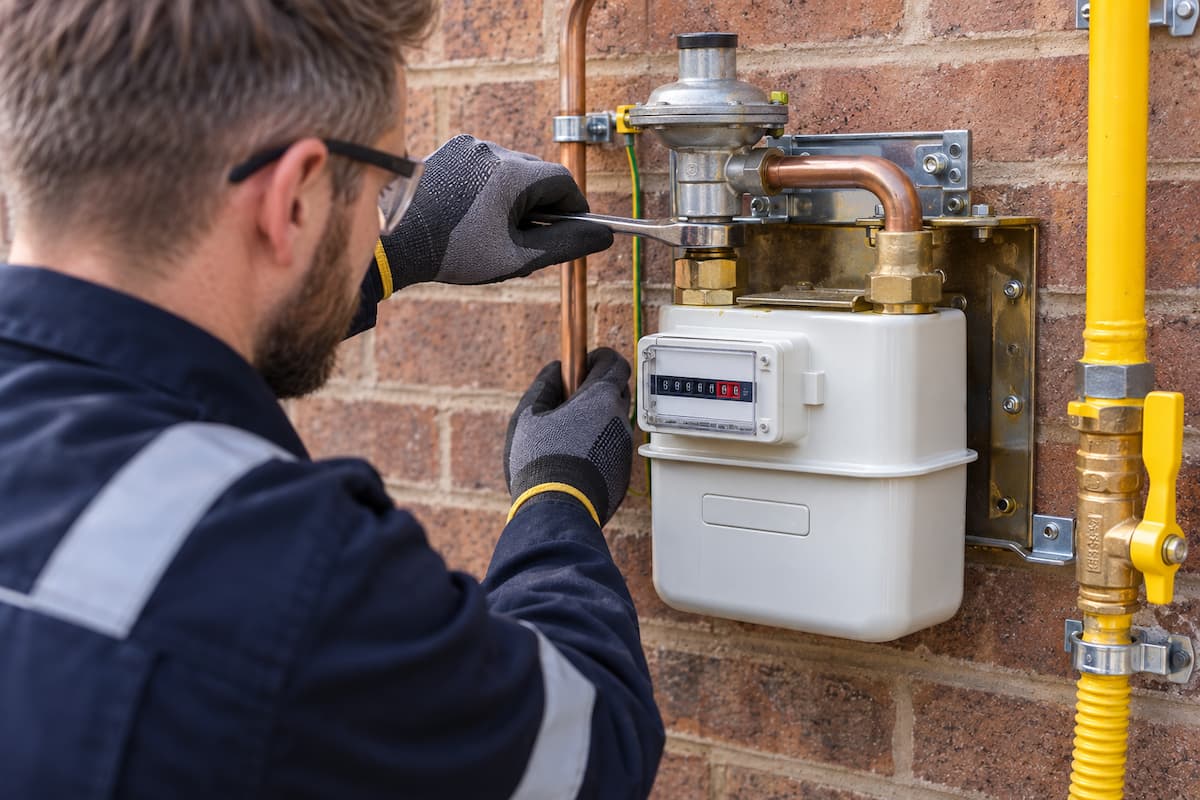
- Water meter where fitted
- Internal stop tap
From this point, water is distributed throughout the property using either a direct or indirect system arrangement.
The key difference lies in whether the outlets receive water directly from the mains supply or from water stored in a cistern.
Direct Water Supply Systems
A direct water supply system delivers water directly from the mains supply to all outlets within the property.
There is no cold water storage cistern involved in the distribution process.
All cold water outlets receive water directly from the incoming mains supply.
This includes:
- Kitchen taps
- Bathroom taps
- Toilets
- Showers
- Outside taps
- Appliances
Direct systems are common in modern homes due to improvements in mains water pressure and reliability.
Direct System Layout
In a direct system:
- Water enters through the mains supply.
- Water passes through the internal stop tap.
- Pipework distributes water directly to outlets.
- Hot water is generated through a boiler or hot water system.
Because all cold outlets are connected directly to the mains, pressure remains relatively consistent throughout the property.
Advantages Of Direct Systems
Direct systems offer several important benefits.
Improved Water Quality
Because water is supplied directly from the mains, there is less opportunity for contamination.
The water remains fresh and continuously renewed.
Better Water Pressure
Mains-supplied outlets generally provide higher pressure than gravity-fed systems.
This often results in:
- Better shower performance
- Faster filling baths
- Improved appliance operation
Reduced Maintenance
Without a cold-water storage cistern, fewer components require inspection and maintenance.
This reduces:
- Cleaning requirements
- Overflow issues
- Storage related contamination risks
Simpler Installation
Modern direct systems often require less pipework than traditional indirect systems.
This can simplify installation and future alterations.
Disadvantages Of Direct Systems
Despite their advantages, direct systems also have limitations.
Dependence On Mains Supply
If the mains supply is interrupted, the property loses its water supply immediately.
There is no stored reserve available.
Variable Pressure
Mains pressure can fluctuate depending on:
- Local demand
- Property location
- Water authority infrastructure
- Time of day
Performance may vary accordingly.
Increased Demand On Mains Supply
Properties with multiple bathrooms may place significant demand on the incoming supply.
Additional design considerations may be required.
Indirect Water Supply Systems
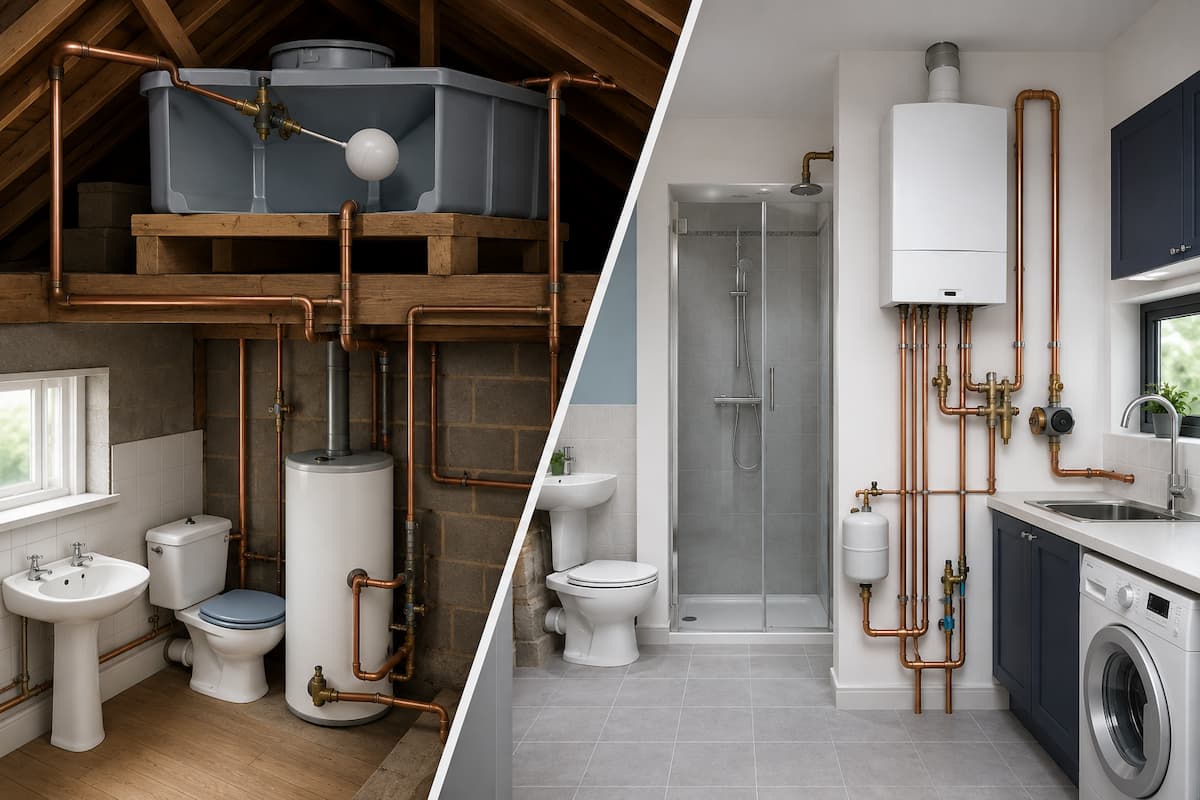
An indirect water supply system uses a cold water storage cistern to supply some or all of the property’s plumbing fixtures.
These systems were historically installed when mains supplies were less reliable and lower pressure was common.
Many older properties across the UK still operate using indirect systems.
Indirect System Layout
In a traditional indirect arrangement:
- Kitchen cold tap receives mains water
- Cold water storage cistern is filled from the mains supply
- Bathroom cold outlets are supplied from the cistern
- Hot water cylinder receives water from the cistern
Water pressure is generated by gravity rather than mains pressure.
The height of the cistern above the outlet creates the pressure available at taps and showers.
Components Of An Indirect System
A typical indirect system includes:
- Incoming mains supply
- Ball valve
- Cold water storage cistern
- Overflow arrangement
- Distribution pipework
- Hot water cylinder
- Vent pipework
Each component plays an important role in maintaining safe system operation.
Ball Valves and Water Level Control
The ball valve controls the water level within the cold water storage cistern.
As water is drawn from the cistern, the water level falls, and the float arm drops. This opens the valve, allowing fresh mains water to enter the cistern.
As the water level rises, the float arm rises with it and gradually closes the valve until the incoming water supply stops.
A properly functioning ball valve maintains a consistent water level within the cistern and prevents overflow.
Faults include:
- Worn valve washers
- Debris preventing closure
- Damaged float arms
- Incorrect float adjustment
Faulty ball valves are one of the most common causes of overflowing storage cisterns.
Cold Water Storage Cisterns
The cold water storage cistern is the heart of an indirect water supply system.
Its purpose is to:
- Store water safely
- Supply bathroom outlets
- Feed the hot water cylinder
- Provide a reserve water supply
Modern cisterns must comply with Water Regulations and be fitted with suitable covers, insulation and warning pipe arrangements.
Potable and Non Potable Water
One of the key concepts plumbers must understand is the difference between potable and non-potable water.
Potable water is water suitable for drinking, food preparation, and personal consumption.
In many traditional indirect systems:
- The kitchen cold tap receives potable mains water.
- Bathroom cold taps may receive water from the storage cistern.
- The hot water cylinder is supplied from stored water.
Historically, this arrangement reduced the risk of drinking stored water that could potentially become contaminated.
Understanding which outlets provide potable water is essential when carrying out plumbing work and ensuring compliance with Water Regulations.
Warning Pipes and Overflow Protection
Cold water storage cisterns are fitted with a warning pipe that discharges water safely if the normal water level exceeds the intended operating level.
The warning pipe provides a visual indication that a fault may be present.
Water discharging from a warning pipe often indicates:
- Faulty ball valve
- Incorrect float setting
- Debris preventing valve closure
- Excessive incoming pressure
Overflow discharge should never be ignored, as it can lead to water waste, property damage, and unnecessary costs for the homeowner.
Advantages Of Indirect Systems
Indirect systems offer several benefits that remain relevant today.
Emergency Water Storage
Stored water remains available if the mains supply is interrupted temporarily.
This provides a degree of resilience during supply disruptions.
Reduced Mains Demand
The storage cistern allows water demand to be spread over time rather than relying solely on instantaneous mains supply.
Simple Gravity Operation
Traditional gravity systems operate without the need for pumps or complex controls.
This makes them relatively straightforward to maintain.
Disadvantages Of Indirect Systems
Indirect systems also present several challenges.
Lower Water Pressure
Gravity generated pressure is often significantly lower than mains pressure.
This can result in:
- Weak showers
- Slower bath filling
- Reduced flow rates
Contamination Risks
Stored water can become contaminated if cisterns are poorly maintained.
Potential issues include:
- Debris accumulation
- Vermin ingress
- Bacterial growth
- Poor insulation
Regular inspection remains important.
Additional Maintenance
Storage cisterns require periodic inspection and maintenance to ensure safe operation.
Direct Vs Indirect Systems Comparison
| Feature | Direct System | Indirect System |
|---|---|---|
| Water Source | Mains Supply | Cold Water Storage Cistern |
| Pressure Type | Mains Pressure | Gravity Pressure |
| Water Storage | No | Yes |
| Shower Performance | Generally Better | Often Lower |
| Maintenance Requirements | Lower | Higher |
| Contamination Risk | Lower | Higher |
Water Pressure Differences
One of the biggest practical differences between direct and indirect systems is water pressure.
Direct systems rely on the incoming mains supply.
Indirect systems rely on head pressure generated by the height of stored water.
As a general rule:
- 10 metres of height provides approximately 1 bar of pressure
Many loft-mounted cisterns provide only a fraction of this pressure.
This explains why traditional gravity-fed showers often perform less effectively than mains pressure alternatives.
Typical Water Pressures In Domestic Systems
The pressure available within a plumbing system depends largely on the system design.
| System Type | Typical Pressure |
|---|---|
| Gravity Fed Bathroom Tap | 0.1 to 0.3 bar |
| Gravity Fed Shower | 0.1 to 0.5 bar |
| Mains Pressure System | 1 to 5 bar |
| Unvented Cylinder System | Typically Similar To Mains Pressure |
These figures are general guides and may vary depending on location, property design and water authority supply conditions.
Hot Water Production In Direct and Indirect Systems
The type of water supply system also affects hot water production.
Direct Systems
Modern direct systems often utilise:
- Combination boilers
- Unvented cylinders
- Mains pressure hot water systems
Indirect Systems
Traditional indirect systems commonly use:
- Vented hot water cylinders
- Gravity-fed hot water distribution
- Open vent arrangements
Understanding these relationships is important when diagnosing hot water performance issues.
Water Regulations Considerations
Water Regulations play a critical role in the design and installation of both system types.
Important considerations include:
- Backflow prevention
- Fluid category protection
- Suitable storage arrangements
- Approved fittings and materials
- Overflow protection
- Contamination prevention
Plumbers must ensure all installations comply with current regulations.
Faults In Direct Systems
Typical direct system faults include:
- Low mains pressure
- Faulty pressure reducing valves
- Blocked filters
- Restrictive pipework
- Internal leaks
Systematic testing helps identify the root cause quickly.
Faults In Indirect Systems
Typical indirect system faults include:
- Faulty ball valves
- Overflow discharge
- Airlocks
- Contaminated cisterns
- Poor gravity pressure
- Frozen loft pipework
Regular maintenance can prevent many of these issues.
Airlocks In Gravity Fed Systems
Airlocks occur when pockets of trapped air prevent water from flowing correctly through pipework.
Indirect systems are generally more susceptible to airlocks because they operate using gravity rather than mains pressure.
Symptoms include:
- Reduced water flow
- Spluttering taps
- Intermittent supply
- Complete loss of flow at an outlet
Diagnosing and clearing airlocks is a common task for plumbers working on older gravity-fed installations.
Identifying System Types On Site
One of the most useful skills for apprentice plumbers is learning to identify the water supply system present within a property.
Signs of a direct system include:
- No cold water storage cistern
- Combination boiler installation
- Unvented hot water cylinder
- Strong mains pressure outlets
Signs of an indirect system include:
- Cold water storage cistern in the loft
- Vented hot water cylinder
- Open vent pipework
- Gravity-fed bathroom outlets
Correctly identifying the system helps engineers diagnose faults more effectively and plan installation work safely.
Future Trends In Water Supply Systems
The industry continues to move towards mains pressure plumbing systems.
Modern developments include:
- Unvented hot water systems
- Combination boilers
- Smart water monitoring
- Water efficiency technologies
- Low water consumption fittings
However, plumbers will continue to encounter indirect systems for many years due to the large number of existing installations throughout the UK.
A strong understanding of both system types remains essential.
Modernisation And System Upgrades
Many older properties are now being upgraded from traditional indirect systems to mains pressure arrangements.
Upgrades include:
- Removal of cold water storage cisterns
- Installation of combination boilers
- Installation of unvented hot water cylinders
- Pipework upgrades
- Improved heating controls
These improvements can provide better pressure, improved efficiency and reduced maintenance requirements.
However, plumbers must carefully assess the existing water supply before carrying out any conversion work.
Practical Knowledge For Apprentice Plumbers
When attending a property, one of the first tasks should be identifying the type of water supply system present.
Questions include:
- Is there a cold water storage cistern?
- Are outlets mains fed or gravity fed?
- Is the hot water cylinder vented or unvented?
- What pressure is available?
- Are there signs of contamination or poor maintenance?
Answering these questions provides valuable information before beginning any installation or fault-finding work.
Fault Finding Scenarios
Practical fault finding helps apprentices connect theory with real plumbing situations.
Scenario One
Customer Complaint:
“The shower upstairs has very poor pressure.”
Possible causes:
- Gravity-fed system limitations
- Blocked showerhead
- Airlock in pipework
- Partially closed isolation valve
- Pump fault where fitted
Scenario Two
Customer Complaint:
“There is water dripping outside from the overflow pipe.”
Possible causes:
- Faulty ball valve
- Incorrect float adjustment
- Debris within the valve assembly
- Excessive incoming pressure
Scenario Three
Customer Complaint:
“The hot water pressure is much lower than the cold water pressure.”
Possible causes:
- Scaled hot water cylinder
- Blocked outlet pipework
- Airlock within the hot water distribution system
- Partially closed valve
Working through fault scenarios develops the systematic diagnostic approach required by professional plumbers.
Plumbing Training at Staffordshire Training Services
At Staffordshire Training Services, we provide accredited plumbing training that develops a strong understanding of water systems, plumbing principles and practical installation techniques.
Our plumbing training courses combine technical theory with hands-on workshop experience, helping learners understand how direct and indirect water supply systems operate, as well as the wider plumbing systems found throughout domestic and commercial properties.
By developing a strong foundation in plumbing fundamentals, learners are better prepared to progress to heating, gas, and renewable energy qualifications.
Related Articles
- Introduction To Plumbing Systems
- Understanding Water Pressure In Plumbing Systems
- Plumbing Qualifications: Diploma Vs NVQ Routes
- Water Regulations and Why They Matter for Plumbers
- Pathways to Becoming a Qualified Plumber in the West Midlands
Prefer an AI Summary?